Gardening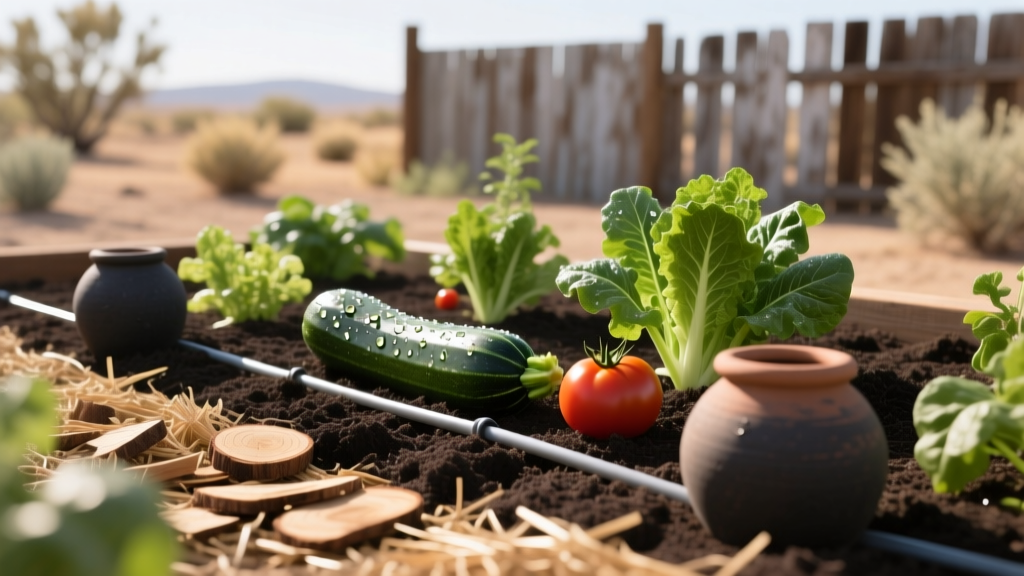
Water-Wise Vegetable Gardening: Ollas, Drip Lines, and Mulch
Sarah ChenPublished
Introduction to Water-Wise Gardening
As climate patterns shift and summer droughts become more severe, maintaining a productive vegetable garden requires a strategic approach to water management. Traditional overhead watering methods are incredibly inefficient, losing massive amounts of moisture to wind drift and evaporation before it ever reaches the root zone. According to the EPA WaterSense program, outdoor water use accounts for nearly 30% of total household water consumption, and in arid regions, this number can exceed 50%. By adopting water-wise gardening techniques, you can drastically reduce your water footprint while simultaneously improving your harvest.
Transitioning to a drought-resilient garden does not mean sacrificing your favorite crops. Instead, it involves leveraging ancient irrigation technologies, modern precision drip systems, and biological soil management to ensure every single drop of water is utilized effectively. This guide will walk you through the most impactful water-wise strategies, complete with actionable measurements, product recommendations, and cost estimates to help you build a garden that thrives even in the harshest conditions.
The Ancient Magic of Olla Irrigation
Ollas (pronounced 'oy-yahs') are unglazed, porous terracotta clay pots that have been used for thousands of years to irrigate crops in arid climates. The science behind an olla is based on soil moisture tension. When you bury an olla and fill it with water, the water slowly seeps through the microscopic pores of the clay. However, it only releases water when the surrounding soil becomes dry and creates a suction effect. This means plants are watered precisely when they need it, and zero water is lost to surface evaporation.
How to Install and Use Ollas
To implement this system in a standard 4x8-foot raised bed, you will need approximately four to six 1-gallon ollas. Commercial ollas typically cost between $15 and $35 each, though you can create DIY versions by plugging the drainage holes of standard terracotta pots with a cork or silicone sealant and burying them.
- Spacing: A 1-gallon olla effectively waters a 36-inch diameter circle (an 18-inch radius). Place them evenly down the center of your raised bed.
- Installation: Dig a hole and bury the olla so that only 1 to 2 inches of the neck remain above the soil line. This prevents soil and debris from washing in.
- Planting: Plant your vegetable seedlings within 12 to 18 inches of the olla's center. As the roots grow, they will naturally wrap around the buried clay pot, tapping directly into the moisture source.
- Maintenance: Fill the ollas every 3 to 7 days depending on the heat, and always keep them covered with a lid or a flat stone to prevent mosquito breeding and reduce evaporation from the pot itself.
Precision Drip Irrigation Systems
While ollas are fantastic for small spaces and deep-rooted plants, drip irrigation remains the gold standard for larger garden layouts and row crops. Drip systems deliver water directly to the base of the plant at a slow, measurable rate, achieving up to 90% water use efficiency compared to the 50-60% efficiency of sprinklers.
Designing Your Drip Layout
For a water-wise setup, avoid standard soaker hoses, which degrade quickly and leak unevenly. Instead, build a modular system using 1/2-inch poly tubing as your mainline and 1/4-inch micro-tubing with pressure-compensating emitters for your plants.
- Emitter Selection: Use 0.5 Gallons Per Hour (GPH) emitters for heavy clay soils that absorb water slowly, and 1.0 GPH or 2.0 GPH emitters for fast-draining sandy soils.
- Automation: Pair your system with a smart hose timer equipped with a soil moisture sensor ($40 to $70). This ensures the system only runs when the soil actually lacks moisture, pausing automatically after rainfall.
- Subsurface Drip: For ultimate water conservation, bury your 1/4-inch drip lines 2 to 3 inches beneath the soil surface. This completely eliminates surface evaporation and discourages root intrusion if you use emitter lines with built-in copper rings.
Deep Mulching for Moisture Retention
No water-wise garden is complete without a thick layer of mulch. Bare soil acts like a wick, drawing deep moisture up to the surface where it evaporates into the dry air. Research from the Colorado State University Extension indicates that applying a proper layer of organic mulch can reduce soil water evaporation by up to 70%, significantly lowering your irrigation needs while moderating soil temperatures.
Mulch Application Rules
Apply mulch to a depth of 3 to 4 inches around your vegetable plants. However, always maintain a 2-inch 'mulch-free moat' directly around the base of the plant stems to prevent collar rot and fungal diseases. Replenish organic mulches mid-season as they decompose and incorporate into the soil.
| Mulch Type | Water Retention | Decomposition Rate | Est. Cost (per cu ft) | Best Application |
|---|---|---|---|---|
| Straw (Seedless) | High | Fast (1 season) | $5.00 - $8.00 | Annual vegetable beds, tomatoes, peppers |
| Pine Bark Nuggets | Medium | Slow (2-3 years) | $4.00 - $6.00 | Perennial borders, fruit bushes, pathways |
| Arborist Wood Chips | High | Very Slow (3+ years) | Free - $3.00 | Garden pathways, around fruit trees, composting |
| Grass Clippings (Dried) | Very High | Very Fast (weeks) | Free | Quick summer fix, nitrogen-boosting top dressing |
| Compost (Top-Dressed) | Medium | Continuous | $3.00 - $5.00 | Seed starting, soil structure improvement |
Selecting Drought-Tolerant Vegetable Varieties
Genetics play a massive role in drought survival. Some vegetable varieties have been specifically bred or naturally adapted to thrive with minimal water and deep taproots. According to guidelines from the Texas A&M AgriLife Extension, selecting heat-tolerant and drought-adapted cultivars is one of the most effective passive water-saving strategies for gardeners in arid and semi-arid climates.
- Tomatoes: Look for 'Dark Star' (a zucchini actually, but for tomatoes, seek 'Cherokee Purple' or 'Sun Gold'). Dry-farmed tomatoes develop incredibly deep roots and intense flavors when watered deeply but infrequently.
- Squash: 'Tromboncino' and 'Costata Romanesco' zucchini are renowned for their vigorous vines and large leaves, which act as a living mulch, shading the soil and retaining ground moisture.
- Legumes: Swap out water-heavy snap peas for Tepary beans or Black-Eyed Peas (Cowpeas). These legumes are native to harsh, hot environments and actually produce better yields when stressed by mild drought.
- Greens: Replace delicate lettuce with Swiss Chard, Malabar Spinach, or New Zealand Spinach, which possess thick, succulent leaves designed to hoard water during dry spells.
Soil Preparation: Building a Living Sponge
The physical structure of your soil dictates how much water it can hold. Sandy soil drains too quickly, while heavy clay causes water to run off the surface. The universal solution is increasing Soil Organic Matter (SOM). Studies show that every 1% increase in soil organic matter allows an acre of soil to hold an additional 20,000 gallons of water. In a 4x8-foot raised bed, increasing your organic matter by just 1% means your bed can hold dozens of extra gallons of plant-available water.
Before the planting season, top-dress your beds with 2 inches of high-quality, screened compost and gently fork it into the top 6 inches of soil. For an extra water-retention boost, incorporate biochar at a rate of 10% by volume. Biochar is a highly porous form of charcoal that acts like a microscopic coral reef in your soil, trapping water and nutrients and releasing them slowly to plant roots over decades.
Smart Watering Schedules and Timing
When you water is just as critical as how you water. Never water your vegetable garden in the middle of the day; the intense sun and heat will evaporate up to 30% of your water before it penetrates the soil. Conversely, watering late in the evening leaves plant foliage damp overnight, inviting powdery mildew and fungal pathogens.
The optimal window for irrigation is between 4:00 AM and 6:00 AM. This allows the water to soak deeply into the root zone before the sun rises, and any splash-back on the leaves will quickly dry once the morning sun hits. Furthermore, practice 'deep and infrequent' watering. Watering for 10 minutes every day encourages shallow, weak root systems that scorch easily. Instead, water for 45 to 60 minutes twice a week to force roots to chase the moisture deep into the soil profile, creating resilient, drought-proof plants.
Conclusion
Creating a water-wise vegetable garden is an investment in both your local ecosystem and your own peace of mind. By combining the targeted, zero-evaporation delivery of olla irrigation and subsurface drip lines with the protective barrier of deep organic mulch, you can effectively drought-proof your food supply. Add in the power of compost-enriched soil and carefully selected drought-tolerant cultivars, and you will find that your garden requires a fraction of the water it once did, all while producing heavier, more flavorful harvests. Start small, implement these systems one bed at a time, and watch your garden thrive regardless of the weather forecast.
