Lawn Care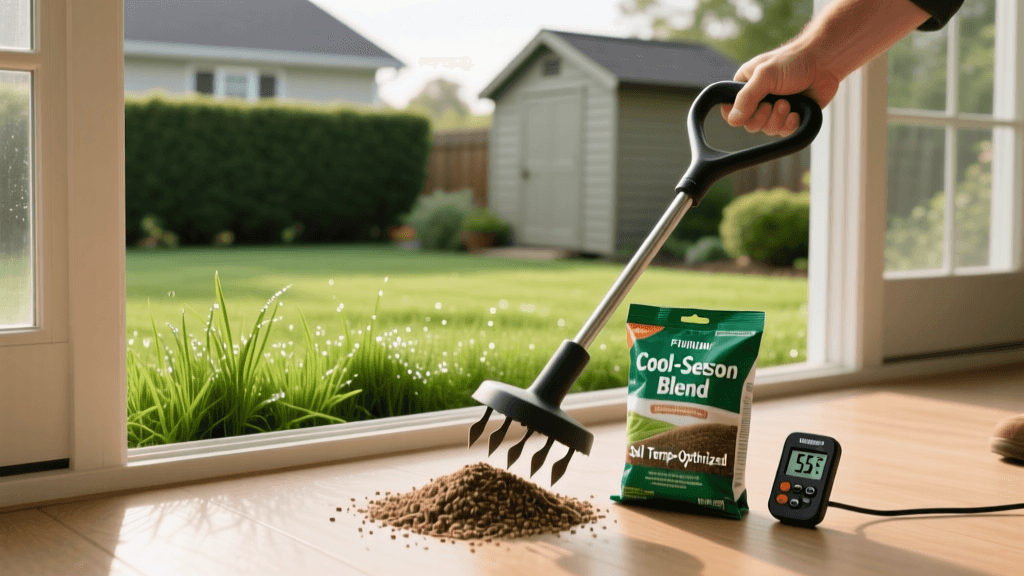
When to Aerate and Overseed Your Cool-Season Lawn
The Importance of Timing for Cool-Season Grasses
Maintaining a lush, vibrant lawn in the northern two-thirds of the United States requires a deep understanding of your grass's biological clock. Cool-season grasses—such as Kentucky Bluegrass, Tall Fescue, Perennial Ryegrass, and Fine Fescue—experience two primary growth flushes each year: one in the spring and one in the fall. However, when it comes to lawn renovation, specifically core aeration and overseeding, timing is everything. Performing these tasks at the wrong time of year can lead to poor seed germination, aggressive weed competition, and wasted money on premium grass seed and fertilizers.
Unlike warm-season grasses that thrive in the heat of summer, cool-season grasses begin to slow their top growth as summer temperatures peak, redirecting their energy toward root development and carbohydrate storage in the autumn months. Capitalizing on this natural biological cycle is the secret to a thick, drought-tolerant turf. This comprehensive when-to timing guide will walk you through the exact seasonal windows, soil temperature triggers, and step-by-step schedules required to successfully aerate and overseed your cool-season lawn.
The Golden Window: Late Summer to Early Fall
The absolute best time to aerate and overseed cool-season lawns is during the late summer to early fall transition. Depending on your specific USDA Hardiness Zone, this window typically falls between mid-August and mid-September. For those in slightly warmer transition zones, this window may extend into early October. The goal is to plant your seed roughly 45 to 60 days before your area's average first hard frost date. This provides the newly germinated seedlings enough time to establish a robust root system capable of surviving the harsh winter freezes.
Soil Temperature vs. Air Temperature: The Real Trigger
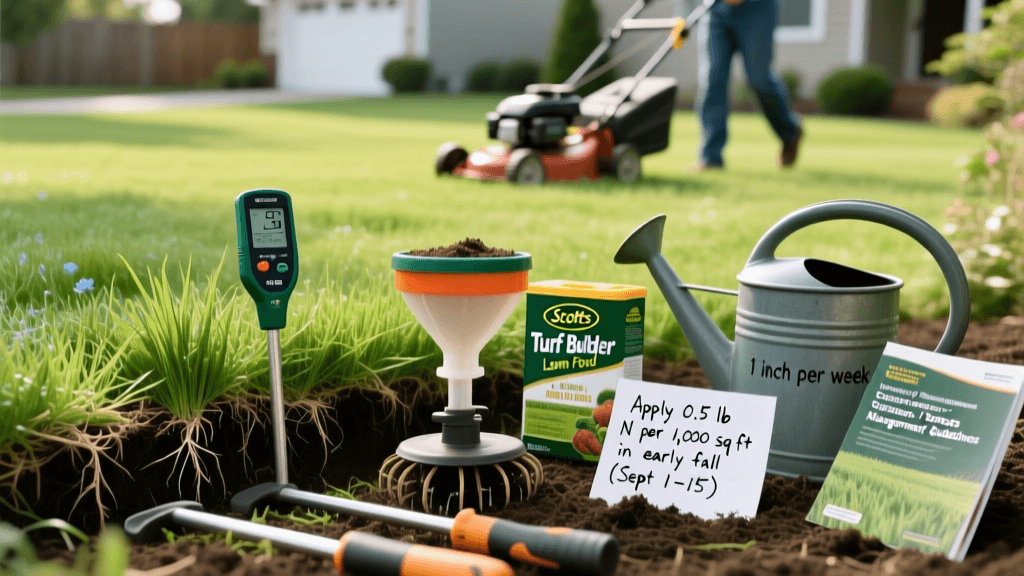
Many homeowners make the mistake of watching the daily weather forecast and basing their lawn care schedule on air temperature. However, seed germination is dictated by soil temperature. For optimal cool-season seed germination, the soil temperature at a depth of two to three inches should be consistently between 50°F and 65°F (ideally hovering around 60°F). You can easily track this using a standard soil thermometer or by consulting local agricultural extension websites that publish real-time soil temperature maps. When the soil is in this sweet spot, weed competition from aggressive summer annuals like crabgrass is naturally declining, giving your new grass seed a massive competitive advantage.
Spring vs. Fall: A Timing Comparison
While spring aeration is sometimes necessary for heavily compacted soils, fall remains the undisputed champion for overseeding. The table below illustrates why waiting until autumn yields vastly superior results compared to spring renovations.
| Factor | Spring Timing (April - May) | Fall Timing (August - September) |
|---|---|---|
| Weed Competition | Extremely High (Crabgrass germination peaks) | Low (Summer annual weeds are dying off) |
| Soil Temperature | Warming up, but often too cold for fast germination | Warm from summer heat, ideal for rapid germination |
| Root Development | Poor (Energy goes to top-growth and seed heads) | Excellent (Energy shifts to deep root establishment) |
| Disease Pressure | High (Spring moisture promotes fungal diseases) | Moderate to Low (Cooler nights reduce fungal risk) |
| Herbicide Conflict | High (Pre-emergents prevent grass seed from sprouting) | Low (Pre-emergents applied in spring have broken down) |
Step-by-Step Fall Aeration and Overseeding Schedule
To achieve professional-grade results, you must prepare your lawn well before the seed ever touches the soil. Follow this timeline to ensure maximum seed-to-soil contact and germination rates.
Phase 1: 4 to 6 Weeks Before (Late July - Early August)
Start by conducting a comprehensive soil test. This will dictate whether you need to apply lime to adjust your soil pH (ideal range is 6.0 to 7.0) or add specific micronutrients. Next, address any broadleaf weed infestations. If you must apply a selective broadleaf herbicide to kill dandelions and clover, do it now. Most herbicide labels require a waiting period of three to four weeks before you can safely sow new grass seed. Applying herbicides too close to your seeding date will result in total germination failure.
Phase 2: 1 Week Before (Late August)
Begin lowering your mowing height gradually. For your final mow before aeration, drop your mower deck to about 1.5 to 2 inches. This prevents the existing grass canopy from shading out the new seedlings and makes it easier for the aerator tines to penetrate the soil. Two days before you plan to aerate, water your lawn deeply, applying about 1 inch of water. The soil should be moist but not muddy; if it is too dry, the aerator tines will bounce off the surface, and if it is too wet, the machine will clog and tear the turf.
Phase 3: Day Of (Early to Mid-September)
Rent a walk-behind core aerator from your local hardware store. Core aeration removes small plugs of soil (typically 2 to 3 inches deep), alleviating compaction and allowing oxygen, water, and nutrients to reach the root zone. Run the aerator over your lawn in two perpendicular directions to ensure adequate coverage. Leave the soil plugs on the lawn; they will break down naturally with rain and mowing, returning valuable microbes to the surface.
Immediately after aerating, overseed the lawn. Use a broadcast spreader or a specialized slit-seeder for the best seed-to-soil contact. According to the University of Minnesota Extension, proper seeding rates are critical to avoid overcrowding or sparse coverage. Use the following rates for overseeding existing lawns:
- Kentucky Bluegrass: 1 to 2 lbs per 1,000 sq ft
- Tall Fescue: 4 to 6 lbs per 1,000 sq ft
- Perennial Ryegrass: 3 to 5 lbs per 1,000 sq ft
Phase 4: Post-Seed Care and Fertilization
Immediately after seeding, apply a high-quality starter fertilizer. Starter fertilizers are rich in phosphorus, which is essential for early root development. A product with an N-P-K ratio similar to 18-24-12 or 10-18-10 is ideal. Apply at a rate of 1 lb of nitrogen per 1,000 square feet. Avoid using standard weed-and-feed products, as they contain herbicides that will kill your new grass.
Watering is the most critical variable in the weeks following overseeding. The top inch of soil must remain consistently moist. This usually requires watering lightly two to three times a day for 5 to 10 minutes per session, depending on your soil type and sun exposure. Once the seeds have germinated and the new grass reaches 2 inches tall, gradually transition to deeper, less frequent watering to encourage deep root growth.
Common Timing Mistakes to Avoid
Even experienced homeowners can fall victim to timing errors. The most common mistake is seeding too late in the fall. If you plant seed in late October or November, the seeds may germinate, but the seedlings will not have enough time to develop a root system capable of surviving winter frost heave, leading to massive spring die-off. Another frequent error is aerating during a summer drought. Aerating stressed, drought-stricken lawns in July can cause irreversible damage to the existing root system. Always wait for the cooler, moister conditions of early autumn.
Furthermore, the Penn State Extension notes that using a spike aerator instead of a core aerator can actually worsen soil compaction by pressing soil outward and downward around the spike holes. Always time your core aeration to coincide with your fall overseeding schedule to maximize the benefits of the open soil channels.
Conclusion
Mastering the when-to timing of lawn aeration and overseeding is the single most effective way to transform a thin, weedy yard into a dense, resilient carpet of cool-season grass. By aligning your efforts with the natural biological rhythms of your turf, monitoring soil temperatures, and following a strict late-summer preparation schedule, you set your lawn up for success not just for the autumn, but for the entire following year. Patience and precise timing will always yield a superior lawn.