Tree Care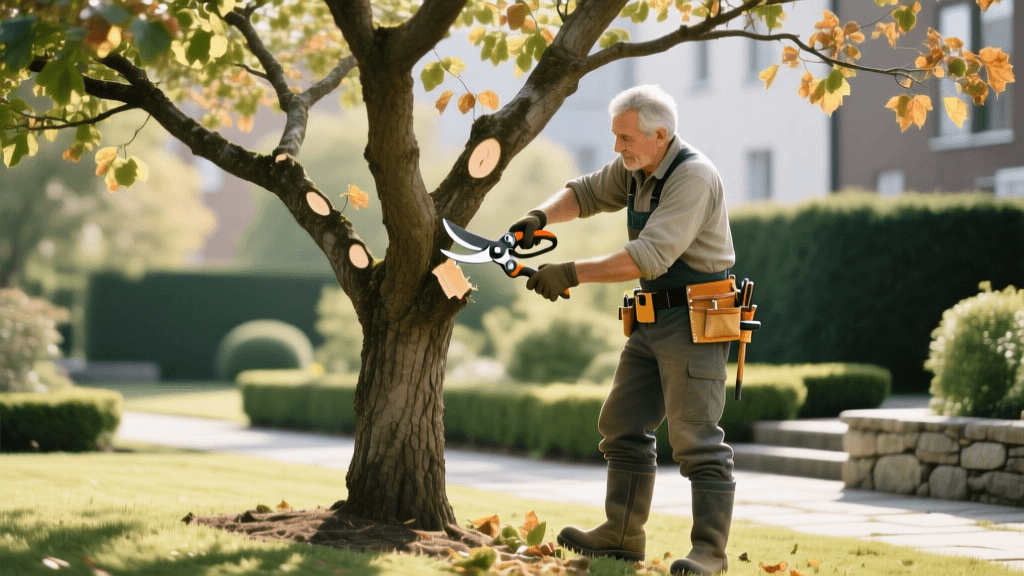
When And How To Prune Trees For Healthy Growth
Pruning makes a real difference for a tree's health, shape, and safety. Done right and at the right time, it helps branches grow strong, keeps disease in check, and can add decades to a tree's life. But pruning at the wrong time—or doing it poorly—can open the door to pests and disease, stress the tree, and cause messy, weak regrowth that throws off the whole canopy. Knowing how trees actually respond to cuts—not just how to make them—is what keeps a landscape looking good without constant fixes.
The Biology Behind Pruning and Tree Response
Trees don’t heal wounds like animals do. Instead, they wall off damaged areas—a process Dr. Alex Shigo described as CODIT (Compartmentalization of Decay in Trees). When you prune, the tree builds chemical and physical barriers around the cut. How well and how fast it does that depends on its energy stores, the time of year, and how clean the cut is.
A flush cut—where you slice right through the branch collar—wipes out the tree’s main defense zone and slows down compartmentalization. The International Society of Arboriculture (ISA) says in its 2021 Best Management Practices that proper cuts should land just outside the branch bark ridge and collar, leaving that collar tissue intact. It holds the specialized cells needed to close the wound. In studies on oak and maple, keeping the collar reduced decay spread by more than 60% compared to flush cuts.
Energy matters too. Trees store carbs in their roots, trunk, and branches during the growing season. Pruning right after leaves come out in spring—when the tree has just used up its reserves to push new growth—puts real strain on it. That’s why timing isn’t guesswork—it lines up with how trees actually use energy.
Growth Rates and How They Affect Pruning Frequency
Different trees need different pruning schedules. A silver maple (Acer saccharinum) can shoot up 3 to 5 feet a year, so it’s quick to develop crossing branches or weak structure. A white oak (Quercus alba) grows only 1 to 1.5 feet a year, so it takes longer to run into those issues. Pruning frequency should match how fast the tree grows—not one size fits all.
The following table lists common landscape trees, their average annual growth rates, and when to prune them:
| Tree Species | Avg. Growth Rate (ft/year) | Recommended Pruning Interval | Best Pruning Season |
|---|---|---|---|
| Silver Maple (Acer saccharinum) | 3–5 | Every 2–3 years | Late winter (dormant) |
| Red Oak (Quercus rubra) | 2–2.5 | Every 3–5 years | Late winter; avoid April–July |
| White Oak (Quercus alba) | 1–1.5 | Every 5–7 years | Late winter (dormant) |
| Eastern White Pine (Pinus strobus) | 2–3 | Every 3–4 years | Late winter to early spring |
| Flowering Dogwood (Cornus florida) | 1–1.5 | Every 3–5 years | After flowering (late spring) |
| Lombardy Poplar (Populus nigra) | 5–8 | Annually | Late winter (dormant) |
| American Elm (Ulmus americana) | 3–4 | Every 2–3 years | Late fall to winter |
Trees like Lombardy poplar grow fast and often develop narrow, weak branch angles. They benefit from annual dormant-season pruning to remove co-dominant leaders and crossing branches before those problems get serious. Slower growers like white oak can go longer between prunings, but they still need attention early on—structural pruning in the first 10 to 15 years sets up the tree for the next hundred.
Pruning Timing by USDA Hardiness Zone
The USDA Plant Hardiness Zone Map splits North America into 13 zones based on average winter lows. These zones help predict when trees wake up in spring and shut down in fall—the two big transitions that define the best window for most pruning.
Cold Climates: Zones 3–5
Zones 3 through 5 cover much of the upper Midwest, New England, and northern Great Plains. Trees stay dormant deep into late winter and early spring. For most deciduous trees, the sweet spot is late February to mid-March—after the worst cold passes but before buds start to swell. Cutting in deep cold (below 0°F) can split bark at the cut site. Pruning too close to bud break forces the tree to juggle wound response and new growth at once.
The University of Minnesota Extension advises homeowners in zones 3 and 4 to wait until daytime temps stay above 20°F before making major pruning cuts on hardwoods. For conifers, late winter works best—but light shaping is okay in midsummer once new growth firms up.
Transitional Climates: Zones 6–7
Zones 6 and 7 stretch across the Mid-Atlantic, parts of the Midwest, Pacific Northwest lowlands, and the upper South. Trees here usually break dormancy late February to early March. The dormant pruning window is tighter—roughly January through mid-February—but milder winters mean wounds start closing faster.
Oaks are the big exception in zones 6 and 7. Oak wilt, caused by Bretziella fagacearum, spreads through sap beetles active from April to July. Texas A&M Forest Service’s 2022 guidelines say oaks in affected areas shouldn’t be pruned between April 1 and July 31. If storm damage forces pruning in that window, paint every cut right away with a pruning sealant—one of the few cases where arborists actually recommend wound dressings.
Warm and Subtropical Climates: Zones 8–11
Zones 8 through 11 include the Gulf Coast, Florida, Southern California, and Hawaii. Many trees here never fully go dormant. Timing depends more on growth cycles, bloom times, and pest activity than on dormancy. Tropical and subtropical species can handle light pruning year-round, but heavy structural work goes best in the dry season—when fungal disease pressure is lowest.
The University of Florida IFAS Extension notes that in zone 9 and warmer, live oaks (Quercus virginiana) do best when pruned December through February—when beetle activity dips and growth slows. Palms should only lose dead or dying fronds. Cutting too many green fronds—sometimes called “hurricane cutting”—weakens the trunk and lowers wind resistance.
Root Spread, Soil Disturbance, and Pruning Connections
Most people think of pruning as something that happens up in the air, but what you do to the canopy directly affects the roots. Roots usually stretch 1.5 to 3 times the radius of the canopy—and in species like American elm or silver maple, they can reach 4 to 7 times that far in open soil. A silver maple with a 30-foot-wide canopy may have roots stretching 45 to 90 feet from the trunk.
When you take off a big chunk of the canopy, you cut the tree’s ability to make food—and that means less energy going to the roots. Bartlett Tree Research Laboratories found in 2019 that removing more than 25% of a tree’s live crown in one session can slash fine root production by up to 40% the next growing season. That’s where the “25% rule” comes from—don’t take off more than a quarter of the live crown at once.
"Proper pruning is an investment in a tree's structural integrity and longevity. The goal is never to simply reduce size, but to guide the tree's natural form while removing only what is necessary for health and safety." — International Society of Arboriculture, Best Management Practices for Pruning, 2021
Root spread ratios also matter if you’re planning construction, hardscaping, or digging near trees. Cutting or compacting roots inside the critical root zone—generally 1 foot out from the trunk for every inch of trunk diameter—can unbalance a tree and raise the risk of wind throw. A tree with a 12-inch trunk has a critical root zone about 12 feet wide. If a tree has recently lost roots, prune its canopy lightly—to avoid overloading a root system already struggling to keep up.
Pruning Techniques and ISA Standards
The International Society of Arboriculture (ISA) sets the standard for arboricultural practice in North America and beyond. Its Certified Arborist credential, held by over 30,000 professionals worldwide as of 2023, requires hands-on knowledge of pruning biology, technique, and safety. If you hire someone to prune your trees, checking for ISA certification is one of the best ways to know the job will be done right.
The Four Core Pruning Cut Types
ISA standards identify four main types of pruning cuts, each with a specific role:
- Reduction cuts — Shorten a branch back to a lateral that’s at least one-third the diameter of the branch being removed. Used to scale back height or spread while keeping the tree’s natural shape.
- Removal cuts — Take off an entire branch at its base—either at the trunk or where it joins a parent branch. Used for dead, diseased, or structurally unsound wood.
- Heading cuts — Cut a branch back to a stub or a lateral smaller than one-third its diameter. Usually avoided except in special cases like pollarding, since they tend to spark dense, weak regrowth.
- Thinning cuts — Pull selected branches from throughout the canopy to let in more light and air—without shrinking the overall size.
Heading cuts get misused more than any other type. “Topping”—making heading cuts all over the canopy—triggers fast-growing epicormic sprouts (water sprouts). These attach only to the outer wood, not the stronger inner wood, making them easy to snap off in wind or ice. ISA’s position statement on topping, updated through 2022, calls it an unacceptable practice that harms tree structure and health long-term.
Tools, Sanitation, and Wound Care
Using the right tool—and keeping it clean—is basic but vital. Hand pruners handle branches up to ¾ inch thick. Loppers reach farther and cut up to 2 inches. Pruning saws handle anything bigger. Chainsaws belong on branches over 4 to 5 inches—and require training and safety gear.
Cleaning tools between cuts is especially important on trees prone to bacterial or fungal disease. Fire blight (Erwinia amylovora) in apple and pear trees, for example, can hitch a ride from infected to healthy tissue on dirty blades. A 10% bleach solution or 70% isopropyl alcohol works well. Purdue University Extension recommends sterilizing tools between every cut if fire blight is known or suspected.
Structural Pruning for Young Trees
The cheapest, smartest pruning you’ll ever do is on young trees—during their first 10 to 15 years. Structural pruning at this stage—choosing a main leader, spacing scaffold branches, and taking out co-dominant stems—doesn’t cost much in time or money, but it avoids expensive, risky problems later.
The aim is to build a strong framework: one clear central leader (unless the species naturally grows multi-stemmed), scaffold branches spaced 18 to 24 inches apart up the trunk, and branch angles wider than 45 degrees. Narrow V-shaped crotches with included bark—where bark gets trapped between two competing stems—are a top cause of branch failure in mature trees. Fixing those while the stems are still under 2 to 3 inches in diameter is simple. Waiting makes it harder—and riskier.
- In year 1–3 after planting, stick to removing dead, damaged, or crossing branches. Hold off on heavy structural work until the tree settles in.
- In years 3–6, start reinforcing the central leader. Remove competing leaders with reduction cuts—not flush cuts to the trunk.
- In years 6–10, set permanent scaffold branches. Gradually remove temporary branches (the ones kept to shade the lower trunk and build trunk thickness), taking out no more than one-third per year.
- In years 10–15, the basic structure should be locked in. Shift to maintenance: clearing dead wood, managing density, and fixing any new structural issues.
Research from the Urban Forest Ecosystems Institute at Cal Poly San Luis Obispo shows trees that got proper structural pruning in their first decade needed half as much corrective pruning later—and had far fewer branch failures—than trees left unpruned. Early pruning is one of the clearest examples of preventive care paying off for decades.