Lawn Care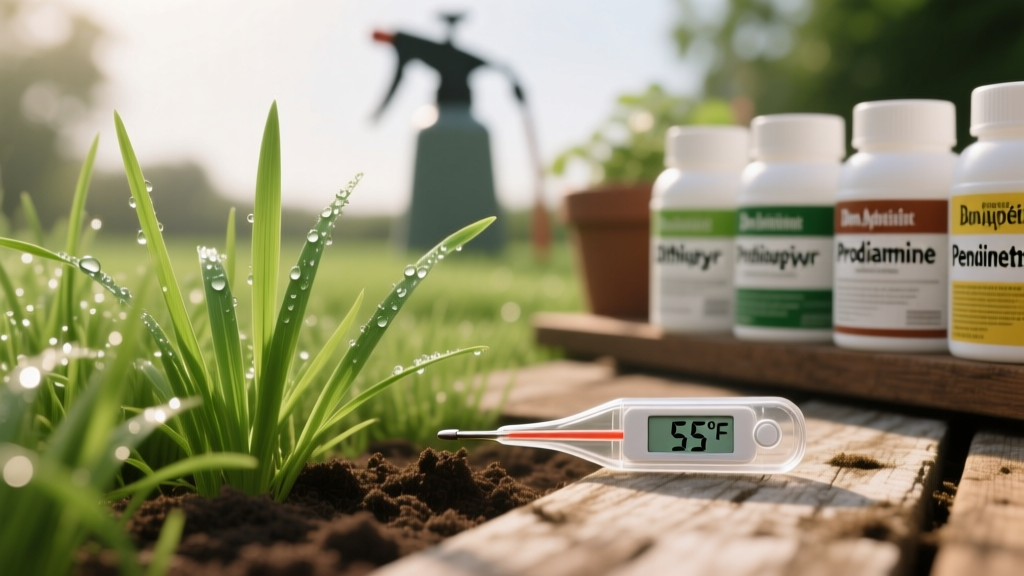
When to Apply Pre-Emergent Herbicide for Crabgrass
Emily WatsonPublished
The Science of Crabgrass Germination
Crabgrass (Digitaria sanguinalis) is a notorious summer annual weed that plagues lawns across the United States. Because it is an annual plant, it completes its entire life cycle in a single growing season, germinating in the spring, thriving in the heat of summer, producing thousands of seeds, and dying off in the fall. The most effective way to combat this invasive grass is not by killing it after it appears, but by preventing it from ever sprouting. This is where pre-emergent herbicides become the cornerstone of any professional-grade lawn care program.
However, the success of a pre-emergent application relies almost entirely on timing. Apply it too early, and the chemical barrier may break down before the main flush of crabgrass seeds germinate. Apply it too late, and the seeds will have already sprouted, rendering the pre-emergent completely useless. According to the University of Minnesota Extension, understanding the environmental triggers for crabgrass germination is the first step toward a pristine, weed-free lawn.
The Golden Rule: Soil Temperature Timing
The single most critical factor in determining when to apply your pre-emergent herbicide is soil temperature, not the calendar date and not the air temperature. Crabgrass seeds remain dormant in the soil until the conditions are optimal for survival. Scientific studies and turfgrass management programs universally agree that crabgrass germination begins when the soil temperature at a depth of one to two inches reaches 55°F (12.7°C) for four to five consecutive days.
To track this accurately, you should invest in a basic soil thermometer. Insert the probe into the soil at a depth of one inch in a shaded area of your lawn to get a baseline reading, and then check a sunny area, as crabgrass often germinates first in thin, sun-baked patches of turf. Alternatively, you can use the GreenCast Soil Temperature Map, an industry-standard tool provided by Syngenta that tracks real-time soil temperatures across the country based on your specific zip code.
The Forsythia Myth: Why Phenology is Flawed
For decades, a common piece of gardening folklore suggested that the perfect time to apply pre-emergent was when forsythia bushes bloomed or when dogwood trees began to bud. While this phenological indicator roughly correlates with spring warming, it is highly unreliable due to localized microclimates, varying spring weather patterns, and the specific species of forsythia in your yard. Relying on soil temperature data removes the guesswork and ensures your chemical barrier is established exactly when the crabgrass seeds are preparing to sprout.
Regional Timing Guide for Pre-Emergent Application
Because soil temperatures warm at different rates depending on your geographic location, the calendar window for application shifts dramatically from south to north. Below is a general timing guide to help you anticipate your application window. Always defer to your local soil temperature readings over these estimated calendar dates.
| Geographic Region | Typical Application Window | Target Soil Temp (1-inch depth) | Common Spring Indicator |
|---|---|---|---|
| Deep South (Zone 8-10) | Mid-February to Early March | 55°F for 4+ days | Early spring warm spells |
| Southeast / Mid-Atlantic (Zone 7) | Early March to Mid-March | 55°F for 4+ days | Forsythia bloom (coincidental) |
| Transition Zone (Zone 6) | Mid-March to Early April | 55°F for 4+ days | Dogwood bud swell |
| Midwest / Northeast (Zone 4-5) | Early April to Late April | 55°F for 4+ days | Soil thaw and spring rains |
| Pacific Northwest | March to Early April | 50°F - 55°F | End of heavy spring rains |
Choosing the Right Pre-Emergent Active Ingredient
Not all pre-emergents are created equal. The active ingredient you choose will dictate how early you need to apply, how long the residual control lasts, and whether you have any leeway if you miss the initial germination window. Penn State Extension recommends selecting a product based on your specific lawn maintenance schedule and the severity of your historical crabgrass pressure.
1. Prodiamine (e.g., Barricade, Resolute)
Prodiamine is a highly effective, long-lasting pre-emergent that works by inhibiting root development in germinating seeds. It is known for its extended residual control, often lasting up to 6 to 8 months depending on the application rate. Because it lasts so long, it is best applied slightly earlier in the spring window. Application Rate: For a standard 65 WG (wettable granule) formulation, apply between 0.5 to 1.0 ounces per 1,000 square feet for liquid applications, or follow the specific granular carrier rates on the product label.
2. Dithiopyr (e.g., Dimension)
Dithiopyr is unique among pre-emergents because it offers early post-emergent activity. If you miss the strict 55°F soil temperature window and crabgrass has just begun to sprout (up to the 1-tiller stage of growth), Dithiopyr will still kill the young seedlings while providing a residual barrier against future germination. This makes it the ultimate 'insurance policy' for homeowners who tend to apply their lawn treatments a few weeks late. Application Rate: Typically applied at 0.5 to 0.75 fluid ounces per 1,000 square feet for liquid formulations.
3. Pendimethalin (e.g., Pendulum, Scotts Halts)
Pendimethalin is a widely available, budget-friendly option commonly found in big-box store granular products. It provides solid pre-emergent control but has a shorter residual lifespan than Prodiamine, usually breaking down after 8 to 10 weeks. If you use Pendimethalin, you must be precise with your timing, and you may require a second application in late spring to prevent late-summer crabgrass flushes.
The Split Application Strategy
For lawns with severe, historic crabgrass infestations, a single spring application may not provide complete season-long control. Turfgrass professionals often utilize a 'split application' strategy. Instead of applying the full annual rate of pre-emergent in early spring, they apply half the rate when soil temperatures reach 55°F, and the second half roughly 6 to 8 weeks later. This approach refreshes the chemical barrier in the soil just as the pre-emergent begins to naturally degrade from microbial activity and UV exposure, ensuring protection well into the hot months of July and August when late-season crabgrass can still germinate.
Application Best Practices and Watering In
Timing your application perfectly is only half the battle; proper application technique is equally vital. Pre-emergent herbicides must be moved from the soil surface down into the top inch of the soil profile where the weed seeds reside. If left on the surface, the chemical will degrade rapidly in sunlight and fail to create the necessary barrier.
- Mow and Rake: Before applying, mow your lawn slightly lower than usual and rake up any debris or thick thatch. This ensures the product reaches the soil surface rather than getting trapped in dead organic matter.
- Calibrate Your Equipment: Whether using a rotary broadcast spreader for granular products or a backpack sprayer for liquids, calibration is essential. Walking too fast will result in under-application, leaving gaps in your chemical barrier where crabgrass will inevitably break through. Walking too slow can cause turfgrass phytotoxicity (chemical burn).
- Watering In: Within 48 hours of application, your lawn must receive approximately 0.5 inches of water. This can come from natural rainfall or manual irrigation. This crucial step 'activates' the pre-emergent, washing it off the grass blades and into the soil profile to establish the barrier.
The Overseeding Conflict: Spring Lawn Repair
One of the most significant drawbacks of traditional pre-emergent herbicides is that they do not discriminate between weed seeds and desirable turfgrass seeds. If you plan to overseed your lawn in the spring to repair bare patches or winter damage, you cannot use standard pre-emergents like Prodiamine or Dithiopyr. Doing so will prevent your expensive grass seed from germinating.
If spring overseeding is a priority, you have two options. First, you can skip the pre-emergent and rely on manual weeding and post-emergent herbicides later in the summer. Second, you can use a specialized, more expensive pre-emergent containing the active ingredient Siduron (commonly known as Tupersan), which uniquely suppresses crabgrass while allowing cool-season grass seeds like Kentucky Bluegrass and Fescue to germinate safely. Alternatively, the active ingredient Mesotrione (Tenacity) can be used at the time of seeding for certain grass types, though it requires careful adherence to label instructions regarding grass species compatibility.
Summary: Your Spring Action Plan
To achieve a lawn completely free of crabgrass, abandon the calendar and start monitoring your soil. Purchase a soil thermometer, track the 55°F threshold at a one-inch depth, and select an active ingredient that matches your application habits. Whether you choose the long-lasting residual of Prodiamine or the forgiving post-emergent traits of Dithiopyr, ensuring the product is applied before germination and watered in immediately will save you countless hours of frustrating weed-pulling in the heat of August.