Pest Control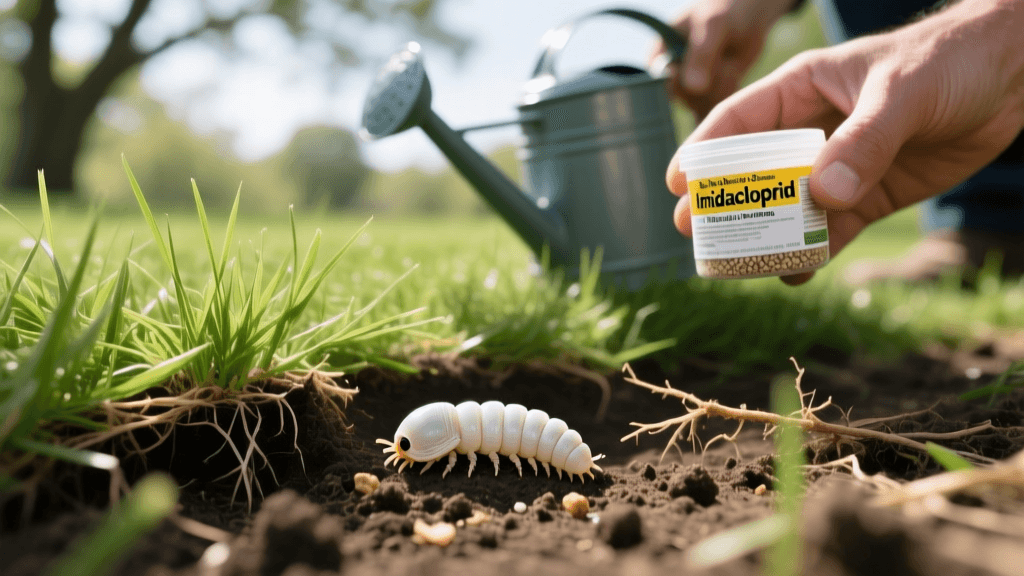
Expert White Grub Control: Timing and Best Treatments
Understanding the White Grub Threat in Turfgrass
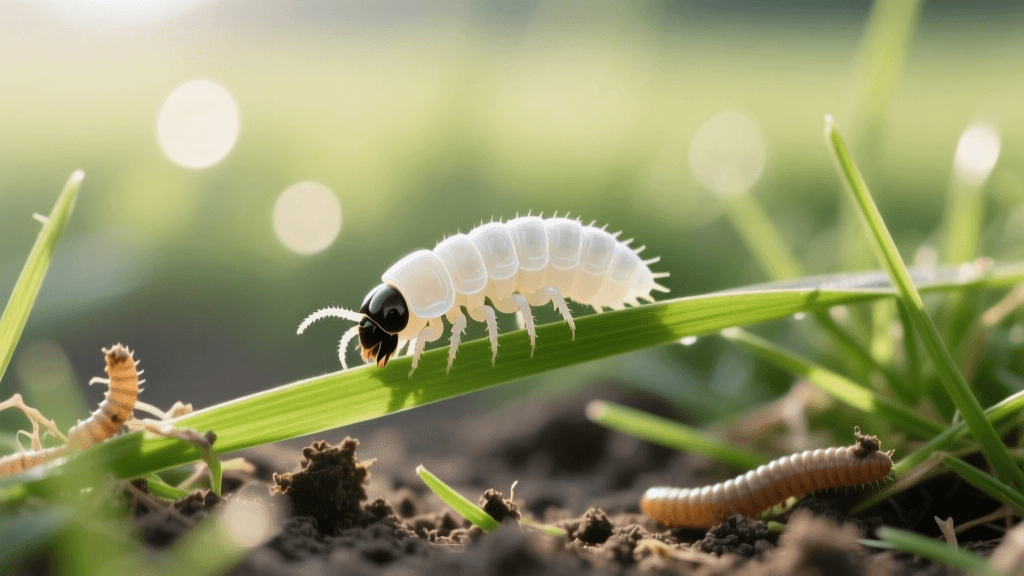
White grubs represent one of the most destructive and costly pest challenges for residential and commercial lawns across North America. These C-shaped, cream-colored larvae belong to various scarab beetle species, including the Japanese beetle, European chafer, June beetle, and Oriental beetle. Feeding aggressively on the root systems of turfgrass, grubs sever the plant from its nutrient and water supply, leading to large, irregular patches of dead, easily rolled-back sod. Furthermore, the presence of grubs often attracts secondary wildlife damage from skunks, raccoons, and crows, which will tear up a lawn overnight to forage for the protein-rich larvae.
Effective grub management requires a shift away from reactive, calendar-based spraying and toward a strategic Integrated Pest Management (IPM) approach. As a senior turf care specialist, I always emphasize to homeowners and lawn care operators that understanding the insect life cycle and matching the correct active ingredient to the specific larval stage is the cornerstone of successful eradication and prevention.
The White Grub Life Cycle: Timing is Everything
To control grubs, you must understand their developmental stages. Adult beetles typically emerge in early summer (June to July) to mate and lay eggs in the soil. These eggs hatch in late July to early August, producing first-instar larvae. These young grubs are small, highly active, and feed aggressively near the soil surface before moving deeper into the soil profile to overwinter as mature third-instar larvae.
This life cycle dictates our chemical and biological strategies. Preventative insecticides target the eggs and early-instar larvae when they are most vulnerable. Curative insecticides, on the other hand, are designed to kill the larger, more resilient late-instar grubs that are actively damaging the turf in late summer and early fall.
Conducting a Grub Survey Before Treatment
Before applying any product, experts recommend conducting a simple grub count survey to determine if treatment is economically and ecologically justified. Not every lawn requires annual grub control.
- Step 1: Use a sharp spade or a specialized turf cup-cutter to cut a one-foot by one-foot square of sod (or a 6-inch diameter circle) in multiple areas of the lawn, especially near the edges of damaged patches.
- Step 2: Peel back the turf and manually sift through the top two inches of soil.
- Step 3: Count the number of grubs. A healthy, well-irrigated lawn can generally tolerate up to 5 to 10 grubs per square foot without showing visible damage. If your count exceeds 10 grubs per square foot, intervention is highly recommended.
Preventative vs. Curative Grub Control Strategies
Choosing between a preventative and curative approach depends on the time of year, the history of your lawn, and your environmental preferences. Preventative products offer long residual control and are generally safer for non-target organisms, while curative products act fast to stop active damage.
| Active Ingredient | Trade Name Examples | Type | Application Window | Target Stage | Est. Cost / 1k sq ft |
|---|---|---|---|---|---|
| Chlorantraniliprole | Acelepryn, Scotts GrubEx | Preventative | April - Early June | Eggs / Early Instar | $0.08 - $0.12 |
| Imidacloprid | Merit, Bayer Advanced | Preventative | June - Mid-July | Eggs / Early Instar | $0.05 - $0.09 |
| Trichlorfon | Dylox, Bayer 24-Hour Grub Killer | Curative | Late Aug - October | Late Instar / Active | $0.10 - $0.15 |
| Hb Nematodes | BioLogic, Arbico Organics | Biological | Late Aug - Sept | Active Grubs | $0.15 - $0.25 |
Expert Application Best Practices for Maximum Efficacy
Even the most expensive, top-tier active ingredient will fail if applied incorrectly. Turf entomologists consistently point out that application errors, rather than chemical resistance, are the primary cause of grub control failures.
The Critical Importance of Watering-In
Grubs live in the soil, not on the grass blades. Whether you are applying a liquid spray or a granular formulation, the active ingredient must be moved past the thatch layer and into the top two inches of the root zone. You must irrigate the lawn immediately after application with at least 0.25 to 0.5 inches of water. If you are using a liquid spray, adding a non-ionic surfactant can help the chemical penetrate hydrophobic thatch layers. Failing to water in a granular product like Trichlorfon (Dylox) will result in the chemical degrading in the sunlight and thatch before it ever reaches the target pest.
Calibration and Uniform Coverage
When using a rotary or drop spreader for granular preventatives like Chlorantraniliprole, calibrate your equipment to ensure you are applying the exact rate listed on the label. Over-application is a waste of money and increases environmental runoff risks, while under-application leaves pockets of surviving grubs that will eventually migrate and damage the turf. For liquid applications, use a flat-fan nozzle and maintain a steady walking pace to ensure uniform distribution without overlapping or skipping.
Organic and Biological Alternatives
For lawn care professionals and homeowners looking to minimize synthetic pesticide use, biological controls offer a highly effective, environmentally responsible alternative within an IPM framework.
- Beneficial Nematodes (Heterorhabditis bacteriophora): These microscopic worms naturally seek out and infect white grubs, releasing bacteria that kill the host within 48 hours. Nematodes must be applied in the late summer when grubs are active, and the soil must be kept consistently moist for at least a week post-application to ensure nematode survival. They are highly sensitive to UV light, so apply them in the early evening.
- Milky Spore (Paenibacillus popilliae): This is a naturally occurring bacterium specifically targeting Japanese beetle grubs. While it is a popular organic choice, experts note that it can take three to five years to establish in the soil to provide meaningful control, making it a long-term investment rather than a quick fix for an active outbreak. Furthermore, it is entirely ineffective against European chafer or June beetle grubs.
Cultural Practices and Lawn Resilience
A robust, deeply rooted lawn can withstand significantly higher grub populations than a weak, shallow-rooted one. Raising your mowing height to 3.5 or 4 inches encourages deeper root growth, providing a buffer against root-feeding insects. Additionally, avoiding excessive nitrogen fertilization in early summer reduces the lush, succulent growth that attracts egg-laying adult beetles. Deep, infrequent watering (providing 1 to 1.5 inches of water per week) trains roots to grow downward, making them harder for shallow-feeding early-instar grubs to completely destroy.
Expert Citations and Extension Guidelines
The strategies and thresholds outlined in this guide are heavily informed by ongoing turfgrass entomology research. According to Michigan State University Extension, preventative applications of Chlorantraniliprole applied in May or early June provide excellent control of all major grub species while posing a significantly lower risk to pollinators and earthworms compared to older neonicotinoid chemistries. Furthermore, MSU turf expert Dr. David Smitley emphasizes that curative treatments like Trichlorfon should only be used as a rescue treatment in late summer when grub surveys confirm damaging populations are actively present, thereby preventing unnecessary chemical introductions into the soil ecosystem.
By combining proper scouting, precise timing, accurate calibration, and a preference for reduced-risk or biological active ingredients, you can protect your turfgrass from white grubs effectively and sustainably.