Pest Control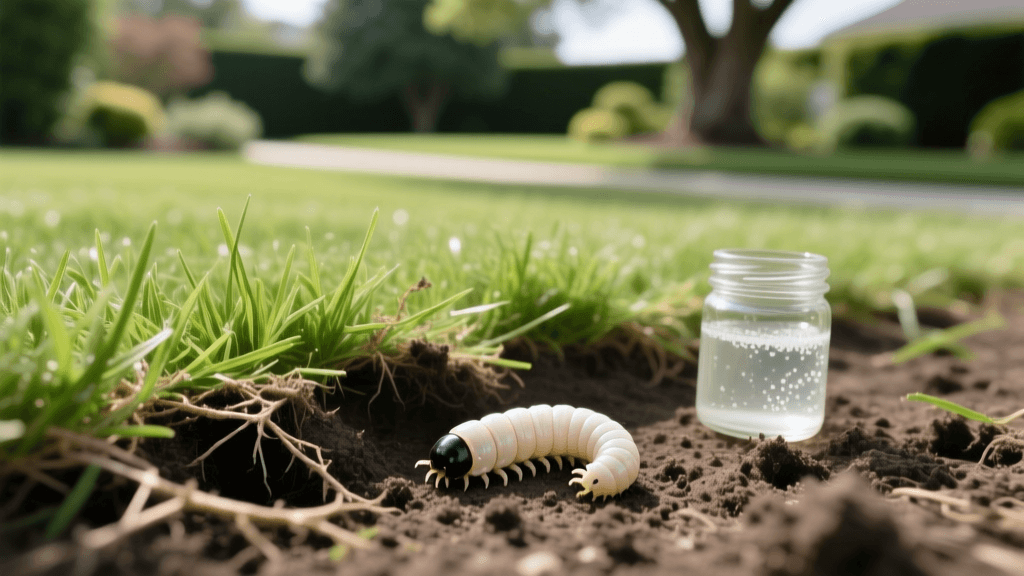
Complete White Grub Identification and Treatment Guide
The Hidden Threat: Understanding White Grubs
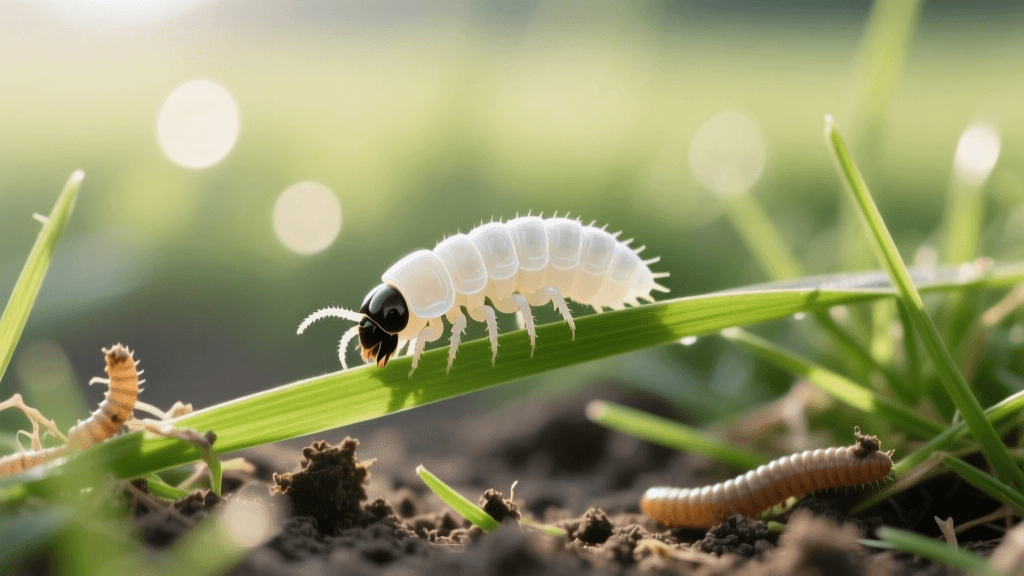
White grubs are the larval stage of various scarab beetles, including Japanese beetles, European chafers, and June bugs. These C-shaped, creamy-white insects live just beneath the soil surface, feeding aggressively on the roots of turfgrass. Because the damage occurs underground, homeowners often do not notice a problem until large, irregular brown patches appear in late summer or early fall. By this time, the root system has been severed, leaving the turf unable to absorb water or nutrients. Effective pest control requires a proactive approach to problem diagnosis, accurate species identification, and targeted treatment strategies.
Diagnosing White Grub Damage in Your Lawn
Before applying any chemical or organic controls, you must confirm that grubs are the actual cause of your lawn's decline. Drought stress, fungal diseases like brown patch, and dog urine spots can mimic grub damage. Follow these diagnostic steps to confirm an infestation:
1. The Tug Test
Walk to the edge of a brown or dying patch of grass where it meets healthy, green turf. Grab a handful of the grass and pull gently. If the turf rolls back like a loose carpet with no visible roots attached, grubs have likely severed the root system. You may also notice a spongy feeling when walking across the affected area.
2. The Soap Drench Test
To force grubs to the surface for a visual count, mix 2 tablespoons of liquid dish soap (lemon-scented works best) into 1 gallon of water. Pour this solution over a 1-square-yard area at the margin of the damaged patch. Wait 10 to 15 minutes. The soap irritates the grubs' respiratory systems, forcing them to the surface where you can easily count them.
3. The Shovel Test
Cut a 1-foot by 1-foot square of sod with a spade, peeling it back to a depth of about 2 to 3 inches. Sift through the soil and roots, counting every grub you find. Replace the sod and water it immediately. Repeat this process in three to four different areas of your lawn to get an accurate population average.
Identifying the Culprit: Common Grub Species
Not all grubs are the same. Identifying the specific species helps predict their lifecycle and determines the optimal timing for treatment. Entomologists identify grubs by examining the 'raster pattern'—the arrangement of tiny bristles and hairs on the underside of the grub's posterior (the end opposite the head).
| Grub Species | Raster Pattern | Adult Emergence | Primary Damage Season |
|---|---|---|---|
| Japanese Beetle | V-shape bristle pattern | Late June to July | August to October |
| European Chafer | Y-shape (zipper) pattern | Late May to June | September to November |
| June Bug (Phyllophaga) | Parallel rows of bristles | April to May | Fall and Early Spring |
| Masked Chafer | Random, scattered bristles | June to July | August to October |
Integrated Pest Management (IPM) Thresholds
A common mistake in lawn care is treating for grubs when populations are too low to cause economic or aesthetic damage. A robust, well-maintained lawn can tolerate a surprising number of root-feeding insects. According to turfgrass experts at the Purdue University Extension, treatment is generally only recommended when populations exceed specific thresholds.
'A healthy, vigorously growing lawn can tolerate up to 5 grubs per square foot without showing significant damage. Treatment thresholds are typically set at 5 to 10 grubs per square foot for Kentucky Bluegrass and Fine Fescues, and up to 15 grubs per square foot for deep-rooted Tall Fescue lawns.' - Purdue University Entomology Department
If your shovel test reveals fewer than 5 grubs per square foot, focus on proper irrigation and fertilization rather than reaching for pesticides. Furthermore, secondary damage from foraging animals like skunks, raccoons, and crows digging for grubs often causes more aesthetic destruction than the insects themselves.
Curative vs. Preventative Treatment Options
Once you have diagnosed an active infestation that exceeds IPM thresholds, you must choose between preventative and curative controls based on the time of year and the size of the grubs.
Preventative Controls (Spring to Early Summer)
Preventative insecticides target newly hatched, first-instar grubs in mid-to-late summer. These products do not kill large, mature grubs or adult beetles. They must be applied before the eggs hatch and watered into the soil immediately.
- Chlorantraniliprole (e.g., Scotts GrubEx, Acelepryn): This is the gold standard for preventative care. It is highly effective, safe for pollinators when applied correctly, and has a long residual window. Apply between April and early June. Cost: Approximately $20 to $25 per 5,000 sq. ft. bag.
- Imidacloprid (e.g., Merit, Bayer Advanced 24-Hour Grub Killer): A neonicotinoid that works systemically. It has a shorter residual life than chlorantraniliprole and must be applied closer to the egg hatch, typically in late June to mid-July. Cost: $15 to $20 per 5,000 sq. ft.
Curative Controls (Late Summer to Fall)
If you missed the preventative window and discover large, actively feeding grubs in August or September, you need a fast-acting curative product. Curative treatments have a very short residual life (often just a few days) but knock down active populations rapidly.
- Trichlorfon (e.g., Dylox): This is the most effective curative chemical available to homeowners and professionals. It degrades quickly in the soil (within 3 to 7 days), making it useless as a preventative. Apply in late August or September when grubs are near the surface. Cost: $25 to $35 per 5,000 sq. ft. bag. Note: Trichlorfon is highly toxic to aquatic life; never apply near ponds or storm drains.
- Carbaryl (e.g., Sevin): An older curative option that is less effective on larger European chafer grubs but works on Japanese beetle larvae. It is highly toxic to earthworms and beneficial insects, so use it only as a last resort.
Organic and Biological Controls
For homeowners committed to organic lawn care, biological controls offer a sustainable, long-term solution, though they require patience and precise application conditions.
- Beneficial Nematodes (Heterorhabditis bacteriophora): These microscopic worms seek out grubs in the soil, enter their bodies, and release bacteria that kill the host within 48 hours. Nematodes are living organisms; they must be stored in a refrigerator, applied at dusk to avoid UV degradation, and watered in immediately. Cost: $30 to $50 per 10,000 sq. ft.
- Milky Spore (Bacillus popilliae): A naturally occurring bacterium that specifically targets Japanese beetle grubs. It takes 2 to 3 years to build up in the soil to effective levels, but once established, it can provide control for 10 to 15 years. It is ineffective against European chafers and June bugs.
Lawn Recovery and Prevention Strategies
Eradicating the grubs is only half the battle; you must also repair the damaged turf and alter the environment to make it less hospitable to future scarab beetle generations.
Repairing Severed Roots
If the turf has been detached from the soil but is still green, press the sod back down firmly with your feet or a lawn roller to re-establish soil-to-root contact. Water the area deeply and consistently for two weeks to encourage new root growth. If the grass is completely dead, rake out the debris, loosen the top 2 inches of soil, and overseed with a turf-type Tall Fescue or Kentucky Bluegrass blend. Apply a starter fertilizer (high in phosphorus, such as a 10-18-10 NPK ratio) to accelerate root development.
Cultural Prevention Tactics
Adult beetles prefer to lay their eggs in thin, stressed lawns with short grass. Implementing the following cultural practices will naturally reduce your lawn's susceptibility to grub infestations:
- Raise Your Mower Height: Keep your grass between 3.0 and 4.0 inches tall. Taller grass shades the soil, keeping it cooler and less attractive to egg-laying females.
- Deep, Infrequent Watering: Water your lawn deeply (1 to 1.5 inches per week) but infrequently. Frequent, shallow watering in July and August keeps the topsoil moist, creating the perfect incubator for grub eggs.
- Core Aeration: Aerate compacted lawns in the fall. This improves drainage, reduces thatch buildup (which can harbor pests), and promotes a deeper, more resilient root system capable of withstanding minor grub feeding.
Conclusion
White grubs are a formidable lawn pest, but they are entirely manageable when approached with a strategy rooted in proper diagnosis and Integrated Pest Management. By utilizing the soap drench test to confirm thresholds, identifying the specific scarab species, and timing your preventative or curative applications correctly, you can protect your turf without over-relying on broad-spectrum chemicals. Always consult your local university extension office for region-specific timing guides, as grub lifecycles vary significantly based on your local climate and hardiness zone.