Tree Care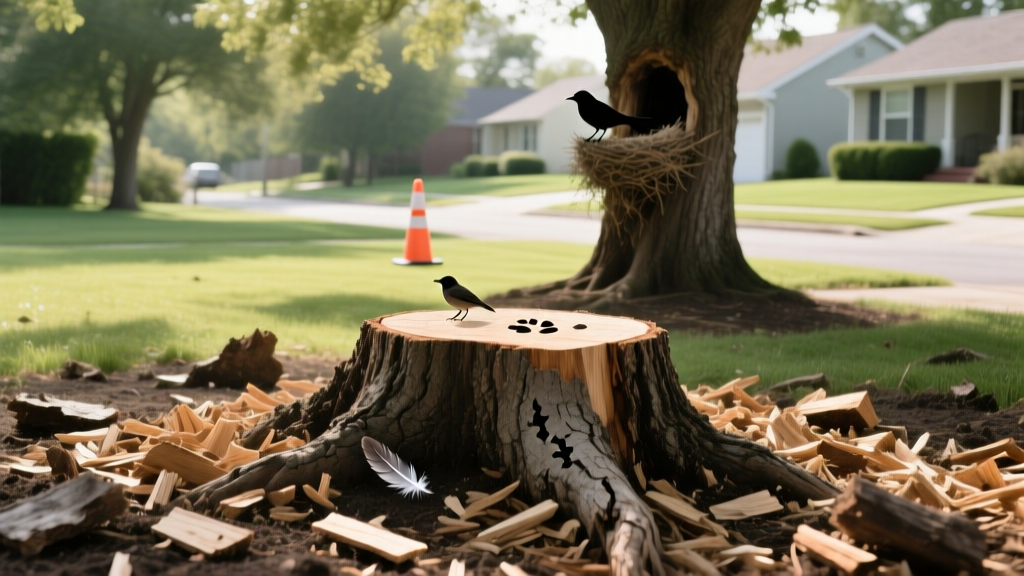
Tree Removal & Stump Grinding Costs 2026: Wildlife Factors
James MillerPublished
The Intersection of Tree Removal and Wildlife Management in 2026
When a hazardous, diseased, or dying tree must be removed from your property, the process is rarely as simple as firing up a chainsaw and grinding the stump down to the dirt. In 2026, ecological awareness and stringent environmental regulations have fundamentally changed how professional arborists approach tree felling. For homeowners actively managing yard animals or protecting local ecosystems, understanding the nuanced cost factors of tree removal and stump grinding is absolutely essential. Wildlife habitats, nesting seasons, and protected species can significantly alter your final estimate, turning a straightforward landscaping project into a complex ecological operation.
Trees are foundational pillars of local ecosystems. They provide critical shelter, food, and nesting sites for countless species of birds, mammals, and insects. When you decide to remove a tree, you are effectively dismantling a micro-habitat. Consequently, modern tree care companies must factor in wildlife surveys, seasonal restrictions, and humane animal exclusion techniques before a single branch is cut. This comprehensive guide breaks down the 2026 pricing landscape for tree removal and stump grinding, specifically through the lens of wildlife and yard animal management.
Base Tree Removal & Stump Grinding Costs in 2026
Before factoring in wildlife considerations, it is important to understand the baseline costs for standard tree removal and stump grinding in 2026. Over the past few years, the arboriculture industry has seen a shift toward advanced, battery-powered electric chippers and chainsaws. While these tools reduce noise pollution and carbon emissions—making them less disruptive to neighborhood wildlife—they have slightly increased the upfront equipment and service costs for tree care companies.
- Small Trees (Under 30 feet): $300 to $600. Typically includes species like dogwoods or redbuds. Stump grinding is usually an additional $75 to $150.
- Medium Trees (30 to 60 feet): $600 to $1,200. Includes maples, birches, and smaller oaks. Stump grinding ranges from $150 to $300 depending on the root flare diameter.
- Large Trees (60 to 100+ feet): $1,500 to $3,500+. Mature oaks, pines, and sycamores require heavy rigging and cranes. Stump grinding for these massive trunks can cost $300 to $600+.
Stump grinding is generally priced per inch of diameter, averaging $3 to $5 per inch in 2026. However, when wildlife is involved, these standard pricing models are frequently adjusted to accommodate ecological protections.
How Wildlife Impacts Your Removal Estimate
The presence of wildlife in or around your tree is one of the most significant variables in modern tree removal estimates. Arborists must navigate federal, state, and local laws designed to protect vulnerable species. Ignoring these regulations can result in massive fines, making professional wildlife assessment a mandatory line item on many 2026 invoices.
Nesting Birds and Federal Protections
Under the Migratory Bird Treaty Act, it is a federal offense to disturb, destroy, or remove the active nests of native migratory birds. If an arborist discovers an active nest during a pre-removal inspection, work must immediately halt until the nesting cycle is complete. In 2026, reputable tree services employ certified wildlife biologists or trained arborists to conduct pre-felling surveys. This survey typically adds $150 to $300 to your initial estimate. If a delay is required, you may also incur rescheduling fees or emergency hazard mitigation costs if the tree poses an immediate threat to your home.
Bat Roosts and Maternity Colonies
Bats are vital for insect control in your yard, consuming thousands of mosquitoes and agricultural pests nightly. Many states have implemented strict protections for bat maternity colonies, typically prohibiting tree removal between May and August. If a bat roost is identified in a dead snag or cavity tree, arborists must install one-way exclusion doors to allow bats to leave safely before the tree is felled. Bat exclusion and habitat relocation services add $400 to $800 to the project cost. In some cases, you may be required to install a certified bat house on your property as a mitigation measure, costing an additional $200 to $400.
Squirrels, Raccoons, and Yard Mammals
While squirrels, raccoons, and opossums are not federally protected, ethical tree care companies in 2026 prioritize humane yard animal management. Felling a tree with an active squirrel drey or raccoon den can result in orphaned young or aggressive, displaced animals invading your attic or crawlspace. Professional arborists will partner with licensed wildlife rehabilitators to safely evict or relocate these animals prior to removal. This humane exclusion process generally adds $250 to $500 to your total estimate but prevents severe property damage and ethical dilemmas down the line.
Stump Grinding vs. Ecological Snag Creation
Standard practice dictates that once a tree is felled, the stump is ground into mulch. However, from a wildlife management perspective, stump grinding destroys crucial subterranean habitats used by salamanders, ground-nesting bees, and beneficial fungi. The National Wildlife Federation actively encourages homeowners to leave dead wood in the landscape to support biodiversity.
Instead of traditional stump grinding, many eco-conscious homeowners in 2026 are opting for 'snag creation' or 'habitat carving.' This involves cutting the tree higher up (leaving a 10-to-15-foot trunk) and using chainsaws to carve artificial cavities, crevices, and perches into the remaining wood. This provides immediate housing for woodpeckers, owls, and nesting songbirds. While standard stump grinding costs around $150 to $300, professional habitat carving is a specialized service that typically costs $300 to $600. Alternatively, if the stump must be removed for landscaping reasons, arborists can slice the trunk into large 'habitat logs' and relocate them to a secluded corner of your yard to serve as a brush pile for rabbits and amphibians.
2026 Cost Breakdown: Standard vs. Wildlife-Inclusive Removal
The following table illustrates how wildlife management factors alter the financial scope of a medium-sized tree removal project (e.g., a 50-foot Oak) in 2026.
| Service Component | Standard 2026 Cost | Wildlife-Inclusive 2026 Cost |
|---|---|---|
| Pre-Removal Wildlife Survey | $0 | $150 - $300 |
| Medium Tree Felling (50 ft) | $800 - $1,200 | $800 - $1,200 |
| Squirrel/Raccoon Humane Exclusion | N/A | $250 - $500 |
| Stump Grinding (30-inch diameter) | $100 - $150 | $0 (Habitat Log Relocation) |
| Ecological Snag Carving (Alternative) | N/A | $350 - $600 |
| Estimated Total Range | $900 - $1,350 | $1,550 - $2,600 |
Post-Removal Yard Animal Management
Once the tree is removed and the stump is addressed, the sudden loss of canopy and habitat will force yard animals to seek new resources. This can lead to increased digging in your lawn, raids on your garden, or attempts to enter your home. To manage this transition in 2026, homeowners should implement proactive deterrence strategies immediately following the removal.
Consider installing motion-activated ultrasonic repellents or solar-powered sprinkler deterrents around the perimeter of the removal zone to discourage raccoons and deer from exploring the newly opened space. If you opted to leave habitat logs or a brush pile, ensure they are placed at least 30 feet away from your home's foundation to prevent attracting wood-boring insects or rodents too close to your structure. Additionally, planting native shrubs and groundcovers recommended by local extension offices will help restore the micro-habitat and provide ground-level cover for displaced songbirds and beneficial insects.
Hiring the Right Arborist for Wildlife-Sensitive Removal
Not all tree services are equipped to handle the ecological complexities of modern tree removal. When soliciting estimates in 2026, it is critical to hire an arborist who understands the intersection of tree care and wildlife management. Always verify that the company employs Certified Arborists through the International Society of Arboriculture (ISA). Furthermore, ask specific questions about their protocols for discovering active nests, their partnerships with local wildlife rehabilitators, and their familiarity with state-specific bat protection laws.
By investing in a wildlife-inclusive tree removal service, you are not only protecting yourself from severe federal and state fines but also actively participating in the conservation of your local ecosystem. While the upfront costs may be higher than a standard 'cut-and-grind' operation, the ecological benefits and peace of mind make it an invaluable investment for any environmentally conscious homeowner.
