Tree Care
Winter Tree Care: Protecting Your Landscape From Frost
Introduction to Winter Tree Stress and Seasonal Maintenance
As the vibrant colors of autumn fade and temperatures begin to plummet, many homeowners mistakenly believe that their landscape maintenance duties are over. However, winter is one of the most critical seasons for tree health. While deciduous trees enter a state of dormancy, they are far from invincible. The harsh realities of winter weather—including freezing temperatures, drying winds, heavy snow loads, and dramatic temperature fluctuations—can cause severe, sometimes irreversible damage to both young and mature trees. Implementing a proactive seasonal maintenance and care strategy is essential to ensure your trees survive the winter and thrive in the spring.
Winter tree care is not merely about reacting to damage after a storm; it is about fortifying your landscape against environmental stressors before they strike. From preventing winter desiccation in evergreens to guarding against sunscald on thin-barked species, understanding the specific vulnerabilities of your trees will dictate your seasonal care schedule. In this comprehensive guide, we will explore the hidden dangers of winter weather and provide actionable, step-by-step maintenance protocols to protect your valuable landscape investments.
Understanding the Hidden Dangers of Winter Weather
Winter Desiccation
One of the most common and devastating winter injuries is desiccation, often referred to as 'winter burn.' This occurs when trees lose moisture through their leaves or needles faster than their frozen root systems can absorb water from the soil. Evergreens, particularly broadleaf varieties like rhododendrons, hollies, and boxwoods, are highly susceptible. The symptoms often do not appear until early spring, manifesting as brown, crispy needle tips or scorched leaf margins. According to the Morton Arboretum, desiccation is exacerbated by harsh, drying winds and bright winter sun, which accelerate the transpiration process even when the ground is completely frozen.
Sunscald and Frost Cracking
Young trees and species with thin bark, such as maples, ashes, and fruit trees, are highly vulnerable to sunscald. On cold, clear winter days, the sun's radiant heat can warm the bark on the southwest side of the trunk, stimulating cellular activity. When the sun sets or clouds roll in, temperatures rapidly drop below freezing, killing the newly active cambium cells. This results in sunken, discolored, and eventually cracked bark. The University of Minnesota Extension notes that this extreme temperature fluctuation can also cause frost cracks—deep, vertical splits in the wood that expose the tree's interior to pathogens, decay fungi, and boring insects.
Late Fall Preparation: Watering and Mulching Protocols
Deep Hydration Before the Freeze
The foundation of winter tree care begins in late autumn. A well-hydrated tree is significantly more resilient to winter stress than a drought-stressed one. Soil moisture acts as an insulator, keeping the root zone warmer than dry soil. You must continue watering your trees deeply until the ground freezes solid.
- Newly Planted Trees (1-3 years): Provide 10 to 15 gallons of water per week. Use a slow-release watering bag or a soaker hose to ensure the water penetrates deeply into the root ball.
- Established Trees: Apply 1 inch of water per week, focusing on the drip line (the outer edge of the tree's canopy) where the most active feeder roots are located.
- Evergreens: Pay special attention to evergreens, as they continue to transpire moisture throughout the winter. Ensure the top 12 inches of soil remain consistently moist until the first hard freeze.
Proper Winter Mulching Techniques
Mulch is your tree's best defense against extreme temperature fluctuations and soil heaving (the freezing and thawing cycle that can push shallow roots out of the ground). However, improper mulching can be just as damaging as no mulch at all.
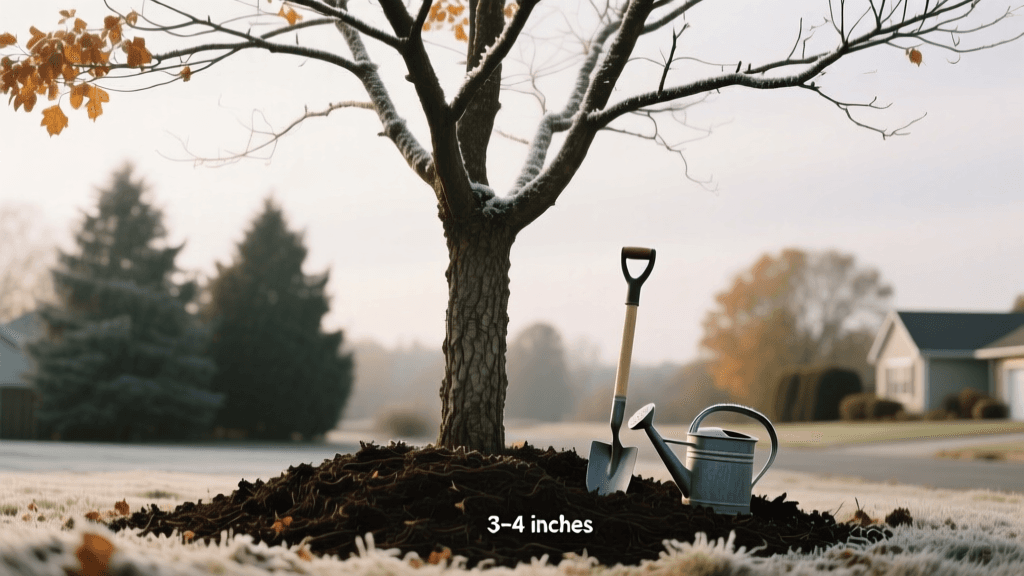
Apply a 2 to 4-inch layer of organic mulch, such as shredded hardwood or pine bark, in a wide ring around the base of the tree. The mulch ring should extend at least 3 feet from the trunk. Crucially, you must practice the 'donut method'—keep the mulch at least 3 to 4 inches away from the actual trunk of the tree. Piling mulch against the bark (volcano mulching) traps moisture, promotes bark rot, and creates a warm, inviting habitat for rodents that will chew through your tree's cambium layer during the winter.
Trunk Protection: Wrapping and Pest Deterrence
To combat sunscald and frost cracking, trunk wrapping is a highly effective, low-cost seasonal maintenance task. This is especially critical for trees planted within the last two to three years.
How to Wrap a Tree:
- Purchase commercial tree wrap (crepe paper or synthetic fabric designed for arboriculture). Do not use plastic tape or dark materials that absorb heat.
- Begin wrapping at the base of the trunk, just above the soil line.
- Wrap upward, overlapping each layer by about one-third of the wrap's width.
- Continue wrapping until you reach the lowest scaffold branches.
- Secure the top with a small piece of masking tape or a biodegradable tie. Never use wire or tight zip-ties, which can girdle the tree as it grows.
- Timing: Apply the wrap in late November and remove it promptly in early April. Leaving wrap on during the spring and summer traps moisture and invites fungal diseases and insect infestations.
Rodent Guarding: If voles, mice, or rabbits are prevalent in your area, tree wrap alone will not suffice. Install a cylinder of 1/4-inch galvanized hardware cloth around the base of the trunk. The mesh should be buried 2 inches into the soil and extend 18 to 24 inches above the expected snow line to prevent animals from chewing the bark.
Evergreen Care and Anti-Desiccant Applications
For broadleaf and some narrowleaf evergreens, chemical barriers can provide an extra layer of protection against winter desiccation. Anti-desiccant sprays, such as Wilt-Pruf or VaporGard, coat the foliage with a thin, waxy polymer that reduces moisture loss through the stomata.
Application Rules:
- Apply the anti-desiccant in late November or early December, after the trees have fully hardened off for winter but before the ground freezes.
- The temperature must be above 40°F (4°C) during application and remain above freezing for at least 24 hours afterward to allow the coating to cure properly.
- A second application in late January or early February is often necessary, as the product degrades under UV light over time.
- Never apply anti-desiccants to blue spruces or other conifers with a natural waxy bloom, as the spray will strip their natural protective coating and alter their color.
For evergreens exposed to harsh, prevailing winter winds or road salt spray, erecting a burlap windscreen is highly recommended. Drive wooden stakes into the ground on the windward side of the tree and staple heavy-duty burlap to the stakes, leaving the top open to allow for air circulation and snow shedding.
Managing Snow and Ice Loads Safely
Heavy, wet snow and ice storms can cause catastrophic structural failure in trees. While you cannot control the weather, you can manage how you interact with snow-laden trees. The International Society of Arboriculture (ISA) strongly advises against shaking snow or ice off tree branches. When covered in ice or heavy snow, branches become incredibly brittle. Shaking them or striking them with a broom or shovel can cause the branch to snap suddenly, posing a severe safety hazard and causing jagged wounds that tear the bark down the main trunk.
Instead, use a soft-bristled broom to gently brush upward on the underside of branches to relieve light, powdery snow loads. If branches are coated in solid ice, leave them alone and allow the ice to melt naturally. If a branch does break under the weight of a storm, do not attempt to prune it yourself if it is near power lines or requires a ladder. Hire an ISA Certified Arborist to make proper pruning cuts that will allow the tree to compartmentalize and heal the wound efficiently.
Winter Tree Protection Methods and Costs Breakdown
Budgeting for seasonal tree care ensures you have the right materials on hand before the first freeze. Below is a comparison chart detailing the most common winter protection methods, their target applications, and estimated costs.
| Protection Method | Target Tree Types | Estimated Cost | Application Timing |
|---|---|---|---|
| Commercial Tree Wrap | Thin-barked, young deciduous trees (Maple, Ash, Fruit) | $5 - $12 per roll | Late November (Remove in April) |
| Hardware Cloth Guard | All young trees in areas with high vole/rabbit populations | $15 - $25 per roll | October (Can remain year-round) |
| Anti-Desiccant Spray | Broadleaf and narrowleaf evergreens (Holly, Boxwood, Arborvitae) | $15 - $30 per gallon | Early December & Late January |
| Burlap Windscreen | Evergreens exposed to prevailing winds or road salt spray | $10 - $20 per 10ft roll | November (Remove in early spring) |
| Organic Hardwood Mulch | All trees (Crucial for newly planted specimens) | $4 - $8 per 2 cu. ft. bag | October to November |
Conclusion: A Proactive Approach to Seasonal Care
Winter tree care is an investment in the long-term health, safety, and aesthetic value of your property. By understanding the unique physiological stresses that trees face during the dormant season, homeowners can transition from reactive damage control to proactive landscape stewardship. Implementing a thorough late-fall watering schedule, applying mulch correctly, wrapping vulnerable trunks, and utilizing anti-desiccants will drastically reduce the incidence of sunscald, frost cracks, and winter burn. As you prepare your home for the cold months ahead, remember that your trees require a seasonal maintenance schedule just as much as your lawn or garden beds. With the right knowledge and a few inexpensive materials, you can ensure your landscape emerges from the frost vibrant, healthy, and ready for the spring growing season.