Tree Care
Winterizing Deciduous Trees: Hydration, Mulch, and Trunk Guards
The Hidden Dangers of Winter for Deciduous Trees
Deciduous trees may appear dormant when their leaves drop, but their root systems and vascular tissues remain vulnerable to extreme temperature fluctuations, desiccation, and physical damage. Winter injury is one of the leading causes of premature tree decline in urban and suburban landscapes. According to the University of Minnesota Extension, fluctuating winter temperatures cause the most significant stress, leading to frost cracks, root dieback, and sunscald. Preparing your trees before the ground freezes is not just an optional landscaping chore; it is a critical investment in their long-term health and structural integrity. This comprehensive guide details the exact steps, measurements, and products required to winterize your deciduous trees effectively.
The Fall Hydration Protocol: Combating Winter Desiccation
Many homeowners assume that trees do not need water once they drop their leaves. This is a dangerous misconception. Winter desiccation occurs when trees lose moisture from their twigs and buds to dry winter winds, but cannot replace it because the surrounding soil is frozen. Furthermore, well-hydrated soil retains heat significantly better than dry soil, protecting the critical root zone from deep freezing and frost heave.
Exact Watering Measurements and Timing
Continue watering your deciduous trees deeply until the ground freezes solid. The general rule of thumb, supported by arboricultural standards, is to provide 10 to 15 gallons of water per inch of trunk caliper (measured at knee height). For a newly planted tree with a 2-inch caliper, this means applying 20 to 30 gallons of water per week during dry autumn spells.
Use a deep root watering probe or a slow-drip soaker hose placed around the drip line (the outer edge of the tree's canopy). Watering should be done slowly over 2 to 4 hours to allow penetration to a depth of 12 to 18 inches, where the majority of the absorbing roots reside. Stop watering only when the top two inches of soil begin to freeze consistently in the late afternoon.
Winter Mulching: Insulation and Moisture Retention
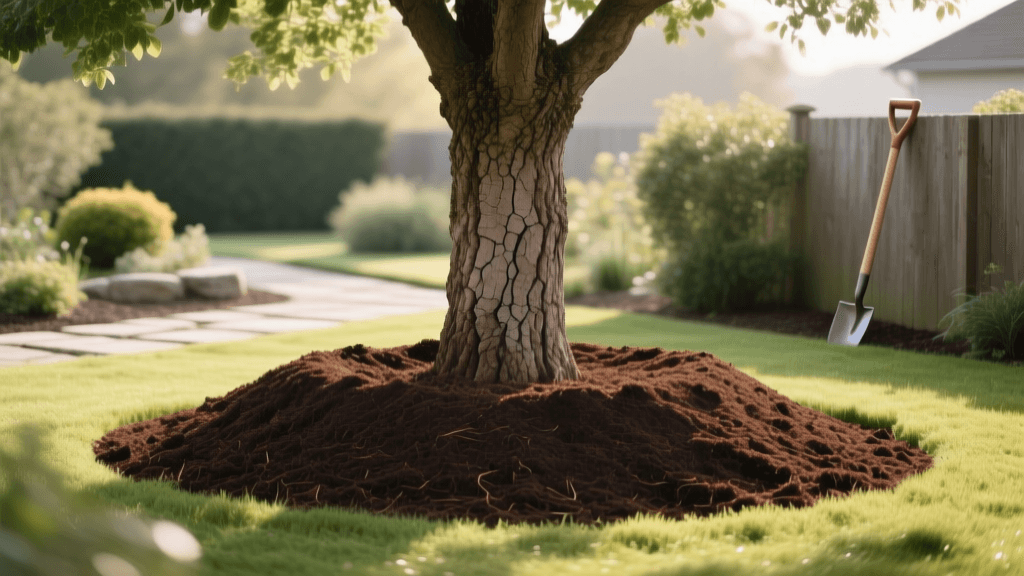
Mulch acts as a thermal blanket for the soil, moderating temperature extremes and preventing the freeze-thaw cycles that can push shallow roots out of the ground (a phenomenon known as frost heave). However, improper mulching can be just as detrimental as no mulch at all.
The 3-3-3 Mulching Rule
To properly insulate your trees, follow the industry-standard 3-3-3 rule:
- 3 Inches Deep: Apply a layer of organic mulch no deeper than 2 to 4 inches. Excessive mulch restricts oxygen exchange and promotes anaerobic conditions that rot the root flare.
- 3 Feet Wide: Extend the mulch ring to a minimum radius of 3 feet from the trunk. For mature trees, extending the mulch to the drip line is ideal, but a 3-foot radius provides essential protection for the primary structural roots.
- 3 Inches from the Trunk: Keep the mulch at least 3 inches away from the actual bark. Piling mulch against the trunk (often called 'volcano mulching') traps moisture against the cambium layer, inviting fungal pathogens and providing a hidden winter habitat for bark-gnawing rodents like voles and mice.
Best Mulch Materials for Winter
Shredded hardwood bark, aged wood chips, and composted leaves are excellent choices. Avoid using fresh, uncomposted wood chips directly against young trees, as they can temporarily tie up soil nitrogen during decomposition. Aged pine bark is also highly effective and resists compaction from heavy winter snows.
Trunk Protection: Preventing Sunscald and Rodent Damage
Young deciduous trees, particularly those with thin bark like maples, ash, crabapples, and honeylocusts, are highly susceptible to two specific winter threats: southwest injury (sunscald) and rodent girdling.
Understanding Southwest Injury (Sunscald)
On cold, sunny winter days, the dark bark on the southwest-facing side of the trunk absorbs solar radiation, warming the cambium tissue and stimulating cellular activity. When the sun sets or drops behind a cloud, the temperature of the bark plummets rapidly, freezing and killing the newly active cells. This results in sunken, discolored, and cracked bark that disrupts the tree's vascular system.
Applying Tree Guards and Wraps
To prevent sunscald, wrap the trunks of newly planted or thin-barked trees with commercial tree wrap (crepe paper) or install white corrugated plastic tree guards.
- Tree Wrap: Costs approximately $8 to $12 per roll. Start wrapping at the base of the trunk and overlap the layers by one-third, working your way up to the first scaffold branches. Secure the top with a piece of weather-resistant tape (never use wire or duct tape, which can girdle the tree). Remove the wrap in early spring to prevent insect harborage and trunk girdling as the tree expands.
- Plastic Tree Guards: Costing $5 to $15 each, these rigid, white plastic cylinders reflect sunlight and physically block rodents. Ensure the guard is tall enough to extend above the expected snow line (usually 24 to 36 inches) and bury the bottom slightly in the mulch to prevent mice from tunneling underneath.
Seasonal Maintenance Checklist and Timeline
Organizing your winterizing tasks ensures nothing is overlooked as the weather turns. Below is a structured timeline for seasonal tree maintenance.
| Timeframe | Action Item | Specific Details & Measurements |
|---|---|---|
| Early Fall (Sept) | Soil Testing & Fertilization | Test soil pH; apply slow-release, low-nitrogen fertilizer if deficient. Avoid high nitrogen which delays dormancy. |
| Mid-Fall (Oct) | Deep Root Hydration | Apply 10-15 gallons of water per inch of trunk caliper weekly until ground freezes. |
| Late Fall (Nov) | Mulch Application | Apply 2-4 inches of shredded hardwood mulch in a 3-foot radius, keeping it 3 inches from the trunk. |
| Pre-Winter (Dec) | Trunk Protection | Install white plastic guards or crepe paper wrap on thin-barked species up to 36 inches high. |
| Deep Winter (Jan-Feb) | Structural Pruning | Prune dead, diseased, or crossing branches while the tree is fully dormant and the canopy is visible. |
| Early Spring (Mar) | Guard Removal & Inspection | Remove trunk wraps to prevent girdling and fungal growth; inspect bark for frost cracks or rodent damage. |
Pruning and Fertilizing: What to Avoid in Late Fall
Timing is everything when it comes to tree health. While winter is the ideal time for structural pruning, late fall is the worst time to make major cuts or apply the wrong nutrients.
The Fertilization Trap
Applying high-nitrogen synthetic fertilizers in late autumn stimulates new, tender growth. This growth will not have time to harden off before the first frost, resulting in severe dieback and cellular rupture. If a soil test indicates a need for nutrients, use a slow-release, organic fertilizer with a low nitrogen profile (such as a 5-10-10 NPK ratio) in early fall, or wait until early spring.
Pruning Guidelines
Limit late fall pruning to the removal of hazardous, dead, or diseased wood. Heavy pruning triggers a wound-response in the tree that requires energy. Because the tree is entering dormancy, it cannot compartmentalize the wound effectively until spring, leaving the cut vulnerable to fungal spores and winter desiccation. Save your major structural pruning and canopy reduction for mid-to-late winter, just before the spring sap flow begins.
Expert Citations and Authoritative Guidelines
Proper tree care relies on science-backed methodologies. The guidelines outlined in this article align with the best practices published by leading agricultural and horticultural institutions.
'Fluctuating temperatures in winter, particularly warm days followed by freezing nights, are the primary cause of frost cracks and sunscald in deciduous trees. Protecting the trunk and maintaining consistent soil moisture are the most effective preventative measures.' - University of Minnesota Extension, Department of Forest Resources
Furthermore, the International Society of Arboriculture (ISA) emphasizes that mulching and proper hydration are the cornerstone of urban tree survival during winter months. By adhering to these precise measurements and timelines, homeowners can drastically reduce winter mortality rates and promote vigorous, healthy canopy growth in the spring. Investing a few hours and a minimal budget into winterizing your trees today will save you hundreds of dollars in tree removal and replacement costs in the future.