Tree Care
Winter Tree Care: Protecting Bark, Roots, and Foliage
The Hidden Dangers of Winter for Landscape Trees
While winter is generally viewed as a period of dormancy for landscape trees, the biological reality is far more complex. Beneath the bark, the cambium layer and phloem tissues remain vulnerable to extreme temperature fluctuations, drying winds, and foraging wildlife. For young trees and recently transplanted specimens, the winter months can be the difference between vigorous spring growth and fatal structural damage. Implementing a proactive seasonal maintenance strategy is critical for preserving tree health, ensuring structural integrity, and protecting your landscape investment.
This comprehensive guide details the physiological threats trees face during the winter and provides actionable, step-by-step protocols for bark wrapping, deep-root hydration, anti-desiccant application, and rodent deterrence.
Understanding and Preventing Sunscald and Frost Cracks
Sunscald, often referred to as southwest injury, primarily affects thin-barked tree species such as maples (Acer), ash (Fraxinus), honeylocust (Gleditsia), and fruit trees. During bright winter days, direct sunlight can heat the dark bark on the south and southwest sides of the trunk to temperatures exceeding 80°F, even when ambient air temperatures are well below freezing. This localized heating tricks the dormant cambium cells into breaking dormancy and becoming active. When the sun sets and temperatures rapidly plummet below freezing at night, these newly active cells freeze and rupture, resulting in dead, sunken, and cracked bark.
Step-by-Step Tree Wrapping Guide
To prevent sunscald, arborists recommend wrapping the trunks of susceptible young trees for their first three to five winters.
- Material Selection: Use commercial white crepe paper tree wrap or white plastic tree guards. Avoid dark-colored materials or black landscaping fabric, as these absorb heat and exacerbate the temperature fluctuation problem.
- Application Technique: Begin wrapping at the very base of the trunk, just above the soil line. Overlap each successive layer by approximately one-third of the wrap width. Continue wrapping upward until you reach the lowest scaffold branches.
- Securing the Wrap: Secure the top of the wrap with a piece of duct tape, masking tape, or natural twine. Never use wire or zip ties, which can girdle the trunk as the tree grows or sways in the wind.
- Timing and Removal: Apply the wrap around Thanksgiving and remove it promptly around Easter. Leaving wrap on during the spring and summer traps moisture against the bark, inviting fungal pathogens and providing a hidden habitat for boring insects.
Cost Estimate: A standard roll of commercial tree wrap costs between $5 and $8 and is sufficient to protect two to three young trees.
Combating Winter Desiccation in Evergreens
Unlike deciduous trees that drop their leaves and halt transpiration, evergreens (both conifers and broadleaf species like rhododendrons and hollies) continue to lose moisture through their needles and foliage throughout the winter. When the ground is frozen, the root system cannot extract replacement water from the soil. This imbalance, worsened by harsh, drying winter winds, leads to winter burn or desiccation, characterized by brown, brittle foliage on the windward side of the tree.
Anti-Desiccant Application Guidelines
Anti-transpirant sprays, commonly known as anti-desiccants (such as Wilt Pruf or Vapor Gard), coat the foliage in a protective polymer film that reduces moisture loss by up to 80%.
- Temperature Constraints: Anti-desiccants must be applied when daytime temperatures are between 40°F and 50°F. Applying them in freezing temperatures will cause the spray to freeze on the needle surface, potentially tearing the stomata and causing cellular damage.
- Coverage: Spray until the foliage is thoroughly coated but not dripping. Pay special attention to the underside of broadleaf evergreens, where the majority of stomata are located.
- Reapplication: Most organic anti-desiccants break down under UV light and weather exposure. Plan for a second application in late January or early February during a winter thaw to maintain protection through the most punishing wind events.
Winter Hydration Protocols
The most overlooked aspect of winter tree care is autumn and winter hydration. A tree entering winter with a moisture deficit is highly susceptible to root dieback and spring canopy failure.
Continue watering your trees deeply until the ground freezes solid. A general rule of thumb established by horticultural extension offices is to provide 10 gallons of water per inch of trunk caliper (measured at knee height) per watering session. For a tree with a 3-inch caliper, this means applying 30 gallons of water. Use a soil needle or root feeder attached to your hose to deliver water directly to the top 12 inches of soil, where the vast majority of the absorbing root hairs are located. If using a standard hose, let it run at a slow trickle at the tree's drip line for several hours.
Proper Winter Mulching and Rodent Deterrence
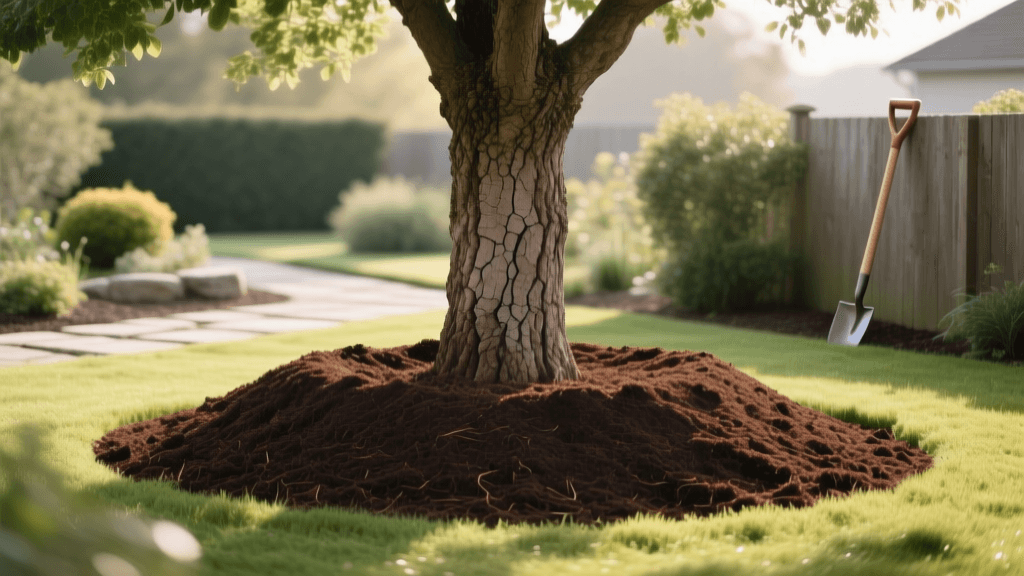
Mulch acts as an insulating blanket, regulating soil temperature and preventing the freeze-thaw cycles that can heave shallow roots out of the ground. However, improper mulching can be fatal.
Follow the industry-standard 3-3-3 Rule:
- 3 Inches Deep: Apply a layer of organic hardwood mulch no deeper than 3 inches. Deeper layers restrict oxygen flow to the root zone.
- 3 Feet Wide: Extend the mulch ring at least 3 feet outward from the trunk to cover the critical root zone.
- 3 Inches Away: Keep the mulch at least 3 inches away from the actual trunk bark. Piling mulch against the trunk (volcano mulching) keeps the bark perpetually damp, leading to rot and encouraging the growth of adventitious roots that can eventually girdle the tree.
Rodent Protection: Winter scarcity drives voles and mice to gnaw on the tender, nutrient-rich inner bark of young trees beneath the snow line. To prevent this, install a cylinder of 1/4-inch galvanized hardware cloth around the base of the trunk. Bury the bottom edge 2 inches into the soil and ensure the top extends 18 to 24 inches above the expected snow line.
Seasonal Winter Tree Care Schedule
Use the following structured maintenance schedule to ensure no critical seasonal tasks are overlooked.
| Maintenance Task | Optimal Timing | Materials Required | Estimated Cost |
|---|---|---|---|
| Deep Root Hydration | Late Fall (Pre-freeze) | Hose, Soil Needle | $15 - $25 |
| Trunk Wrapping (Sunscald) | Late November | White Crepe Paper Wrap | $5 - $8 per roll |
| Rodent Guard Installation | Late November | 1/4-inch Hardware Cloth | $10 - $15 |
| Anti-Desiccant Spray (First Coat) | Early December (Above 40°F) | Wilt Pruf, Pump Sprayer | $20 - $30 per gallon |
| Anti-Desiccant Spray (Second Coat) | Late January / Early February | Wilt Pruf, Pump Sprayer | Included above |
| Dormant Pruning (Oaks & Elms) | January - February | Bypass Pruners, Rubbing Alcohol | $15 (Tool sterilization) |
| Mulch Ring Inspection | March (Post-thaw) | Rake, Hardwood Mulch | $4 - $6 per bag |
| Wrap Removal | Early April | Utility Knife | N/A |
Dormant Pruning for Disease Prevention
Winter is the optimal time for structural pruning, particularly for species susceptible to vascular diseases. Pruning oak trees during the dormant winter months is a critical health measure to prevent Oak Wilt. The sap-feeding beetles that transmit the Oak Wilt fungus are inactive during freezing temperatures, meaning fresh pruning wounds will not attract the vectors. Similarly, pruning elms in winter prevents the spread of Dutch Elm Disease. Always sterilize your pruning tools with 70% isopropyl alcohol or a 10% bleach solution between every cut when working on susceptible species to avoid mechanical transmission of pathogens.
Managing Snow and Ice Loads
Heavy, wet snow and freezing rain can cause catastrophic limb failure. If a tree becomes heavily laden with snow, gently brush the accumulation upward and off the branches using a broom. Never shake the branches or beat them with a tool, as the frozen wood is highly brittle and will snap under mechanical stress. If the branches are encased in solid ice, do not attempt to remove it. The safest course of action is to let the ice melt naturally and inspect the tree for hairline fractures once the thaw is complete.
Expert Insights on Winter Tree Health
Proactive winter care is heavily supported by academic research and extension programs. According to the University of Minnesota Extension, 'Winter sunscald and frost cracks are entirely preventable with proper trunk protection, and the failure to wrap thin-barked species is one of the leading causes of premature decline in urban forests.' Furthermore, the Colorado State University Extension emphasizes that 'winter watering is essential for the survival of recently planted trees, as their limited root systems cannot access deep soil moisture when the upper soil profile is frozen.'
By integrating these scientifically backed practices into your seasonal lawn and garden routine, you ensure your trees remain resilient, structurally sound, and primed for explosive growth when spring finally arrives.