Tree Care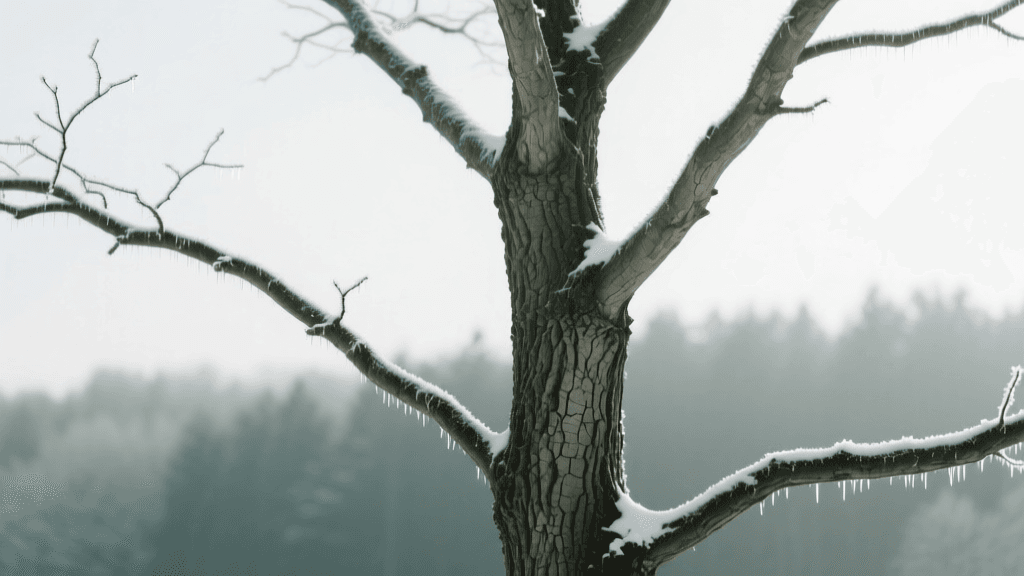
Essential Winter Tree Care and Cold Weather Protection
Why Winter Tree Care Matters
When the leaves fall and temperatures drop, many homeowners assume their landscape requires no further attention until spring. However, winter is arguably the most stressful season for trees. While deciduous trees enter a state of dormancy, they remain vulnerable to extreme temperature fluctuations, drying winds, heavy snow loads, and foraging wildlife. Evergreens face an entirely different set of challenges, primarily the risk of desiccation when frozen ground prevents roots from replacing lost moisture. Implementing a proactive seasonal maintenance routine is critical to ensuring your trees survive the winter and emerge vigorous in the spring.
Late Fall Hydration and Winter Watering
One of the most common misconceptions in tree care is that trees do not need water once they lose their leaves or after the first hard frost. In reality, root systems continue to grow and require moisture until the ground freezes solid. According to the Colorado State University Extension, newly planted trees and shrubs are highly susceptible to winter drought damage because their root systems are not yet established enough to access deep soil moisture.
- Timing: Water deeply in late autumn, right up until the ground freezes. During dry winter spells where there is no snow cover and temperatures are above 40°F, water trees 1-2 times per month.
- Measurements: Apply 10 gallons of water per inch of trunk diameter (measured at knee height). For example, a tree with a 3-inch caliper requires 30 gallons per watering session.
- Method: Use a soaker hose or a slow-drip root feeder to allow water to penetrate 12 to 18 inches into the soil, reaching the active root zone.
Mulching for Temperature Regulation
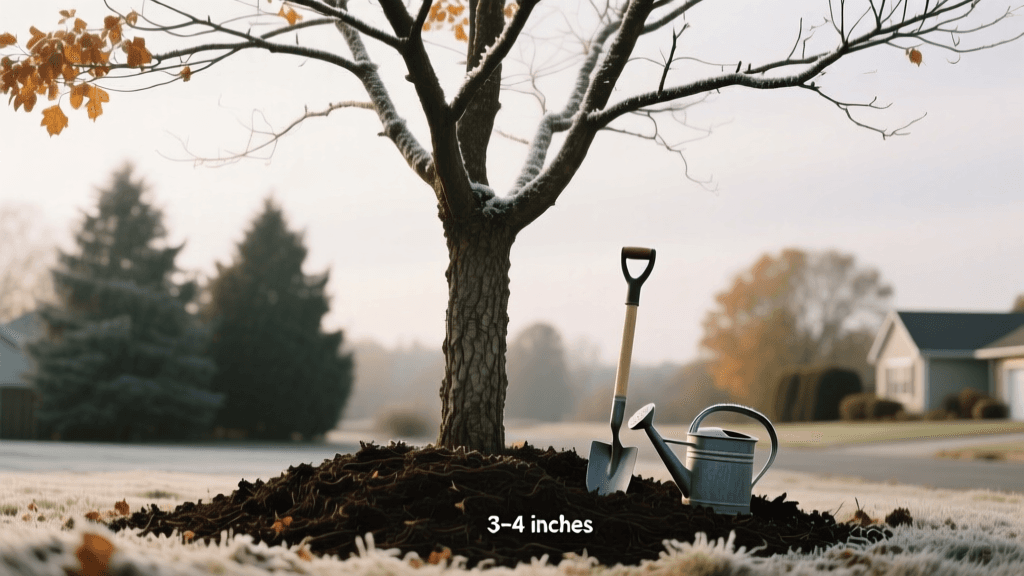
Mulch acts as an insulating blanket for the soil, moderating temperature extremes and retaining crucial moisture. However, improper mulching can cause severe damage. Never pile mulch against the trunk—a practice known as 'volcano mulching'—as this traps moisture against the bark, inviting fungal pathogens and providing a winter haven for bark-gnawing rodents like voles and mice.
Create a donut-shaped mulch ring extending at least 3 to 4 feet from the trunk. Apply a 2 to 4-inch layer of organic mulch, such as shredded hardwood or pine bark. Keep the mulch 3 to 5 inches away from the base of the trunk to allow the root flare to breathe and remain dry.
Protecting Trunks from Sunscald and Frost Cracks
Young deciduous trees, particularly those with thin bark like maples, ash, crabapples, and lindens, are highly susceptible to sunscald and frost cracks. On bright, sunny winter days, the sun heats the south and southwest-facing bark, stimulating cellular activity. When the temperature rapidly drops after sunset, the active cells freeze and burst, leading to vertical cracks and dead bark patches.
To prevent this, wrap the trunks of newly planted or thin-barked trees in late fall. Use a commercial tree wrap made of breathable polypropylene or crepe paper. Start wrapping at the base of the trunk and overlap the layers as you move upward to the first scaffold branches.
Crucial Timing: You must remove the tree wrap in early spring as soon as the threat of hard freezes has passed. Leaving wrap on during the wet spring and hot summer months restricts trunk expansion, traps moisture, and creates an ideal environment for boring insects and fungal cankers. A standard roll of tree wrap costs between $5 and $12 at most garden centers and can protect a tree for one or two seasons.
Rodent and Wildlife Protection
During heavy snow winters, foraging wildlife such as rabbits, mice, and voles turn to tree bark as a primary food source. Girdling—where animals chew the bark entirely around the trunk—severs the tree's phloem and will quickly kill it. To protect young trees, install a cylinder of 1/4-inch hardware cloth or wire mesh around the base of the trunk. The mesh should be buried 2 inches below the soil line to prevent burrowing and extend 18 to 24 inches above the anticipated snow line. Avoid using plastic tubes, which can trap moisture and harbor insects during the summer months.
Combating Winter Burn on Evergreens
Winter burn occurs when evergreen foliage loses water to dry, freezing winds faster than the frozen root system can replace it. This results in brown, desiccated needles, typically on the windward or south-facing side of the tree. Arborvitae, yews, and pines are particularly vulnerable.
To mitigate winter burn, apply an anti-desiccant spray, such as Wilt Pruf or VaporGard. These products coat the needles with a thin, waxy polymer layer that reduces transpiration.
- Application Rules: Anti-desiccants must be applied when temperatures are above 40°F so the liquid can dry properly on the foliage. Do not apply to blue spruces, as the spray will strip their natural, protective blue wax coating.
- Physical Barriers: For smaller evergreens or sensitive shrubs, construct a windbreak using wooden stakes and burlap. Ensure the burlap is wrapped loosely to allow air circulation while blocking harsh winds and intense afternoon sun.
Snow Load Management and De-Icing Salt Damage
Heavy, wet snow and ice can snap branches, particularly on multi-stemmed shrubs and trees with weak branch unions. If snow accumulates on branches, resist the urge to shake them or hit them with a broom. Frozen branches are incredibly brittle, and mechanical shock will cause them to snap. Instead, gently brush upward on the branches with a soft broom to relieve excess weight, or simply let the snow melt naturally.
De-icing salts pose another severe threat. Sodium chloride (rock salt) can accumulate in the soil, causing root toxicity and preventing the uptake of water and essential nutrients. It also causes direct foliar burn when splashed onto branches by passing cars. Switch to calcium chloride or calcium magnesium acetate (CMA) for your walkways and driveways. While slightly more expensive, these alternatives are far less damaging to landscape plants and concrete surfaces.
Late Winter Structural Pruning
While heavy pruning is generally avoided in late fall to prevent stimulating new growth that won't harden off, late winter (February to early March) is the ideal time for structural pruning. With the leaves gone, the tree's architecture is fully visible, making it easier to identify crossing branches, weak crotches, and deadwood. Furthermore, pruning during the deepest part of dormancy minimizes the risk of disease transmission. For example, pruning oak trees in late winter is strongly recommended by the University of Minnesota Extension to prevent the spread of oak wilt, a devastating fungal disease whose spores are active in the warmer months.
When removing larger, dead, or hazardous limbs during late winter, always employ the three-cut method to prevent the heavy wood from tearing the bark down the trunk. First, make an undercut about a foot away from the trunk. Second, make a top cut slightly further out to remove the bulk of the branch's weight. Finally, make a clean, precise finishing cut just outside the branch collar. Never apply wound paint or sealants to pruning cuts; research shows these products trap moisture and impede the tree's natural compartmentalization process.
Seasonal Tree Care Calendar
| Timeframe | Primary Task | Tools & Products Needed |
|---|---|---|
| Late October - November | Deep Hydration & Mulching | Soaker hose, shredded bark mulch, measuring tape |
| November - December | Trunk Wrapping & Anti-Desiccant Spray | Polypropylene tree wrap, Wilt Pruf, pump sprayer |
| December - February | Snow Load Management & Safe De-Icing | Soft-bristle broom, Calcium Chloride ice melt |
| February - Early March | Dormant Structural Pruning | Bypass pruners, folding pruning saw, rubbing alcohol |
| Mid-March | Wrap Removal & Spring Inspection | Utility knife, inspection mirror for trunk pests |
Expert Insights and Further Reading
Maintaining tree health is a year-round commitment. For localized advice and detailed diagnostic tools, consult your local university extension office. The resources below provide excellent, science-backed guidelines for winterizing your landscape: