Tree Care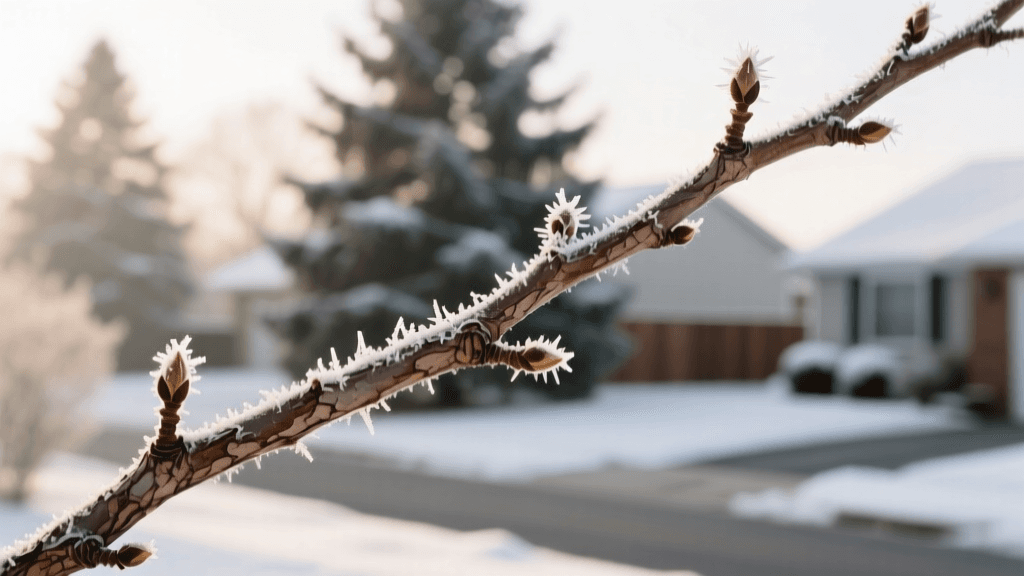
Winter Tree Care Guide: Dormant Pruning and Frost Protection
As the vibrant hues of autumn fade and the first hard frost settles over your landscape, many homeowners make the mistake of assuming their trees no longer need attention. In reality, winter is one of the most critical seasons for tree health maintenance. The dormant season offers a unique window of opportunity to perform structural pruning, fortify root zones against extreme temperature fluctuations, and proactively manage overwintering pests. Neglecting your trees between November and February can lead to catastrophic limb failure during heavy snowstorms, severe desiccation from harsh winter winds, and unchecked pest infestations that will explode in the spring. This comprehensive guide from Lawns Guide will walk you through the essential, actionable steps required to prepare your trees for winter and ensure they emerge vigorously in the spring.
The Science and Strategy of Dormant Pruning
Pruning during the dormant season—typically from late fall after leaf drop until early spring before bud break—is widely considered the gold standard in arboriculture. When a tree is dormant, its energy reserves are stored safely in the root system rather than the foliage. Cutting branches during this time minimizes stress and prevents the loss of vital carbohydrates. Furthermore, without leaves obscuring the canopy, the structural architecture of the tree is fully visible, allowing for precise identification of crossing branches, weak crotches, and diseased wood.
Timing Your Pruning Cuts
While the entire dormant period is suitable for pruning, the optimal window is late winter (January to early February in most USDA zones). Pruning too early in the fall can delay the tree's natural hardening-off process, making it susceptible to early freeze damage. By waiting until the coldest part of winter has passed but before the spring sap flow begins, you allow the tree to rapidly compartmentalize the pruning wounds (a process known as CODIT) as soon as the growing season resumes.
Understanding the Branch Collar
When making your cuts, it is vital to preserve the branch collar—the swollen area where the branch meets the trunk. The collar contains specialized chemicals that initiate the tree's defense mechanisms against decay. Never make a flush cut against the trunk, as this removes the collar and creates a massive, slow-healing wound. Conversely, avoid leaving long stubs, which will rot and provide an entry point for boring insects. The cut should be made just outside the collar and the branch bark ridge, angling slightly downward to shed water.
Essential Tools and Sterilization
Using the correct tools ensures clean cuts that heal quickly. For branches under 0.75 inches in diameter, use high-quality bypass hand pruners like the Felco F-2. For limbs up to 2 inches, employ bypass loppers such as the Corona SL 4264. Anything larger requires a professional-grade pruning saw. Never use anvil pruners on live wood, as they crush the plant tissue and invite disease. Crucially, you must sterilize your blades between every tree, and especially after cutting diseased wood, using a 70% isopropyl alcohol solution or a 10% bleach mixture to prevent the transmission of pathogens like Fire Blight or Dutch Elm Disease.
Winter Mulching: Insulating the Root Zone
Soil temperature fluctuations can cause frost heaving, which pushes shallow roots out of the ground and exposes them to freezing, drying winds. A proper layer of organic mulch acts as a thermal blanket, regulating soil temperature and retaining vital moisture throughout the winter months.
The Donut Method and Material Selection
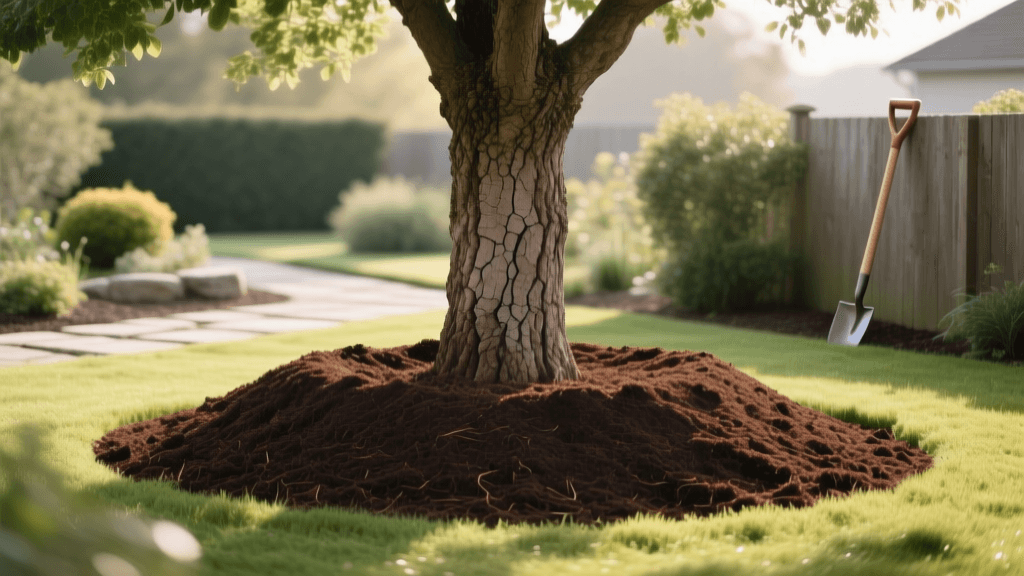
The most common and fatal mistake homeowners make is creating a mulch volcano by piling mulch against the tree trunk. This traps moisture against the bark, leading to stem rot, girdling roots, and providing a warm winter haven for bark-gnawing rodents. Instead, employ the Donut Method. Spread a 3 to 4-inch layer of coarse arborist wood chips or shredded hardwood bark in a ring extending out to the tree's drip line (or at least a 3-foot radius for younger trees). Keep the mulch at least 3 to 5 inches away from the actual trunk flare. A cubic yard of high-quality hardwood mulch typically costs between $30 and $45 when bought in bulk, which is enough to properly mulch about four to five mature trees.
Deep Hydration and Frost Protection
Winter desiccation (drying out) kills more evergreens and newly planted deciduous trees than actual freezing temperatures. When the ground freezes, roots cannot absorb water, but the tree's canopy continues to lose moisture to harsh winter winds and bright winter sun.
The Pre-Freeze Watering Protocol
Trees should receive a deep, slow watering right up until the ground freezes solid. For a newly planted tree, apply 10 to 15 gallons of water slowly using a soaker hose or a slow-trickling garden hose placed at the drip line. For mature trees, apply 10 gallons of water per inch of trunk diameter (measured at knee height). If your region experiences a warm, dry spell in mid-winter (temperatures above 40°F with no snow cover), repeat this watering process once a month to prevent root death.
Trunk Wrapping and Anti-Desiccants
Young trees with thin bark (such as Maples, Ash, and Fruit trees) are highly susceptible to sunscald, a phenomenon where the winter sun warms the bark during the day, activating cells, which then freeze and rupture at night. Wrap the trunks of these trees from the base up to the first major branch using a commercial, breathable tree wrap (costing about $8 to $12 per roll). Remove the wrap in early spring to prevent insect harboring. For broadleaf evergreens like Rhododendrons and Holly, apply an anti-desiccant spray like Wilt Stop (approx. $25 per quart) in late November and again in January to coat the leaves in a protective polymer film.
Dormant Horticultural Oils for Pest Control
Winter is the perfect time to wage war against overwintering pests. Insects like aphids, scale, and spider mites lay their eggs in the crevices of tree bark to survive the cold. Applying a dormant horticultural oil (such as Bonide All Seasons Horticultural Oil, roughly $15 per gallon) will smother these eggs and drastically reduce spring pest populations. Apply the oil using a pump sprayer on a dry, windless day when temperatures are forecasted to remain between 40°F and 70°F for at least 24 hours. Never apply dormant oil to trees that are already showing signs of spring bud break, as it can burn the tender new tissue. Horticultural oils are highly favored in organic lawn and garden care because they leave no toxic residue and pests cannot develop a chemical resistance to the physical smothering action.
Seasonal Winter Tree Care Checklist
| Task | Optimal Timing | Target Trees | Estimated DIY Cost |
|---|---|---|---|
| Dormant Pruning | January - February | All deciduous trees | $40 - $100 (Tools) |
| Mulch Refresh | Late November | All trees | $30 - $45 (Bulk Mulch) |
| Trunk Wrapping | Early December | Young Maples, Ash, Fruit | $8 - $12 (Wrap) |
| Deep Winter Watering | Monthly (if dry and above 40F) | Evergreens, new plantings | Water bill only |
| Dormant Oil Spray | February - Early March | Fruit trees, Ornamentals | $15 - $25 (Oil) |
Authoritative Sources and Further Reading
Proper tree care relies on peer-reviewed science and regional data. The pruning and wound compartmentalization techniques outlined in this guide are based on the pioneering research of Dr. Alex Shigo, the father of modern arboriculture, and are actively promoted by the International Society of Arboriculture (ISA). For regional winter watering guidelines, the Colorado State University Extension provides indispensable data on mitigating winter drought stress in both evergreen and deciduous species. Additionally, the University of Minnesota Extension offers comprehensive manuals on identifying structural defects and executing proper dormant pruning cuts to ensure long-term canopy stability. Always consult a certified arborist for large-scale pruning or trees situated near power lines and structures.