Tree Care
Winter Tree Care Guide: Dormant Pruning & Frost Protection
The Hidden Dangers of Winter Tree Stress
As the vibrant colors of autumn fade and the first hard frost settles over your landscape, many homeowners assume their yard work is finished until spring. However, winter is arguably the most critical season for long-term tree health and structural integrity. While deciduous trees enter a state of dormancy to conserve energy, they remain highly vulnerable to extreme temperature fluctuations, desiccating winds, heavy snow loads, and ice accumulation. According to experts at The Morton Arboretum, proactive winter tree care is essential for preventing catastrophic structural damage and ensuring vigorous, healthy spring growth. Neglecting your trees during the dormant season can lead to disease infiltration, irreversible bark damage, and even total tree failure. This comprehensive guide will walk you through the essential seasonal maintenance tasks, from precise dormant pruning to advanced frost protection techniques, complete with product recommendations and cost estimates.
The Science and Strategy of Dormant Pruning
Dormant pruning is the practice of trimming and shaping trees while they are in their winter resting phase. This is not merely a matter of convenience; it is a biological necessity for many species. When you prune a tree in late winter, the tree is not actively growing, meaning it loses less sap and experiences significantly less stress. Furthermore, the absence of leaves provides arborists and homeowners with a clear, unobstructed view of the tree's underlying branch structure, making it much easier to identify crossing limbs, weak crotches, and diseased wood.
Expert Tip: Never prune oak trees during the spring or summer months. Fresh pruning wounds emit a scent that attracts sap beetles, which are the primary vectors for Oak Wilt, a fatal fungal disease. Always restrict oak pruning to the deepest part of winter dormancy.
Timing Your Pruning Cuts
The ideal window for dormant pruning is late winter, typically between late January and early March, depending on your USDA Hardiness Zone. You want to prune after the coldest part of the winter has passed but before the spring sap begins to flow and buds start to swell. Pruning during this specific window allows the tree to rapidly compartmentalize and heal the wounds as soon as the spring growth cycle initiates. For species prone to 'bleeding' sap, such as maples, birches, and walnuts, late winter pruning minimizes the unsightly sap drip that occurs if pruned in early spring.
Essential Tools and Sanitation
Using the correct tools and maintaining strict sanitation protocols is vital to prevent the spread of pathogens. Before moving from one tree to the next, you must sterilize your equipment. A simple solution of 70% isopropyl alcohol or a 10% bleach solution applied with a spray bottle or rag is highly effective. Essential tools include:
- Bypass Pruners: For branches under 1 inch in diameter. The Felco F-2 is an industry standard, costing around $60, offering clean, precise cuts that do not crush the cambium layer.
- Loppers: For branches between 1 and 2.5 inches. Look for models with compound action to reduce hand fatigue.
- Folding Pruning Saw: For limbs over 3 inches. The Silky Gomboy features a razor-sharp, impulse-hardened blade that cuts smoothly on the pull stroke, preventing bark tearing.
Defending Against Sunscald and Frost Cracks
One of the most common and damaging winter ailments is sunscald, also known as southwest injury. During winter days, the sun can heat the dark bark on the south and southwest sides of a tree trunk to well above freezing, stimulating cellular activity beneath the bark. When the sun sets and temperatures rapidly plummet below freezing at night, these newly active cells freeze and burst, resulting in dead, sunken, and cracked bark. This damage is particularly prevalent in young trees and species with thin bark, such as maples, lindens, crabapples, and fruit trees. Penn State Extension recommends wrapping vulnerable trunks to reflect sunlight and insulate the cambium.
To protect your trees, purchase a commercial polypropylene tree wrap or a white corrugated plastic tree guard. Avoid dark-colored materials or asphalt-based wraps, as they absorb heat and exacerbate the problem. Begin wrapping at the base of the trunk, overlapping each layer by about one-third, and continue up to the first major scaffold branch. Secure the top with a piece of flexible tape or twine. Never use wire or duct tape, which can girdle the tree. Apply the wrap in November and, crucially, remove it in early April to prevent trapping moisture and harboring insect pests during the spring. A standard roll of tree wrap costs between $10 and $15 and can protect multiple young trees.
Preventing Winter Burn in Evergreens
While deciduous trees drop their leaves to avoid winter moisture loss, evergreens retain their needles or broad leaves, making them highly susceptible to winter burn (desiccation). Winter burn occurs when the sun and harsh winds cause the foliage to transpire (lose water) faster than the roots can replace it, especially when the surrounding soil is frozen solid. The result is browning, brittle foliage, typically on the windward or south-facing side of the tree.
To combat this, ensure your evergreens are deeply watered in late autumn before the ground freezes. A slow, deep soaking using a soaker hose for 2 to 3 hours ensures the root zone is fully saturated. Additionally, apply an anti-desiccant spray, such as Wilt Stop or Vapor Gard. These organic, pine-oil-based products coat the needles with a flexible, breathable film that reduces moisture loss by up to 80%. Apply the first coat in late November when temperatures are above 40°F (4°C), and a second coat in late January or early February. A 32-ounce concentrate costs approximately $35 and can treat dozens of medium-sized shrubs and small trees.
Proper Winter Mulching Techniques
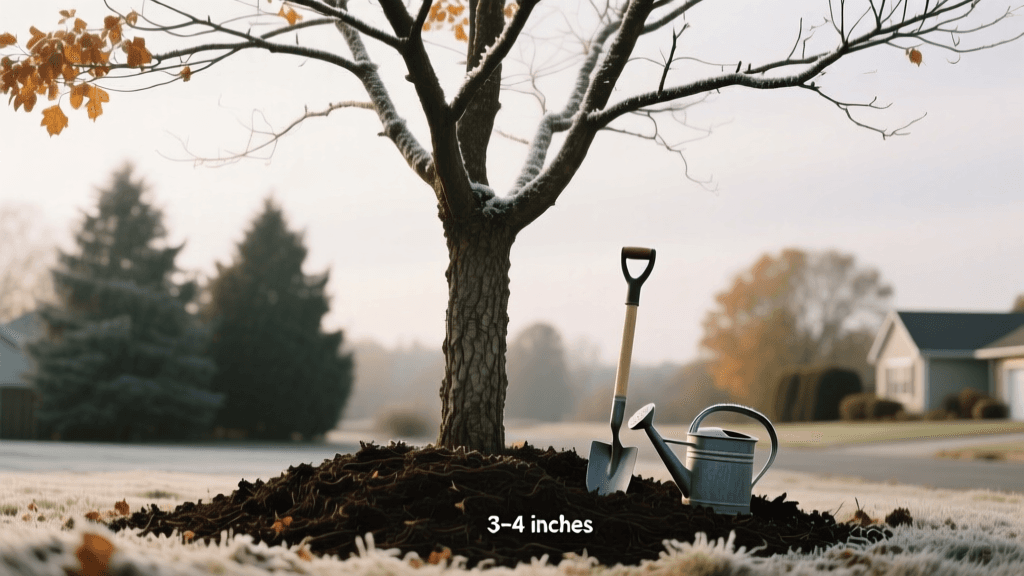
Mulch acts as a vital insulating blanket for a tree's root system, regulating soil temperature and preventing 'frost heave,' a phenomenon where the repeated freezing and thawing of soil pushes shallow roots out of the ground. However, improper mulching can be just as deadly as no mulch at all. Avoid 'volcano mulching,' where mulch is piled high against the trunk, as this traps moisture, invites rot, and encourages girdling roots.
Instead, apply a 2 to 4-inch layer of organic mulch, such as shredded hardwood or pine bark, in a wide ring extending to the tree's drip line if possible. Most importantly, keep the mulch at least 3 to 5 inches away from the actual trunk of the tree, creating a 'donut' shape. This ensures the root flare remains exposed and dry, preventing fungal infections and rodent damage during the winter months.
Winter Tree Care Schedule and Cost Breakdown
Planning your seasonal maintenance ahead of time ensures you do not miss critical application windows. Below is a structured breakdown of essential winter tree care tasks, their optimal timing, and associated costs for an average residential landscape.
| Maintenance Task | Optimal Timing | Estimated Material Cost | Primary Benefit |
|---|---|---|---|
| Deep Root Watering | Late October - November | $0 - $5 (Water cost) | Prevents evergreen desiccation and winter burn. |
| Trunk Wrapping | November | $10 - $15 per roll | Reflects sun to prevent sunscald and frost cracks. |
| Anti-Desiccant Spray | Late Nov & Late Jan | $30 - $45 per bottle | Seals needles to lock in vital moisture. |
| Dormant Pruning | February - Early March | $60 - $150 (Tools) | Removes hazards and prevents disease vectors. |
| Tool Sanitation | During Pruning | $3 - $5 (Alcohol) | Stops the spread of fungal and bacterial pathogens. |
| Mulch Refresh | Late Fall or Early Spring | $5 - $8 per bag | Insulates roots and prevents frost heave. |
By adhering to this seasonal maintenance schedule, you invest a small amount of time and money during the winter to save hundreds, if not thousands, of dollars in emergency tree removal or disease treatments later. According to the University of Minnesota Extension, trees that are properly prepped for winter not only survive harsh freezes but also exhibit significantly more robust canopy development and disease resistance in the subsequent growing season. Treat your trees with the care they deserve this winter, and they will reward you with vibrant health and enduring beauty for decades to come.