Tree Care
Winter Tree Care: How to Protect Trees From Frost and Salt Damage
The Hidden Dangers of Winter Weather on Your Landscape
When the leaves fall and the ground freezes, many homeowners assume their landscape requires zero attention until spring. However, winter is one of the most stressful seasons for trees. Extreme temperature fluctuations, heavy snow loads, desiccating winds, and chemical de-icers can cause severe, sometimes irreversible, damage to your landscape investments. According to the University of Minnesota Extension, winter injury often goes unnoticed until the tree fails to leaf out in spring or suffers a catastrophic structural failure during a summer storm.
Proper seasonal maintenance and care are not just about spring planting or summer watering; they require a proactive winterization strategy. This comprehensive guide will walk you through the exact steps, measurements, and products needed to protect your trees from frost, snow, and salt damage.
Late Fall Hydration and the 3-3-3 Mulching Rule
Winter desiccation (drying out) is a primary killer of evergreens and newly planted deciduous trees. Because frozen ground prevents roots from taking up water, trees lose moisture through their needles and twigs on windy, sunny winter days without being able to replace it.
Deep Watering Before the Freeze
Before the ground freezes solid (usually late October to mid-November, depending on your hardiness zone), give your trees a deep, thorough watering. The general rule of thumb is to apply 10 gallons of water per inch of trunk caliper (measured at knee height). For a newly planted tree with a 2-inch caliper, you should apply 20 gallons of water slowly using a soaker hose or a slow-drip tree watering bag (like a Treegator, which costs around $25-$35).
The 3-3-3 Mulching Strategy
Mulch acts as an insulating blanket, regulating soil temperature and retaining critical moisture. Follow the 3-3-3 rule for optimal winter protection:
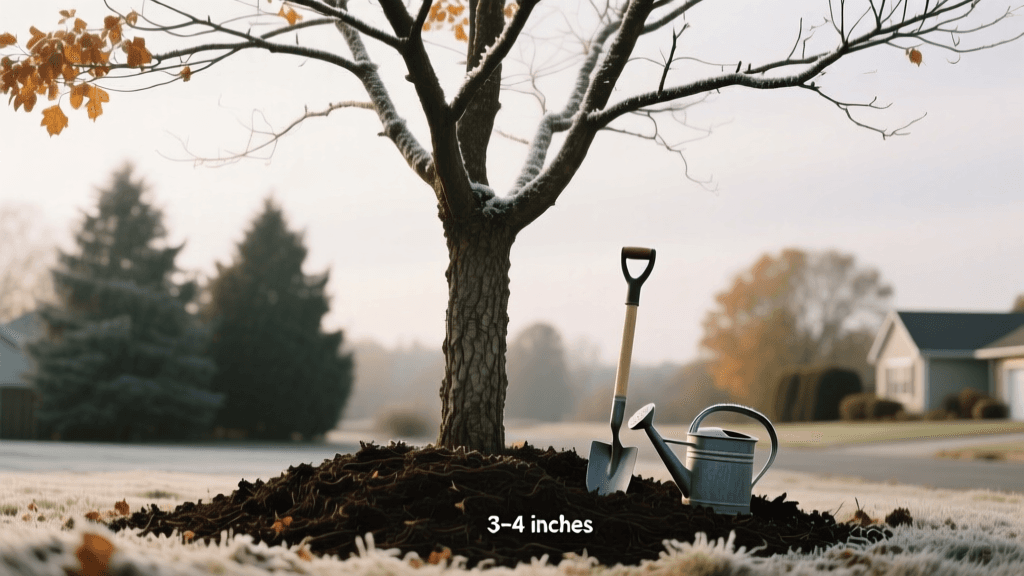
- 3 Inches Deep: Apply a 3 to 4-inch layer of organic mulch (shredded hardwood or pine bark).
- 3-Foot Radius: Extend the mulch ring at least 3 feet out from the trunk in all directions.
- 3 Inches Away: Keep the mulch at least 3 inches away from the actual trunk to prevent rot, fungal pathogens, and rodent nesting. Never create a "mulch volcano."
Wrapping Trees to Prevent Sunscald and Frost Cracks
Sunscald and frost cracks primarily affect thin-barked trees such as maples, ash, lindens, honeylocusts, and fruit trees. On sunny winter days, the sun heats the bark, awakening the dormant cambium layer. When the sun sets or a cloud passes over, the temperature plummets, causing the active cells to freeze and rupture. This results in vertical fissures known as frost cracks.
How to Wrap a Tree Properly
To prevent this, wrap the trunks of susceptible trees using a commercial tree wrap (crepe paper) or a white polyurethane spiral guard. Products like DeWitt Tree Wrap cost approximately $15 to $20 per roll and can protect multiple trees.
- Start at the base of the trunk and wrap upward at a slight angle, overlapping each layer by about one-third.
- Continue wrapping until you reach the first set of lower branches.
- Secure the top with a small piece of masking tape or twine. Never use wire or duct tape, which can girdle the tree.
- Timing: Apply the wrap around Thanksgiving and remove it promptly around Easter. Leaving wrap on during the spring and summer traps moisture and invites boring insects and fungal diseases.
Managing Snow Load and Ice Damage Safely
Heavy, wet snow and ice accumulation can snap branches, especially on multi-stemmed trees like arborvitae, birch, and certain ornamental shrubs.
Proactive Pruning
Late fall is the ideal time to perform structural pruning. Remove dead, diseased, or crossing branches that are prone to snapping. For multi-stemmed evergreens prone to splitting, you can gently tie the leaders together using soft, wide nylon straps or specialized tree cabling kits ($40-$80) to provide structural support against heavy snow.
What to Do During a Storm
If a branch becomes heavily coated in ice, do not shake it or hit it with a broom. Frozen branches are incredibly brittle and will shatter under sudden impact. Instead, allow the ice to melt naturally. If a branch is bent under heavy, wet snow, gently brush the snow upward using a soft-bristled broom to relieve the weight without snapping the wood.
"The biggest mistake homeowners make in winter is assuming their trees are completely dormant and invincible. In reality, the cambium layer is highly susceptible to rapid temperature fluctuations, and winter desiccation kills more evergreens than extreme cold." — Certified Master Arborist
Navigating De-Icing Salts and Chemical Damage
De-icing salts used on driveways and sidewalks are notorious for causing soil toxicity and root damage. Sodium chloride (rock salt) pulls moisture away from roots and displaces essential nutrients like potassium and calcium. Research from Penn State Extension highlights that salt damage often manifests as marginal leaf browning and branch dieback on the side of the tree facing the road or walkway.
De-Icing Product Comparison Chart
| De-Icing Product | Active Ingredient | Lowest Effective Temp | Plant Toxicity | Est. Cost (50 lbs) |
|---|---|---|---|---|
| Rock Salt | Sodium Chloride (NaCl) | 20°F (-6°C) | High (Severe root/soil damage) | $10 - $15 |
| Calcium Chloride | CaCl2 | -25°F (-31°C) | Moderate (Less toxic than NaCl) | $25 - $35 |
| Magnesium Chloride | MgCl2 | 0°F (-17°C) | Low to Moderate | $25 - $40 |
| CMA | Calcium Magnesium Acetate | 20°F (-6°C) | Very Low (Plant & Pet Safe) | $40 - $60 |
Actionable Advice: Switch to Calcium Magnesium Acetate (CMA) or use abrasive traction agents like coarse sand or kitty litter near your landscape beds. If you must use salt, erect a physical barrier (like a burlap screen stapled to wooden stakes) between the salted walkway and your trees to block salt spray. In early spring, heavily flush the soil around salt-exposed trees with fresh water to leach the sodium below the root zone.
Winter Watering Schedules for Evergreens and New Plantings
Winter watering is a critical but often overlooked aspect of seasonal tree care. Trees planted within the last two years, as well as broadleaf evergreens (like rhododendrons and hollies), require supplemental moisture during winter droughts.
The Colorado State University Extension recommends winter watering when air temperatures are above 40°F and there is no snow cover on the ground. Follow these guidelines:
- Timing: Water mid-day (before 2:00 PM) so the water has time to soak into the soil before nighttime freezing temperatures return.
- Frequency: Water newly planted trees once or twice a month from November through February, depending on natural precipitation.
- Application: Apply water slowly at the drip line (the outer edge of the tree's canopy) where the feeder roots are most active. Use a deep root feeder or a soaker hose for 30 to 45 minutes.
Conclusion
Winter tree care is an investment in the longevity, safety, and beauty of your landscape. By implementing a late-fall hydration schedule, utilizing the 3-3-3 mulching rule, wrapping vulnerable trunks, and carefully selecting plant-safe de-icing products, you can shield your trees from the harshest elements of the season. A little proactive maintenance during the freezing months will reward you with vibrant, healthy, and structurally sound trees when spring finally arrives.