Tree Care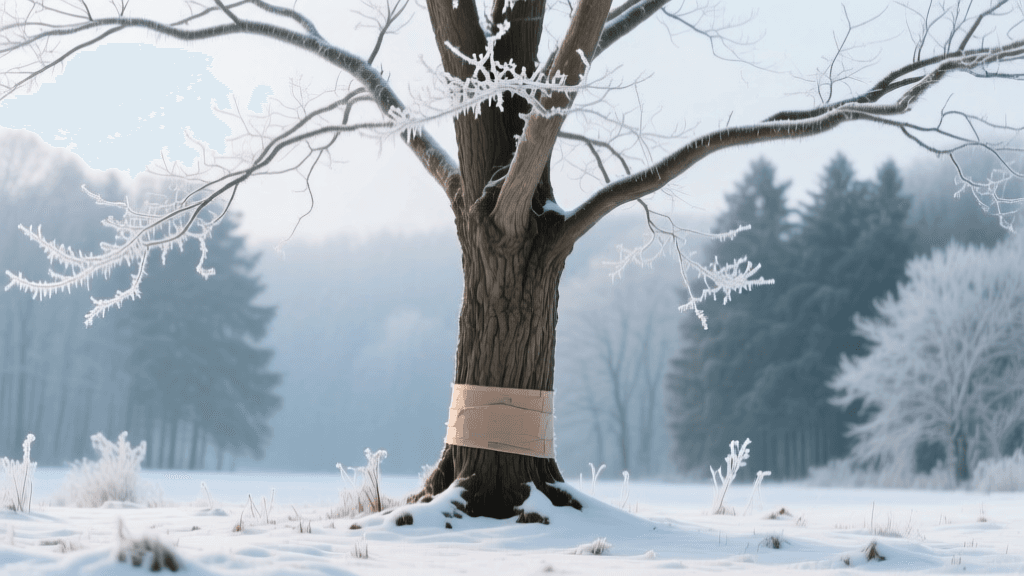
Winter Tree Care Guide: Protecting Trees From Freeze Damage
Why Winter Tree Care is Crucial
As autumn fades and temperatures plummet, many homeowners assume their landscape requires no further attention until spring. However, winter is arguably the most stressful season for trees. While deciduous trees enter a state of dormancy to conserve energy, they remain highly vulnerable to extreme temperature fluctuations, desiccating winds, heavy snow loads, and ice accumulation. Without proper seasonal maintenance, trees can suffer from frost cracks, sunscald, root dieback, and severe winter burn. According to The Morton Arboretum, proactive winter tree care is essential for maintaining structural integrity and ensuring vigorous spring growth. This comprehensive guide will walk you through the exact steps, products, and measurements needed to winterize your trees effectively.
Hydration: The First Line of Defense
One of the most common misconceptions in tree care is that trees do not need water during the colder months. In reality, dehydration is a primary cause of winter tree mortality, particularly for newly planted trees and evergreens. Moist soil retains heat significantly better than dry soil, acting as an insulating blanket for the root system. When the ground freezes, roots are unable to draw moisture, making pre-winter hydration critical.
Watering Measurements and Techniques
The general rule of thumb for winterizing hydration is to provide 10 gallons of water per inch of trunk caliper (diameter measured at knee height). For a newly planted tree with a 2-inch caliper, this means applying 20 gallons of water per week until the ground freezes solid.
- Timing: Continue watering through late October and November, stopping only when the top few inches of soil begin to freeze consistently.
- Method: Use a slow-release watering bag, such as the Treegator or Gator Bag (typically costing $20 to $30). These bags drip water slowly over 5 to 9 hours, ensuring deep penetration into the root zone without causing surface runoff.
- Evergreen Focus: Evergreens continue to transpire (lose water through needles) on warm, windy winter days. If the ground is frozen, they cannot replace this lost moisture, leading to fatal desiccation.
For detailed regional guidelines on cold-weather hydration, the Colorado State University Extension provides excellent fact sheets on fall and winter watering protocols, emphasizing that watering should occur on days when the air temperature is above 40°F and there is no snow cover.
Mulching for Root Insulation and Moisture Retention
Mulch is the unsung hero of seasonal tree maintenance. A proper layer of organic mulch regulates soil temperature, preventing the destructive freeze-thaw cycles that cause 'frost heaving'—a phenomenon where shallow roots are literally pushed out of the ground by expanding ice lenses.
The 'Donut' Method
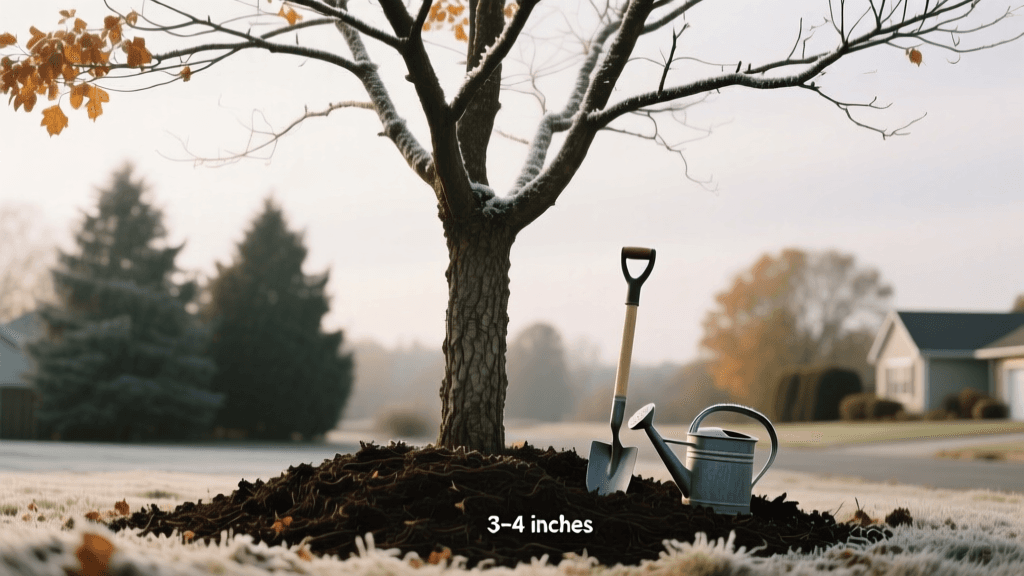
Applying mulch incorrectly can be just as damaging as skipping it altogether. Avoid 'volcano mulching,' where mulch is piled high against the trunk, which invites rot, fungal pathogens, and rodent nesting.
- Clear the Base: Remove grass and weeds in a 3-foot radius around the trunk.
- Apply Organic Mulch: Use aged arborist wood chips or shredded bark (costing roughly $4 to $6 per cubic foot).
- Measure Depth: Spread the mulch to a depth of 3 to 4 inches. Any deeper, and you risk suffocating the roots by blocking oxygen exchange.
- The Donut Rule: Keep the mulch at least 3 to 5 inches away from the actual trunk of the tree, exposing the root flare. The final shape should resemble a flat donut, not a volcano.
Proper mulching mimics the natural forest floor, providing a slow release of nutrients while buffering the soil against extreme winter temperature swings.
Protecting Trunks from Sunscald and Frost Cracks
Young trees and species with thin bark—such as Maple, Ash, Cherry, Plum, and Honeylocust—are highly susceptible to sunscald and frost cracks. Sunscald occurs on bright, freezing winter days when the sun heats the southwest-facing side of the trunk, stimulating cellular activity in the phloem and cambium layers. When the sun sets and temperatures rapidly drop below freezing, these active cells freeze and burst, leaving elongated, dead scars on the trunk.
Wrapping and Shielding Techniques
To prevent this thermal shock, you must insulate the trunk.
- Materials: Purchase a roll of white crepe paper tree wrap or a specialized synthetic tree guard (costing $10 to $15 per roll). Avoid dark-colored materials or plastic wraps that trap moisture and heat.
- Application: Begin wrapping at the base of the trunk and overlap the layers as you work your way up to the first set of branches. The overlap should face downward to shed rain and snow.
- Alternative: For a more permanent solution, install a white PVC pipe guard slit down the side and placed around the trunk. This also protects against hungry winter rodents like voles and rabbits.
- Removal: Crucial Step: You must remove trunk wraps in early spring (around April) before the tree breaks dormancy. Leaving wraps on year-round traps moisture, encourages fungal cankers, and provides a perfect hiding spot for boring insects.
Preventing Winter Burn in Evergreens
Winter burn manifests as brown, rust-colored needles on the outer canopy of evergreens, particularly on Arborvitae, Boxwood, and Spruce. This is caused by a combination of freezing winds, bright sunlight, and frozen root zones. The Penn State Extension notes that winter injury is often misdiagnosed as a disease, when it is actually an environmental stress response.
Anti-Desiccants and Physical Barriers
To protect your evergreens, employ a two-pronged approach:
- Anti-Transpirant Sprays: Products like Wilt Pruf or Anti-Stress (costing $15 to $25 per quart) coat the needles in a protective, breathable polymer film that reduces moisture loss. Apply these in late November and again in late January on a day when temperatures are above 40°F, allowing the spray to dry completely before freezing.
- Burlap Screens: For highly sensitive or newly planted evergreens, construct a windbreak using wooden stakes and heavy-duty burlap (such as DeWitt burlap). Drive three or four stakes into the ground around the tree and staple the burlap to the stakes. Do not wrap the burlap tightly against the foliage, as this can cause abrasion and trap excess moisture; leave a 6-inch air gap.
Late Winter Pruning for Structural Integrity
While heavy pruning is generally avoided in the fall (as it can stimulate tender new growth that will be killed by frost), late winter—typically February to early March—is the optimal time for structural pruning. Because the tree is fully dormant and the leaves have fallen, the branching architecture is clearly visible, making it easier to identify crossing branches, weak crotches, and storm-damaged limbs.
Pruning during the coldest part of the year also minimizes the risk of spreading airborne diseases like oak wilt or fire blight, which are inactive in winter. Make clean, angled cuts just outside the branch collar to promote rapid compartmentalization (healing) once the spring growth cycle begins. Always sanitize your pruning shears and saws with a 10% bleach solution or isopropyl alcohol between cuts to prevent pathogen transfer.
Comprehensive Tree Winterization Schedule
Use the following structured action plan to budget and schedule your seasonal tree maintenance. Costs are estimated per average-sized residential tree.
| Task | Optimal Timing | Target Trees | Materials & Estimated Cost |
|---|---|---|---|
| Deep Root Watering | Oct - Nov (Until ground freezes) | All trees, especially newly planted and evergreens | Treegator bag or soaker hose ($20 - $30) |
| Mulch Application | Late Nov (After soil cools) | All landscape trees | Arborist wood chips, 3-4 cu ft ($15 - $25) |
| Trunk Wrapping | Dec (Before heavy snow) | Thin-barked species (Maple, Ash, Cherry) | White crepe paper wrap ($10 - $15) |
| Anti-Desiccant Spray | Late Nov & Late Jan | Broadleaf and needle evergreens | Wilt Pruf or equivalent ($15 - $25) |
| Burlap Windbreaks | Dec (Before harsh winds) | Exposed Arborvitae, Boxwood | Stakes and DeWitt burlap ($20 - $40) |
| Structural Pruning | Feb - Early March | Mature deciduous trees | Bypass pruners, hand saw, rubbing alcohol ($0 - $50) |
Conclusion
Winter tree care is an investment in the long-term health, safety, and aesthetic value of your property. By understanding the specific vulnerabilities of your trees—from the delicate cambium layer of a young maple to the transpiring needles of an evergreen—you can implement targeted seasonal maintenance that prevents catastrophic freeze damage. Hydrate deeply before the frost, insulate the root zone with proper mulching, shield vulnerable trunks from thermal shock, and prune strategically in late winter. Following these actionable guidelines will ensure your trees emerge from the winter months resilient, healthy, and ready for a vibrant spring canopy.