Tree Care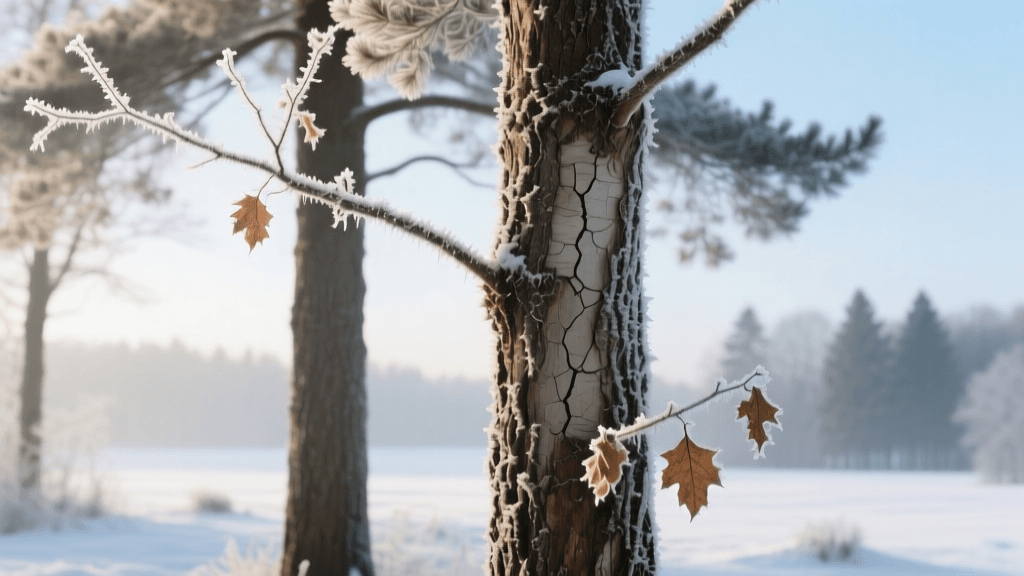
Winter Tree Protection: Preventing Frost Cracks and Desiccation
The Hidden Dangers of Winter on Landscape Trees
When the leaves fall and the ground freezes, many homeowners assume their landscape trees have entered a state of complete dormancy and require zero maintenance. However, winter is actually one of the most stressful seasons for both deciduous and evergreen trees. Extreme temperature fluctuations, biting winds, heavy snow loads, and frozen soil can cause severe, sometimes irreversible, damage to your trees' vascular systems. Understanding the physiological threats of winter and implementing a proactive seasonal maintenance plan is crucial for preserving tree health, structural integrity, and aesthetic value.
In this comprehensive guide, we will explore the primary winter threats—specifically frost cracks, sunscald, and winter desiccation—and provide actionable, step-by-step instructions to winterize your landscape. From selecting the right anti-desiccant sprays to proper dormant pruning techniques, these strategies will ensure your trees emerge vibrant and healthy in the spring.
Understanding Frost Cracks and Sunscald
Frost cracks and sunscald are two distinct but related types of winter injury that primarily affect the bark and cambium layer of young, thin-barked trees. Species such as maples, sycamores, lindens, and fruit trees are particularly vulnerable.
The Mechanics of Sunscald (Southwest Injury)
Sunscald occurs on bright, cold winter days when the sun heats the bark on the southwest-facing side of the trunk. This localized heating awakens the cambium cells beneath the bark, prompting them to lose their cold-hardiness. When the sun sets or a cloud passes over, the temperature plummets rapidly, causing the active cells to freeze and die. In the spring, this dead tissue manifests as sunken, discolored, or peeling bark, creating an entry point for fungal pathogens and wood-boring insects.
The Mechanics of Frost Cracks
Frost cracks are longitudinal splits in the wood that occur due to extreme and rapid drops in nighttime temperatures. The outer layers of the trunk cool and contract faster than the inner wood, creating immense tensile stress that causes the bark and wood to split open, often with a loud, rifle-like crack. While trees can attempt to seal these wounds over the summer with callus tissue, repeated opening and closing of the crack each winter severely compromises the tree's structural stability.
How to Prevent Trunk Injury with Tree Wraps
The most effective defense against sunscald and frost cracks is the application of a physical barrier that insulates the trunk and reflects solar radiation.
- Material Selection: Use a commercial tree wrap such as DeWitt Paper Tree Wrap or a white polypropylene tree guard. Avoid dark-colored plastics or black vinyl, as they absorb heat and exacerbate the freezing-thawing cycle.
- Application Technique: Begin wrapping at the base of the trunk and spiral upward, overlapping each layer by about one-third. Continue wrapping until you reach the lowest scaffold branches. Secure the top with a piece of weather-resistant tape or twine.
- Timing and Removal: Apply wraps in late November after the first hard freeze. Crucial: You must remove the wrap in early spring (typically March or April) as the buds begin to swell. Leaving wraps on year-round traps moisture against the bark, promoting fungal rot and providing a safe harbor for pests like the emerald ash borer and bark beetles.
- Cost Estimate: Commercial tree wraps cost between $5 and $12 per roll, which is typically enough to treat 2 to 4 young trees.
Combating Winter Desiccation in Evergreens
Winter desiccation, often called 'winter burn,' is the most common cause of winter injury in evergreens, including arborvitae, pines, spruces, and broadleaf evergreens like rhododendrons and hollies. Because evergreens retain their foliage year-round, they continue to lose water through transpiration, even in winter. When the ground is frozen, the root system cannot replace this lost moisture. Dry, harsh winter winds and intense winter sun accelerate transpiration, leading to desiccated, brown, and dead needles or leaves.
Deep Root Hydration Before the Freeze
The foundation of desiccation prevention is ensuring the tree enters winter fully hydrated. In late autumn, before the ground freezes solid, provide a deep, slow watering. Apply approximately 10 to 15 gallons of water per inch of trunk caliper. Use a soaker hose or a slow-drip irrigation bag to allow the water to penetrate deeply into the root zone (12 to 18 inches deep) rather than running off the surface.
Applying Anti-Desiccant Sprays
Anti-desiccants (also known as anti-transpirants) are polymer or wax-based sprays that coat the foliage, sealing the stomata and reducing moisture loss by up to 50%. Products like Wilt Pruf (a pine emulsion) or VaporGard are industry standards.
- Mixing: For dormant winter applications, mix 1 part Wilt Pruf to 5 parts water. Always follow the specific manufacturer's label instructions.
- Application Timing: Spray in late November or December when daytime temperatures are between 40°F and 50°F. Do not apply if temperatures are near freezing, as the spray will not cure properly and can cause cellular damage.
- Reapplication: Most anti-desiccants break down under UV light over 6 to 8 weeks. A second application in late January or February (during a warm winter thaw) is highly recommended for maximum protection.
Winter Mulching and Frost Heaving Prevention
Frost heaving occurs when the soil undergoes repeated freeze-thaw cycles, which can push the root balls of newly planted trees and shallow-rooted shrubs entirely out of the ground, exposing the roots to lethal freezing temperatures. A proper mulch layer acts as a thermal blanket, regulating soil temperature and retaining moisture.
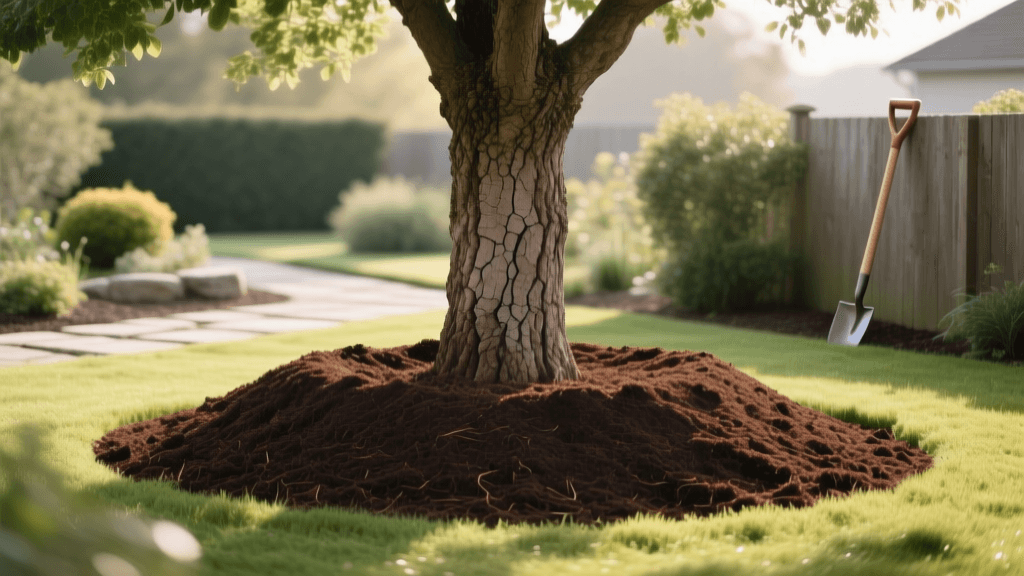
- The 'Donut' Method: Apply a 3 to 4-inch layer of shredded hardwood bark or wood chips in a wide ring around the tree. The mulch ring should extend at least to the tree's drip line if possible.
- Avoid Volcano Mulching: Keep the mulch at least 3 to 5 inches away from the actual trunk flare. Piling mulch against the trunk traps moisture, causes bark decay, and encourages rodent girdling during the winter months when food is scarce.
Dormant Pruning for Disease Prevention
Winter is the ideal time for structural pruning and the removal of diseased wood. Because trees are fully dormant, the risk of spreading devastating vascular diseases is drastically reduced. For example, pruning Oak trees in the summer can attract sap beetles that carry Oak Wilt spores. Pruning Elms in the summer increases the risk of Dutch Elm Disease. By pruning between December and February, these insect vectors are inactive, keeping your trees safe.
Use sterilized, sharp bypass pruners and pruning saws. Make clean cuts just outside the branch collar to promote rapid callus formation in the spring. Do not use wound dressings or pruning paints, as modern arboricultural science has proven they trap moisture and impede the tree's natural compartmentalization process.
Comprehensive Winter Tree Care Schedule
Use the following table to plan your seasonal maintenance budget and schedule.
| Maintenance Task | Optimal Timing | Target Trees | Estimated Cost (DIY) |
|---|---|---|---|
| Deep Root Watering | Late October - November | All newly planted & evergreen trees | $0 (Water cost only) |
| Anti-Desiccant Spray | Dec & Feb (40°F+ days) | Evergreens, Arborvitae, Holly | $25 - $45 per gallon |
| Trunk Wrapping | November (After hard freeze) | Maples, Lindens, Fruit Trees | $5 - $12 per wrap |
| Winter Mulching | November (After ground chills) | All landscape trees | $5 - $8 per 2-cu-ft bag |
| Dormant Pruning | December - February | Oaks, Elms, Fruit Trees | $0 - $150 (Tool cost) |
| Rodent Guard Installation | November | Young fruit & ornamental trees | $4 - $10 per guard |
Managing Snow Loads and Ice Storms
Heavy, wet snow and ice can snap vulnerable branches, particularly on multi-stemmed evergreens like arborvitae and junipers. If a snowstorm deposits heavy snow on your trees, gently brush the snow upward using a broom. Never shake the branches or hit them with a tool, as the frozen wood is extremely brittle and will shatter instantly. If ice coats the branches, leave them alone and allow the ice to melt naturally; attempting to break the ice will almost certainly result in severe bark tearing and branch breakage.
Expert Citations and Authoritative Guidelines
Proper winterization is backed by extensive arboricultural research. According to the Cornell University College of Agriculture and Life Sciences (CALS), winter sunscald and frost cracking are preventable with proper trunk wrapping, but they emphasize that wraps must be removed in spring to avoid secondary pest infestations. Furthermore, the USDA Forest Service highlights that winter desiccation is the leading cause of evergreen decline in northern climates, strongly recommending late-fall deep watering and the judicious use of pine-emulsion anti-transpirants to maintain cellular turgor pressure during frozen-ground periods.
'Trees that enter the winter season in a drought-stressed state are exponentially more susceptible to cold injury, vascular cavitation, and subsequent spring dieback. Late autumn irrigation is the single most cost-effective winter protection measure a homeowner can undertake.' - USDA Forest Service, Urban Tree Health Guidelines.
Conclusion
Winter tree care is not about coddling your landscape; it is about mitigating extreme environmental stressors that can lead to long-term structural failure and disease susceptibility. By investing a few hours in late fall to deeply hydrate, wrap vulnerable trunks, apply anti-desiccants, and mulch properly, you will save hundreds of dollars in tree removal and replacement costs. Treat your trees proactively this winter, and they will reward you with robust, vigorous growth when the spring thaw finally arrives.