Tree Care
Winter Tree Care: How to Protect Trees From Frost and Snow Damage
The Hidden Dangers of Winter Weather
When the leaves fall and the ground freezes, many homeowners assume their landscape is safely dormant and invulnerable until spring. However, winter is one of the most stressful seasons for both deciduous and evergreen trees. Fluctuating temperatures, biting winds, heavy snow loads, and hungry wildlife can cause severe, sometimes fatal, damage to your landscape. Implementing a proactive seasonal maintenance plan is critical to ensuring your trees survive the freeze and thrive in the spring.
According to the University of Minnesota Extension, winter injury is a leading cause of decline in young landscape trees. By understanding the specific threats and applying targeted protective measures, you can safeguard your investment and maintain a vibrant, healthy yard year-round.
Understanding Winter Tree Damage
Frost Cracks and Sunscald
Frost cracks occur when the sun warms the dark bark of a tree on a cold winter day, causing the outer layers to expand. When the sun sets and temperatures plummet, the bark rapidly contracts and freezes. This extreme temperature differential causes the bark to split vertically, often exposing the vulnerable cambium layer underneath. Sunscald operates similarly, essentially cooking and killing the active cells beneath the bark on sunny, sub-freezing days. This damage is most common on young, thin-barked species such as maple, linden, ash, and fruit trees.
Winter Desiccation (Drying Out)
The Penn State Extension notes that winter desiccation is most severe on windy, sunny days when the ground is completely frozen. Evergreens, including pines, spruces, arborvitae, and broadleaf varieties like rhododendrons, continue to lose moisture through their needles or leaves. Because the frozen soil prevents roots from taking up replacement water, the foliage dries out, turns brown, and dies—a phenomenon often mistakenly blamed on extreme cold rather than severe drought.
Snow and Ice Load Breakage
Heavy, wet snow and ice accumulation can bend and snap branches, particularly on multi-stemmed evergreens like arborvitae and junipers, or trees with weak, narrow crotch angles. The sheer weight compromises the structural integrity of the wood, which is already brittle due to freezing temperatures.
Step-by-Step Winterizing Guide
1. Deep Hydration Before the Freeze
The most effective defense against winter desiccation is a well-hydrated root system. Continue watering your trees deeply until the ground freezes solid. A general rule of thumb is to provide 10 gallons of water per inch of trunk diameter (measured at knee height) every week during dry autumn spells. Use a slow-soaking hose or a root-watering tool to ensure moisture penetrates 12 to 18 inches deep into the soil profile.
2. Proper Mulching Techniques
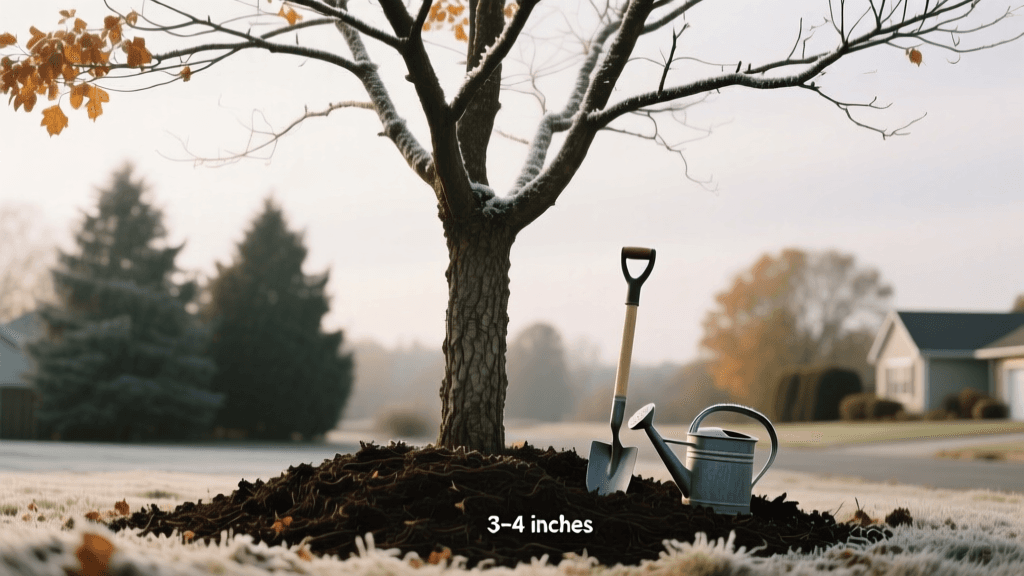
Mulch acts as an insulating blanket, regulating soil temperature and retaining vital moisture. Apply a 3 to 4-inch layer of organic mulch, such as arborist wood chips or shredded bark, over the root zone. Crucial Warning: Never pile mulch against the tree trunk (commonly known as volcano mulching). Maintain a 6-inch gap between the mulch and the trunk base to prevent bark rot and deter voles and mice from nesting and girdling the tree during winter.
3. Wrapping and Trunk Protection
To prevent frost cracks and sunscald, wrap the trunks of newly planted and thin-barked trees. Use commercial tree wrap tape (a crinkly, paper-like material) or white plastic tree guards. Start wrapping at the base of the trunk and overlap the material as you work your way up to the first set of branches. The white color reflects winter sunlight, keeping the bark temperature stable. Always remove the wrap in early spring to prevent trapping moisture and harboring insects during the growing season.
4. Anti-Desiccant Sprays
For broadleaf evergreens and highly susceptible needled evergreens, apply an anti-desiccant spray like Wilt-Pruf or Vapor Guard. These products coat the foliage in a protective, waxy polymer that reduces transpiration. Apply the spray when daytime temperatures are above 40°F (4°C) and no rain or snow is forecast for at least 24 hours. A second application in mid-to-late winter (usually February) is often necessary as the product breaks down under UV exposure.
Winter Tree Care Product Comparison
Selecting the right materials is essential for effective seasonal maintenance. Below is a comparison chart of common winterizing products to help you budget and plan your landscape care.
| Product Type | Best Used For | Estimated Cost | Application Timing |
|---|---|---|---|
| Commercial Tree Wrap Tape | Thin-barked deciduous trees (Maple, Ash, Linden) | $10 - $15 per roll | Late November (Remove in April) |
| Burlap Screens / Windbreaks | Newly planted evergreens, broadleaf evergreens exposed to harsh northern winds | $20 - $40 per screen | Before first heavy snow |
| Anti-Desiccant Spray (e.g., Wilt-Pruf) | Rhododendrons, Hollies, Arborvitae, Boxwoods | $25 - $50 per gallon | December and February (Above 40°F) |
| Galvanized Hardware Cloth (1/4 inch mesh) | Trunk base protection against voles, mice, and rabbits | $15 - $25 per roll | Autumn (Bury 2-3 inches deep) |
Managing Snow Load and Ice Damage
When heavy, wet snow blankets your trees, the instinct is often to shake the branches or aggressively knock the snow off. Do not do this. Frozen branches are highly brittle and will snap easily under mechanical stress. Instead, use a soft-bristled broom to gently sweep upward on the underside of the branches, allowing the snow to fall without putting downward pressure on the limbs. If ice forms a thick glaze over the tree, leave it alone; attempting to break the ice will almost certainly result in severe bark tearing and branch breakage.
Proper structural pruning during the dormant season is your best long-term defense against snow load damage. Removing weak, co-dominant stems and narrow crotch angles in late winter ensures the tree's architecture can withstand heavy precipitation.
Dormant Pruning: The Silver Lining of Winter
While fall is generally a poor time for pruning (as it stimulates vulnerable new growth and exposes fresh cuts to winter fungi), late winter—typically February and early March—is the ideal window for major structural pruning. Without leaves obscuring your view, the tree's branching architecture is fully visible, making it easier to identify crossing branches, deadwood, and structural defects. Furthermore, the risk of transmitting diseases like oak wilt or fire blight is virtually zero when temperatures are below freezing and insect vectors are inactive.
Spring Transition: Unwrapping and Assessment
As the threat of hard freezes passes in early spring, your seasonal maintenance cycle concludes with careful unwrapping. Remove tree guards and burlap screens promptly to allow air circulation and prevent fungal diseases. Inspect the trunk for any signs of rodent girdling or frost cracks. If you find minor bark damage, trace the edges with a sterilized pruning knife to create smooth, elliptical margins that will promote callus tissue growth. For comprehensive seasonal guidelines and advanced diagnostic techniques, the Arbor Day Foundation offers excellent resources for long-term tree stewardship.
By dedicating a single weekend in late autumn to these protective measures, you ensure your landscape remains resilient, structurally sound, and ready to explode with vibrant growth the moment spring arrives.