Tree Care
Winter Tree Maintenance: Hydration, Mulch, and Frost Care
The Hidden Dangers of Winter Tree Stress
Many homeowners assume that once autumn leaves fall and trees enter dormancy, their landscape requires zero maintenance until spring. However, winter is actually one of the most stressful seasons for both deciduous and evergreen trees. Freezing temperatures, harsh winds, and fluctuating daytime heat can lead to severe moisture loss, frost heaving, and catastrophic bark damage. Implementing a targeted seasonal maintenance protocol is critical for long-term tree health and structural integrity.
Late Fall Hydration: The Deep Watering Protocol
Winter desiccation occurs when trees lose more water through their twigs and needles than they can absorb from frozen soil. To prevent this, trees must enter the winter season fully hydrated. According to the University of Minnesota Extension, trees need consistent moisture right up until the ground freezes solid.
Measurements and Timing
- When to Water: Continue watering until the soil temperature drops to 40 degrees Fahrenheit. In most northern climates, this means watering well into November or even early December.
- How Much to Apply: Provide 10 to 15 gallons of water per inch of trunk diameter (measured at chest height) every week during dry autumn spells.
- Tools: Use a deep root watering wand or a soaker hose placed at the drip line. Avoid shallow sprinkler use, which only wets the topsoil and encourages surface rooting.
Soil Moisture Verification
Do not rely on visual surface cues. Invest in a reliable tool like the XLUX Soil Moisture Meter. Insert the probe 6 to 8 inches into the soil near the drip line. If the reading indicates dry soil, initiate a deep watering cycle immediately. The cost of a high-quality moisture meter is typically under $15, a small investment that prevents hundreds of dollars in tree replacement costs.
The Science of Winter Mulching
Mulch acts as an insulating blanket, regulating soil temperature and preventing frost heaving, a phenomenon where freezing and thawing cycles push shallow roots out of the ground. Proper mulching also retains the critical soil moisture achieved during your fall watering regimen.
The 3-3-3 Rule for Application
- Depth: Apply exactly 3 to 4 inches of mulch. Any deeper, and you risk suffocating the roots and inviting fungal pathogens.
- Radius: Extend the mulch ring at least 3 feet outward from the trunk, ideally to the drip line if space permits.
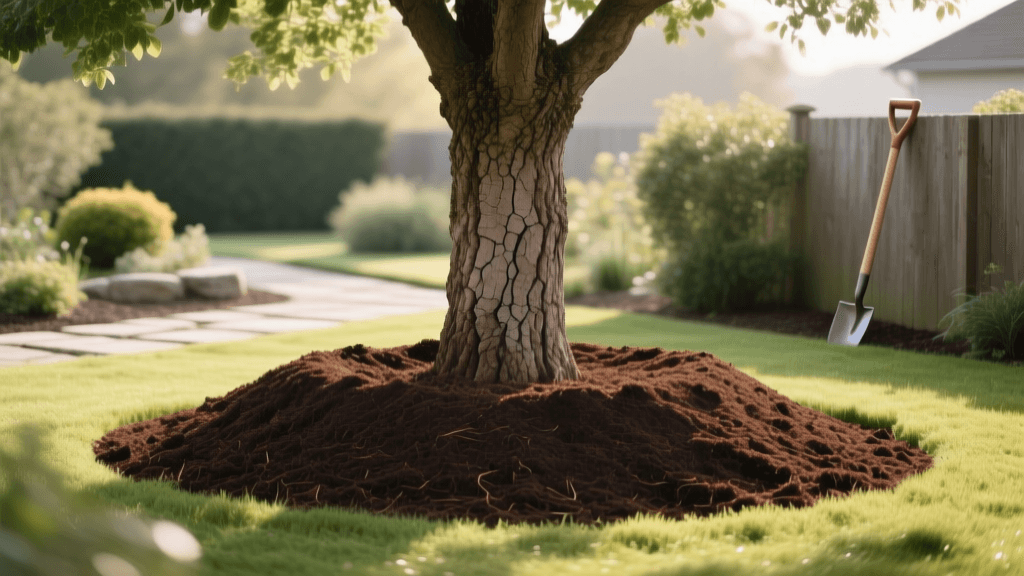
- Trunk Clearance: Keep mulch at least 3 inches away from the actual trunk. Volcano mulching traps moisture against the bark, leading to collar rot and attracting rodents that chew on the cambium layer during winter.
Material Selection and Costs
Opt for coarse organic materials like arborist wood chips or shredded hardwood bark, which allow for adequate gas exchange. Avoid fine materials like peat moss or grass clippings that mat down. Expect to pay between $25 and $45 per cubic yard for premium hardwood mulch at local landscape supply centers.
Frost Cracks and Sunscald Prevention
During winter, the sun can heat the bark of a tree on a cold, clear day, causing the inner cells to break dormancy. When the sun sets and temperatures plummet, these active cells freeze and burst, resulting in vertical fissures known as frost cracks or sunscald. This is particularly devastating for thin-barked species such as Red Maples, Honeylocusts, Ash, and young fruit trees.
Protective Wrapping Techniques
To shield vulnerable trunks, wrap them using a commercial tree wrap made of breathable crepe paper (brands like Frost King or Dalen). Start wrapping from the base of the trunk and overlap the material by one-third as you work upward to the first scaffold branches. Secure the top with natural twine, never duct tape or wire, which can girdle the tree. Apply the wrap in late November and remove it in early April to prevent trapping spring moisture and harboring boring insects. A standard 150-foot roll costs approximately $8 to $12.
Winterizing Evergreens vs. Deciduous Trees
While the fundamental principles of soil hydration apply to all trees, the above-ground winter care varies significantly between evergreens and deciduous species. Review the comparison table below to tailor your seasonal maintenance strategy.
| Care Aspect | Evergreen Trees (Pines, Spruces, Arborvitae) | Deciduous Trees (Maples, Oaks, Birches) |
|---|---|---|
| Primary Winter Threat | Needle desiccation from harsh, drying winds. | Sunscald, frost cracks, and rodent bark girdling. |
| Anti-Desiccant Spray | Highly recommended. Apply when temps are 40 to 50 degrees. | Not required for dormant, leafless branches. |
| Trunk Protection | Rarely needed unless newly planted in full sun. | Essential for young trees and thin-barked species. |
| Snow Load Management | Gently brush heavy snow off upward-facing branches. | Prune weak crotches in late fall to prevent splitting. |
Anti-Desiccant Sprays: When and How to Apply
For broadleaf evergreens (like Rhododendrons and Hollies) and needled evergreens exposed to harsh winter winds, applying an anti-desiccant is a crucial health intervention. Products like Wilt-Pruf or Bonide Wilt Stop contain a waxy polymer that coats the foliage, reducing moisture transpiration by up to 80 percent.
Application Rules
- Temperature Constraints: Only apply when daytime temperatures are above 40 degrees Fahrenheit and remain above freezing for at least 24 hours to allow the emulsion to dry properly.
- Coverage: Spray until the foliage is coated but not dripping. Ensure you cover the underside of the leaves where the majority of stomata (pores) are located.
- Reapplication: Most organic anti-desiccants break down under UV light. Plan a second application in late January or early February during a winter thaw.
Managing Snow Load and Ice Damage
Heavy, wet snow and ice accumulation can snap limbs and cause catastrophic structural failure, especially in multi-stemmed evergreens and deciduous trees with narrow crotch angles. While you cannot control the weather, you can mitigate the physical impact on your trees.
Safe Snow Removal Techniques
When heavy snow blankets your evergreens, resist the urge to shake the branches violently. Frozen wood is brittle and will snap under sudden mechanical stress. Instead, use a soft-bristled broom to gently brush snow off the branches using an upward motion. This supports the limb while relieving the weight. If ice has formed, it is safest to let it melt naturally; attempting to chip ice off the bark will inevitably damage the cambium layer.
Cabling and Bracing
For mature trees with known structural weaknesses, such as codominant stems (two main trunks of equal size), late fall is the ideal time to consult a certified arborist for cabling or bracing. Installing a dynamic cable system (like the Cobra system) costs between $250 and $600 per limb but can save a priceless heritage tree from being split in half during a February ice storm.
Expert Insights on Winter Tree Health
'The most common mistake homeowners make is assuming trees do not need water in the winter. A tree that enters the freezing months with a moisture deficit will suffer severe root damage and crown dieback by spring. Deep, infrequent watering in the fall is the single most effective preventative measure.' — University of Minnesota Extension, Forestry Department.
By combining strategic late-fall hydration, scientifically measured mulching, and targeted physical barriers against frost and sunscald, you can dramatically increase your trees' resilience. Seasonal maintenance is not merely about survival; it is about ensuring your landscape emerges vigorous, structurally sound, and primed for explosive spring growth.