Tree Care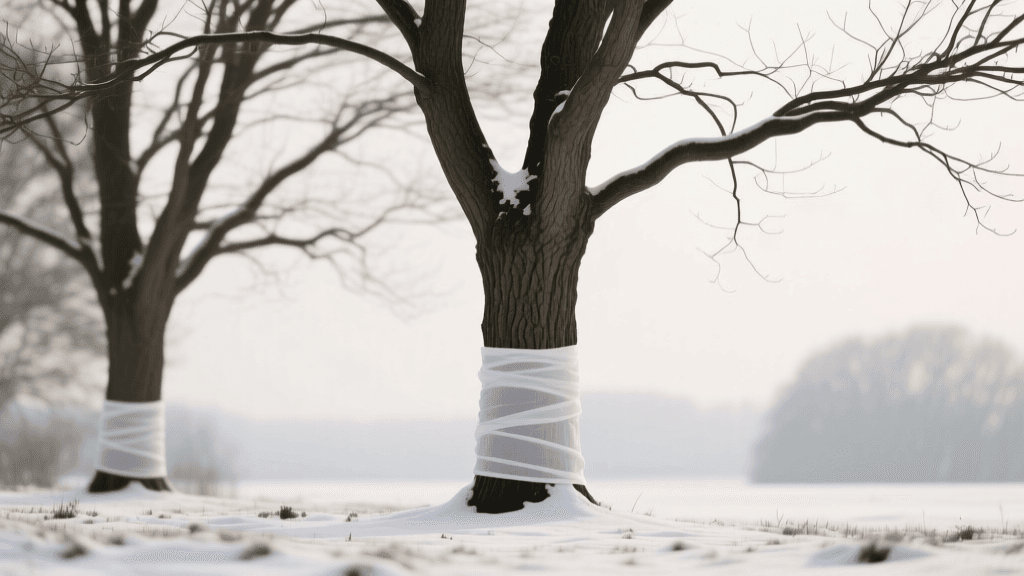
Winter Tree Care Guide: Protecting Trees From Cold Damage
The Hidden Dangers of Winter for Landscape Trees
When the leaves fall and the ground freezes, many homeowners assume their landscape trees have entered a state of complete suspended animation, requiring zero maintenance until spring. However, winter is arguably the most stressful season for trees in temperate climates. While deciduous trees do enter dormancy and evergreens slow their metabolic processes, they remain highly vulnerable to extreme temperature fluctuations, freezing winds, heavy snow loads, and hungry wildlife. Without proper seasonal maintenance, the damage inflicted during the winter months can lead to stunted spring growth, severe structural weakness, or even total tree failure.
According to the Arbor Day Foundation, proactive winter tree care is essential for maintaining the structural integrity and long-term health of your landscape. This comprehensive guide will walk you through the specific physiological threats trees face in winter and provide a detailed, actionable maintenance schedule to protect your investment.
Understanding the Four Major Winter Tree Threats
Before you can protect your trees, you must understand the science behind winter damage. The most common cold-weather injuries are not simply caused by 'being too cold,' but rather by rapid temperature shifts and moisture imbalances.
1. Sunscald (Southwest Winter Injury)
Sunscald primarily affects young, thin-barked trees such as maples, ash, cherry, and apple. On bright, sunny winter days, the dark bark on the south and southwest-facing sides of the trunk absorbs solar radiation, warming the underlying cambium layer and stimulating cellular activity. When the sun sets or a cloud passes over, temperatures plummet rapidly, freezing and killing the newly active cambium cells. This results in sunken, discolored, and eventually splitting bark, leaving the tree highly susceptible to disease and borers.
2. Frost Cracks
Unlike sunscald, frost cracks are longitudinal splits in the wood itself, often accompanied by a loud 'cracking' sound. These occur when the outer layers of the trunk contract rapidly during extreme cold snaps, while the inner wood remains relatively warm and expanded. The resulting tension causes the trunk to split, sometimes extending deep into the heartwood.
3. Winter Desiccation (Winterburn)
Evergreens, including pines, spruces, arborvitae, and broadleaf evergreens like rhododendrons, continue to lose moisture through their needles and leaves throughout the winter. When the ground is frozen solid, the roots cannot draw up replacement water. Combined with harsh, drying winds and intense winter sun, the foliage dries out, turns brown, and dies. The Penn State Extension notes that winter desiccation is the leading cause of evergreen decline in residential landscapes.
4. Animal Browsing and Girdling
As natural food sources become buried under snow, deer, rabbits, and rodents turn to your trees. Deer will browse on the lower branches of evergreens, while voles and rabbits will chew the bark at the base of the trunk. If rodents chew the bark completely around the circumference of the trunk—a process known as girdling—the tree's vascular system is severed, and it will die the following spring.
Step-by-Step Winterizing Action Plan
Implementing a seasonal maintenance routine in late autumn and early winter can mitigate nearly all of the threats listed above. Follow these specific, actionable steps to prepare your trees for the freeze.
Step 1: Deep Autumn Hydration
Water acts as a thermal insulator in the soil, protecting root systems from extreme temperature swings. Continue watering your trees deeply until the ground freezes solid (usually late November or early December, depending on your USDA Hardiness Zone).
- Measurement: Apply 10 to 15 gallons of water per inch of trunk caliper (measured at knee height).
- Timing: Water slowly using a soaker hose or a slow trickle from a garden hose for 2-3 hours per tree, once a week if there is no significant rainfall.
- Cost: Minimal (only the cost of municipal water).
Step 2: Proper Mulching Technique
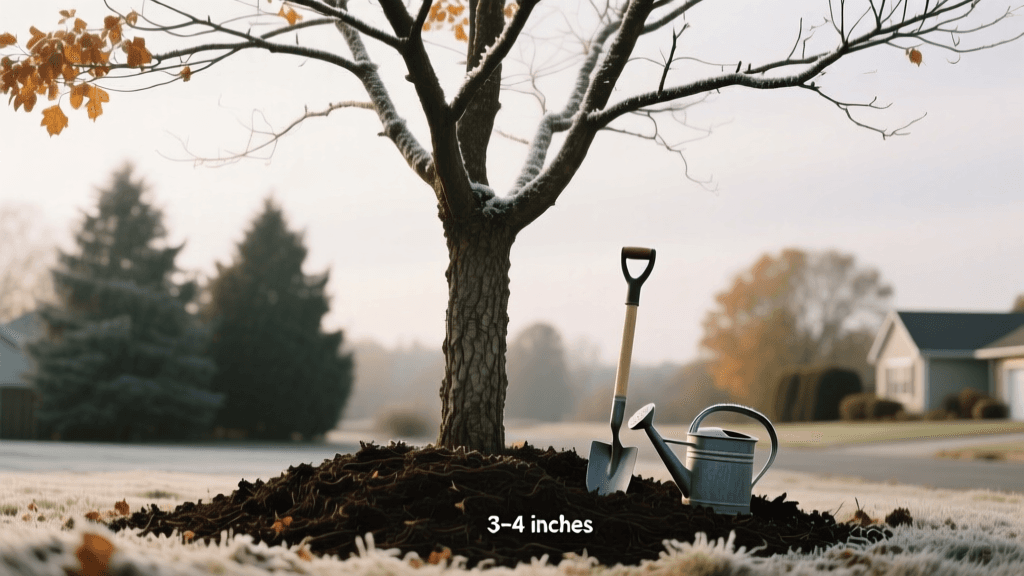
Mulch regulates soil temperature and retains vital moisture. However, improper mulching can cause more harm than good. Avoid 'volcano mulching,' where mulch is piled high against the trunk, as this traps moisture, invites rot, and provides a winter home for bark-chewing rodents.
- Measurement: Apply a 2 to 4-inch layer of organic hardwood mulch in a 3-foot radius around the base of the tree.
- The Donut Method: Keep the mulch at least 3 to 5 inches away from the actual trunk flare. The root flare should remain completely exposed to the air.
- Cost: $5 to $8 per bag of premium shredded bark mulch.
Step 3: Trunk Wrapping for Sunscald Prevention
To protect thin-barked and newly planted trees from sunscald and frost cracks, use a commercial tree wrap. The University of Minnesota Extension strongly recommends wrapping vulnerable trunks to reflect harsh winter sunlight and insulate the cambium.
- Product Recommendation: DeWitt Tree Wrap or generic crepe-paper tree wrap (avoid dark-colored materials or plastic wraps that trap moisture).
- Application: Start wrapping at the base of the trunk and overlap each layer by one-third as you work your way up to the first set of lower branches. Secure the top with a small piece of masking tape or twine (never use wire or duct tape, which can girdle the tree).
- Crucial Timing: Apply in November. You must remove the wrap in early April to prevent trapping spring moisture and harboring boring insects.
- Cost: $15 to $25 per roll (one roll can wrap multiple young trees).
Step 4: Anti-Desiccant Sprays for Evergreens
To combat winter desiccation, apply an anti-transpirant spray to the foliage of your evergreens. These products coat the needles in a thin, breathable polymer film, reducing moisture loss by up to 80%.
- Product Recommendation: Wilt Pruf or Bonide Anti-Transpirant concentrate.
- Application Rules: Spray only when temperatures are above freezing (ideally between 40°F and 50°F) so the product can dry properly on the needles. Apply a thorough coat in late November, and a second coat in late January or early February for season-long protection.
- Cost: $20 to $40 for a concentrate bottle that yields 10+ gallons of spray.
Step 5: Installing Physical Wildlife Barriers
To stop voles, rabbits, and deer from destroying your trees, install physical guards.
- For Voles and Rabbits: Use 1/4-inch galvanized hardware cloth. Form a cylinder around the trunk, burying the bottom 2 inches into the soil and extending it at least 18 inches above the anticipated snow line. Cost: $15 to $20.
- For Deer Browsing: Erect temporary fencing using wooden stakes and deer netting around the perimeter of vulnerable evergreen shrubs and low-hanging branches. Cost: $30 to $50 for materials.
Managing Snow and Ice Loads
Heavy winter storms can cause catastrophic structural damage to multi-stemmed evergreens like arborvitae and junipers, splaying their branches and causing them to snap.
Pro Tip: If heavy, wet snow accumulates on your evergreens, gently brush it off using a broom, sweeping upward from the bottom to the top. Never shake the branches or hit them with a shovel, as frozen wood is incredibly brittle and will shatter upon impact.
For ice storms, the safest action is inaction. Ice bonds to the cellular structure of the branches. Attempting to knock ice off will almost certainly result in severe branch tearing. Allow the ice to melt naturally, and prune any broken limbs with clean, sharp cuts once the storm has passed.
Late Winter Pruning Best Practices
While heavy pruning should be avoided in the fall (which stimulates new, tender growth that will be killed by frost), late winter—typically February and early March—is the absolute best time for structural pruning. Because the tree is fully dormant and the leaves are gone, the branching structure is clearly visible, making it easier to identify crossing branches, weak crotches, and diseased wood. Furthermore, pruning wounds made in late winter heal rapidly once the spring growth flush begins, minimizing the window of opportunity for disease pathogens and wood-boring insects to enter the tree.
Seasonal Tree Care Comparison Chart
Use the table below to quickly reference the specific maintenance requirements based on your tree types.
| Tree Type | Primary Winter Threat | Protective Action | Estimated Cost |
|---|---|---|---|
| Young Deciduous (Maple, Ash, Cherry) | Sunscald & Frost Cracks | Crepe-paper trunk wrapping (Nov to April) | $15 - $25 |
| Evergreens (Pine, Spruce, Arborvitae) | Winter Desiccation (Winterburn) | Anti-transpirant sprays & deep root watering | $20 - $40 |
| Fruit Trees (Apple, Crabapple) | Rodent Girdling & Deer Browsing | Hardware cloth trunk guards & perimeter fencing | $25 - $50 |
| Multi-Stemmed Shrubs (Juniper, Yew) | Snow Load Splaying & Breakage | Twine wrapping (spiraling) & gentle snow removal | $5 - $10 |
When to Call a Certified Arborist
While homeowners can handle hydration, mulching, wrapping, and spraying, certain winter tree care tasks require professional intervention. If your tree has suffered severe ice damage, exhibits large, hanging 'widow-maker' branches, or requires structural pruning near power lines, do not attempt DIY repairs. Contact an ISA Certified Arborist to perform a winter risk assessment and safely execute necessary pruning or cabling. Investing in professional seasonal maintenance ensures your trees remain safe, structurally sound, and vibrant for decades to come.