Tree Care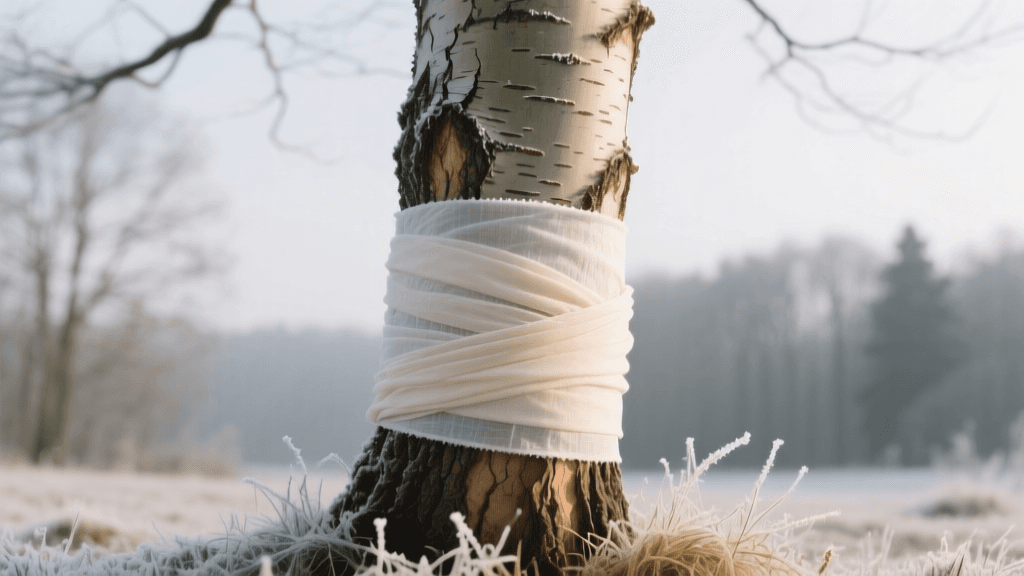
Winterizing Trees: Preventing Sunscald and Frost Cracks
The Hidden Winter Threat: Sunscald and Frost Cracks
Winter is often viewed as a dormant period where landscape maintenance takes a back seat. However, for young and thin-barked trees, winter presents a unique set of environmental hazards that can cause irreversible damage or even death. While heavy snow loads and ice storms are obvious threats, the most insidious winter dangers are sunscald and frost cracks. These phenomena occur not during the deepest, most consistent freezes, but during the transitional periods of late fall and late winter when daily temperature fluctuations are most extreme.
Many homeowners assume trees are entirely self-sufficient during the winter months. In reality, the winter sun can be just as damaging as the summer heat if proper precautions are not taken. Understanding the science behind winter trunk injury and implementing a proactive seasonal maintenance schedule is crucial for preserving the structural integrity and long-term health of your landscape trees.
The Science of Sunscald and Frost Cracks
To effectively protect your trees, you must first understand the biological mechanisms that cause winter trunk injury. Sunscald, sometimes referred to as 'southwest injury,' primarily affects the south and southwest-facing sides of a tree trunk. On a cold, clear winter day, the low angle of the sun beats directly against the dark bark. This solar radiation can heat the bark surface and the underlying cambium layer (the active growing tissue) to temperatures significantly higher than the ambient air temperature.
This localized heating tricks the tree into breaking dormancy. The cambium cells become active and lose their cold hardiness. However, as soon as the sun sets, or if a cloud passes over the sun, the temperature of the bark plummets rapidly. According to the University of Minnesota Extension, this rapid freezing kills the active cambium cells, resulting in sunscald. The following spring, the dead bark will dry out, crack, and peel away, exposing the vulnerable inner wood to pests, fungi, and decay.
Frost cracks are closely related but manifest differently. They appear as deep, vertical splits in the wood. These occur when the outer layers of the trunk freeze and contract faster than the inner, warmer wood. The immense stress caused by this uneven contraction causes the trunk to split, often with a loud cracking sound. While trees can sometimes callus over these cracks, they remain permanent structural weaknesses and entry points for disease.
Identifying Vulnerable Tree Species
Not all trees require winter trunk protection. Mature trees with thick, deeply furrowed bark (like oaks and hickories) have natural insulation that protects their cambium layer from rapid temperature shifts. The trees that require seasonal winterization are typically young trees (planted within the last three to five years) and species naturally characterized by thin, smooth bark.
Table 1: Tree Species Susceptibility to Winter Trunk Injury
| Susceptibility Level | Common Tree Species | Characteristics |
|---|---|---|
| Highly Susceptible | Maples (Red, Sugar, Japanese), Cherries, Plums, Ash, Linden, Birch, Honeylocust | Thin, smooth bark; dark bark colors that absorb high levels of solar radiation. |
| Moderately Susceptible | Elms, Sycamore, Willow, Crabapple | Medium bark thickness; may require protection in the first 2-3 years after planting. |
| Resistant | Oaks, Hickories, Pines, Spruce, Black Walnut | Thick, deeply ridged, or highly insulating bark; naturally adapted to temperature swings. |
If you have recently planted a tree from the 'Highly Susceptible' list, winterizing the trunk should be a non-negotiable part of your annual fall maintenance routine.
Step-by-Step Guide to Wrapping Tree Trunks
The most effective and common method for preventing sunscald and frost cracks is wrapping the trunk with a specialized reflective material. The Iowa State University Extension recommends using commercial tree wraps designed specifically for this purpose. Here is how to execute the wrapping process correctly:
1. Timing is Everything
Do not wrap your trees too early in the fall. Wrapping too soon can trap excess moisture against the bark and encourage fungal growth or rodent habitation. Wait until late fall, typically mid-to-late November, or after the first hard freeze when the tree has fully entered dormancy and dropped its leaves.
2. Select the Right Material
Purchase a commercial tree wrap made from polypropylene fabric, crepe paper, or burlap. These materials are breathable and reflective. Never use black plastic, tar paper, or dark materials, as these will absorb heat and exacerbate the exact temperature fluctuations you are trying to prevent. A standard roll of tree wrap costs between $5 and $12 and is usually enough to protect two to three young trees.
3. The Wrapping Technique
- Start at the Base: Begin wrapping at the soil line. Do not bury the wrap in the soil, but ensure it covers the root flare.
- Overlap Properly: Wrap the material around the trunk at a slight upward angle, overlapping each previous layer by about one-third (33%). This ensures water sheds off the wrap like shingles on a roof, rather than seeping underneath.
- Work Upward: Continue wrapping until you reach the first set of scaffold branches (the lowest major horizontal branches).
- Secure the Top: Fasten the end of the wrap using natural twine, masking tape, or specialized landscape tape. Never use duct tape, electrical tape, or wire, as these will girdle the tree and damage the bark as it expands in the spring.
Alternative Trunk Protection Methods
If wrapping is not feasible, or if you are dealing with a high population of winter rodents (like voles and rabbits) that might chew through fabric wraps, consider these alternatives:
White Plastic Tree Guards
Rigid, white plastic tree guards serve a dual purpose: they reflect the winter sun to prevent sunscald and create a physical barrier against rodents and lawn equipment. When using plastic guards, ensure they are split down the side to allow for trunk expansion and have adequate ventilation holes to prevent moisture buildup. These typically cost $3 to $8 per guard.
The Latex Paint Method
A highly effective, low-cost alternative favored by commercial orchardists is painting the trunk. Mix white, interior latex paint with water at a 50/50 ratio. Using a wide brush, paint the south and southwest-facing sides of the trunk from the soil line up to the first branches. The white paint reflects solar radiation, keeping the cambium layer dormant. This method costs less than $5 per tree but must be reapplied annually as it weathers.
Supporting Winterization: Deep Hydration and Mulching
Trunk protection is only one piece of the winterization puzzle. A tree's root system must also be prepared to survive the freezing, desiccating winds of winter. As noted by Penn State Extension, proper mulching and hydration are critical to preventing winter root damage and overall tree stress.
Late Fall Deep Watering
Evergreens and newly planted deciduous trees continue to lose moisture through their needles and twigs during winter. If the ground is dry when it freezes, the tree cannot replace this lost moisture, leading to severe winter desiccation. Continue to water your trees deeply once a week until the ground freezes solid. Apply 10 to 15 gallons of water per inch of trunk diameter, ensuring the moisture penetrates at least 12 inches into the soil.
The 'Donut' Mulching Technique
Mulch acts as an insulating blanket, regulating soil temperature and retaining moisture. However, improper mulching can be fatal.
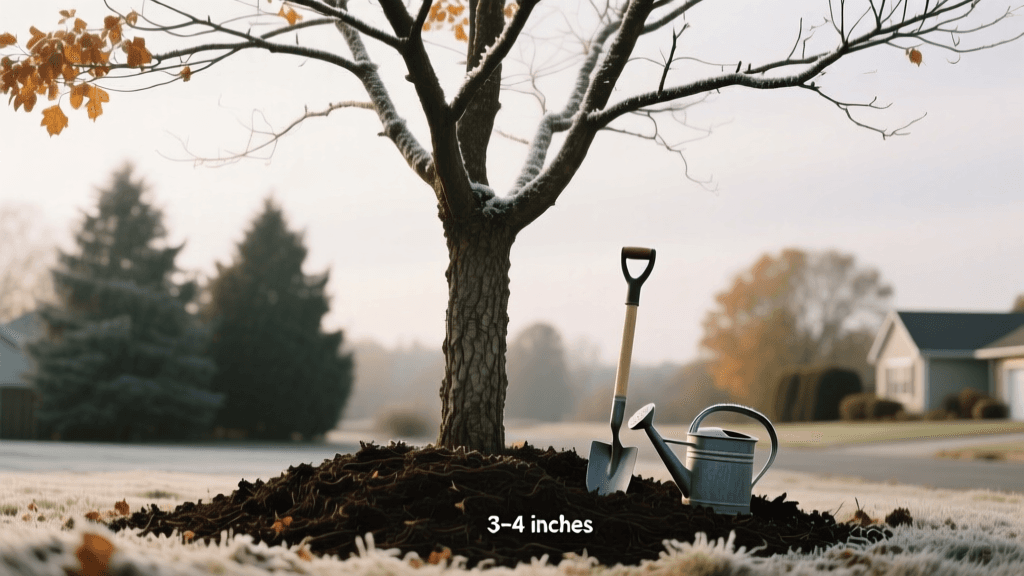
- Depth: Apply a 2 to 4-inch layer of organic wood chips or shredded bark.
- Diameter: Extend the mulch ring at least 3 feet out from the trunk (further is better).
- The Donut Rule: Keep the mulch 3 to 5 inches away from the actual trunk. Piling mulch against the bark (often called 'volcano mulching') traps moisture, invites fungal cankers, and creates a warm, hidden habitat for bark-gnawing rodents.
Product Comparison Chart: Trunk Protection Options
| Protection Method | Estimated Cost | Pros | Cons | Best Use Case |
|---|---|---|---|---|
| Polypropylene Tree Wrap | $5 - $12 / roll | Breathable, highly effective at temperature regulation, easy to apply. | Must be removed in spring; does not stop rodents. | Young, thin-barked trees in open, sunny lawns. |
| White Plastic Guard | $3 - $8 / guard | Excellent rodent protection, reusable for multiple seasons. | Can trap moisture if not ventilated; may harbor insects if left on year-round. | Areas with high vole/rabbit populations; rural edges. |
| White Latex Paint | $2 - $5 / tree | Cheapest option, no physical material to remove in spring, deters boring insects. | Aesthetically unpleasing to some homeowners; requires annual reapplication. | Orchards, large-scale plantings, rural windbreaks. |
Spring Removal and Damage Assessment
One of the most critical steps in seasonal tree care is knowing when to remove winter protection. You must remove tree wraps and plastic guards in early spring, typically in April, just as the tree begins to break dormancy and the risk of hard freezes has passed. Leaving wraps on during the wet spring and hot summer months will girdle the trunk, trap moisture against the bark, and provide a perfect breeding ground for fungal diseases and insect borers.
What to Do If Damage Has Occurred
If you remove the wrap and discover that sunscald or a frost crack has occurred, do not panic, and do not apply commercial tree wound sealants or paints. Modern arboriculture has proven that sealants trap moisture and hinder the tree's natural healing process. Instead, use a sterilized, sharp knife to carefully trace the outline of the dead, peeling bark and remove the loose tissue. This allows the wound to dry and encourages the tree to form a protective callus roll over the damaged area. With proper spring watering and a light application of balanced fertilizer, most healthy trees will compartmentalize the damage and recover over the next growing season.
Pro Tip: Keep a record of which trees in your landscape required wrapping this year. As a tree matures and its bark thickens (usually after 5 to 7 years), it will naturally outgrow the need for winter trunk protection, saving you time and money in future seasonal maintenance schedules.