Tree Care
Winterizing Young Trees: Frost Protection and Hydration Guide
The Hidden Dangers of Winter for Young Trees
As the vibrant colors of autumn fade and the first hard frost threatens to settle over your landscape, many homeowners mistakenly believe their yard work is finished. However, for young trees—typically those planted within the last three to five years—winter is not a time of peaceful slumber, but rather a period of intense environmental stress. While mature trees with deep, established root systems and thick, corky bark can easily withstand freezing temperatures and harsh winter winds, young specimens remain highly vulnerable to a variety of cold-weather ailments.
Winter tree care is a critical component of seasonal maintenance and overall tree health. Failing to properly prepare your young trees for the freezing months can result in severe consequences, including root desiccation, frost cracking, sunscald, and devastating rodent damage. In this comprehensive guide, we will explore the science behind winter tree stress and provide actionable, step-by-step protocols to protect your landscape investments, ensuring they emerge vibrant and healthy when spring arrives.
Understanding Winter Desiccation and Frost Stress
Winter desiccation, often referred to as winter burn, occurs when a tree loses more water through its foliage or bark than it can absorb from the surrounding soil. This is particularly problematic on sunny, windy winter days when the air temperature is above freezing, but the ground remains solidly frozen. The tree's canopy or bark continues to transpire, drawing moisture from the plant's internal reserves. Because the frozen root zone cannot replace this lost water, the tree's cells dry out and die, leading to browning foliage in evergreens and dieback in deciduous branches.
Another major threat is frost cracking, also known as southwest injury. On cold, clear winter days, the sun heats the southwest-facing side of a young tree's thin bark, causing the underlying cambium layer to expand and become active. When the sun sets or a cloud passes over, temperatures plummet rapidly. The sudden freezing causes the outer bark and inner wood to contract at different rates, resulting in vertical splits that can expose the tree to fungal pathogens and wood-boring insects.
Step 1: Strategic Fall and Winter Hydration
The foundation of winter tree health is established in the late fall. Before the ground freezes solid, you must engage in deep, slow watering to ensure the root zone is fully saturated. Hydrated soil retains heat better than dry soil, providing a warmer microclimate for the root system and reducing the risk of deep freezing.
The 10-Gallon Rule
As a general metric provided by urban forestry experts, young trees require approximately 10 gallons of water per inch of trunk caliper (measured at knee height). For a newly planted tree with a 2-inch caliper, this means delivering 20 gallons of water in a single session. Use a slow-drip soaker hose or a specialized tree watering bag, such as the Treegator Original (retailing around $25 to $30), which releases water slowly over 5 to 9 hours, allowing it to penetrate deeply into the clay or compacted soils without running off.
Winter Watering Protocols
If your region experiences a dry winter with little snow cover and temperatures consistently above 40°F, you must continue to water. Water only on warm days when the soil is unfrozen, allowing the hose to drain completely afterward to prevent equipment damage. Utilize a 12-inch soil moisture probe to verify that the water is reaching the critical root zone, which typically sits between 6 and 18 inches below the surface.
Step 2: Insulating the Root Zone with Proper Mulching
Mulch acts as the primary insulating blanket for a tree's shallow feeder roots. It regulates soil temperature, preventing the destructive freeze-thaw cycles that can cause soil heaving, which literally pushes young root balls out of the ground and severs vital anchoring roots.
The 3-3-3 Mulching Method
To properly mulch a young tree for winter, follow the 3-3-3 rule:
- 3 Inches Deep: Apply a layer of organic mulch no deeper than 3 to 4 inches. Piling mulch too thickly deprives the soil of oxygen and encourages the growth of anaerobic bacteria.
- 3 Feet Wide: Extend the mulch ring at least 3 feet in diameter from the trunk. Ideally, the mulch ring should extend to the tree's drip line to cover the entire active root zone.
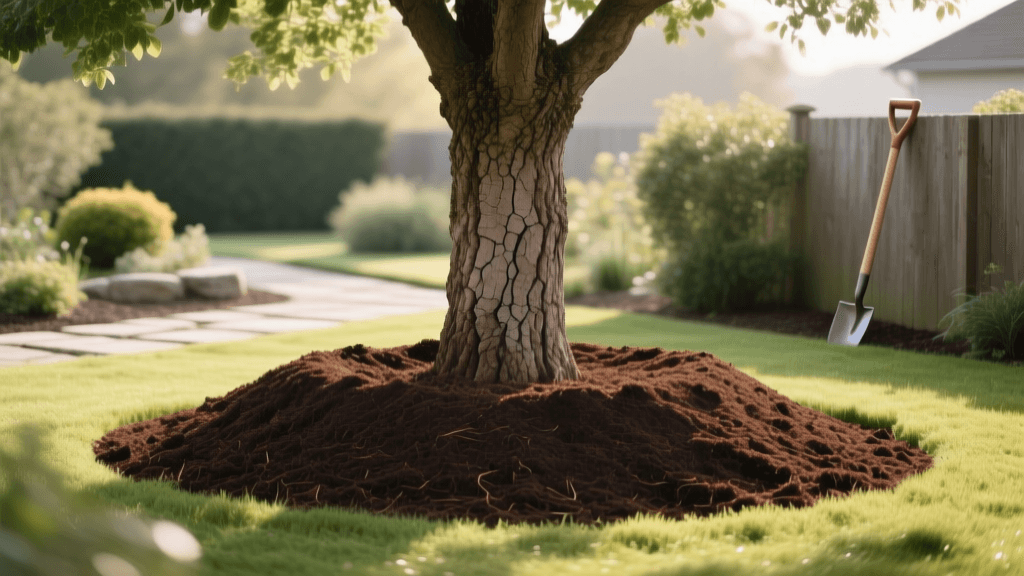
- 3 Inches Away: Keep the mulch at least 3 inches away from the actual trunk flare. Piling mulch against the bark, a practice known as 'volcano mulching,' traps moisture against the trunk, leading to rot, girdling roots, and inviting insect infestations.
Material Selection: Coarse arborist woodchips or shredded hardwood bark are excellent choices. Avoid fine mulches like peat moss or sawdust, which can mat down and repel water. Expect to pay between $30 and $45 per cubic yard for premium double-shredded hardwood mulch from a local landscape supplier.
Step 3: Guarding the Trunk Against Frost Cracks and Pests
Protecting the delicate bark of young deciduous trees, such as maples, ash, and fruit trees, is non-negotiable in regions with harsh winters.
Applying Tree Wrap
Use a commercial, breathable crepe paper tree wrap or a white plastic tree guard. The white color is essential, as it reflects the harsh winter sun, preventing the bark from heating up and triggering southwest injury. Start wrapping at the base of the trunk and work your way up to the first set of lateral branches, overlapping the wrap by about one-third with each turn. Secure the top with a piece of flexible twine or specialized tree tape. Never use duct tape or wire, as these can girdle and kill the tree. A standard roll of paper tree wrap costs about $8 to $12 and will protect 2 to 3 young trees.
Rodent Deterrence
Winter is a time when rodents like voles and mice seek refuge and food under the snow line. They frequently gnaw on the tender bark of young trees, often girdling them completely beneath the snow where you cannot see the damage until spring. To prevent this, install a cylinder of 1/4-inch hardware cloth around the base of the tree. Bury the bottom edge 2 inches into the soil and ensure the cylinder stands at least 18 inches above the anticipated snow line. This physical barrier is vastly superior to chemical repellents, which wash away in winter rains.
Step 4: Anti-Desiccant Sprays for Evergreens
For young evergreens, including arborvitae, pine, and holly, anti-desiccant sprays provide a protective polymer coating over the stomata (pores) of the needles, drastically reducing moisture loss. Products like Wilt-Pruf or Bonide Anti-Transpirant (costing $15 to $25 per quart) are highly effective.
Application Timing: Apply the spray in late November or early December when temperatures are between 40°F and 50°F. The coating requires several hours to dry, so ensure no freezing temperatures or rain are forecasted for at least 24 hours post-application. A second application in late January or early February is often necessary, as the polymer degrades under UV light over time.
Comprehensive Winter Tree Care Schedule
To keep your seasonal maintenance on track, refer to the following structured schedule. This timeline assumes a temperate Northern Hemisphere climate (USDA Zones 4-7).
| Timeframe | Action Item | Tools & Materials Needed | Estimated Cost |
|---|---|---|---|
| Mid-October | Deep root watering and soil moisture testing | Soaker hose, 12-inch soil moisture probe | $15 - $25 |
| Late October | Apply 3-inch hardwood mulch ring (3-3-3 rule) | Shredded hardwood mulch, wheelbarrow, pitchfork | $30 - $45 per yard |
| Early November | Install hardware cloth for vole protection | 1/4-inch hardware cloth, tin snips, work gloves | $10 - $20 |
| Late November | Wrap deciduous trunks; spray evergreen anti-desiccant | White crepe tree wrap, Wilt-Pruf, pump sprayer | $25 - $40 |
| December - February | Winter watering on warm days (if soil is unfrozen) | Garden hose, Treegator slow-release bag | $0 - $30 |
| Early April | Remove tree wrap to prevent fungal growth and girdling | Scissors or utility knife (used carefully) | $0 |
Expert Insights and Authoritative Citations
Proper winter tree care is not merely an aesthetic choice; it is a biological necessity for the survival of young landscape specimens. According to the Colorado State University Extension, a leading authority on arboriculture in challenging climates, winter watering is frequently overlooked but vital for urban and suburban trees.
'Trees and shrubs need to be watered during the winter months to maintain their health. Without adequate supplemental moisture, root systems can suffer severe damage, leading to a delayed decline that may not become apparent until the heat stress of mid-summer. Winter watering should be applied when air temperatures are above 40 degrees F and the soil is not frozen, ensuring the moisture penetrates deeply into the root zone.' — Colorado State University Extension, Fact Sheet 7.211: Fall and Winter Watering.
Furthermore, university researchers emphasize that the majority of winter damage is not caused by the absolute lowest temperatures, but rather by rapid temperature fluctuations and the lack of soil moisture. By implementing a proactive seasonal maintenance routine, you mimic the natural forest floor environment, buffering the tree against extreme thermal shifts and securing its structural integrity for decades to come.
Conclusion: An Investment in Longevity
Winterizing young trees requires a modest investment of time and materials, but the payoff is immense. By prioritizing deep hydration, applying insulating mulch correctly, shielding vulnerable bark from frost cracks, and deterring hungry rodents, you eliminate the primary vectors of winter mortality. Remember that seasonal tree health is a year-round endeavor. The protective measures you implement today as the snow begins to fall will directly dictate the vigor, canopy density, and disease resistance of your trees when the spring thaw finally arrives. Protect your young trees this winter, and they will reward you with shade, beauty, and increased property value for a lifetime.