Tree Care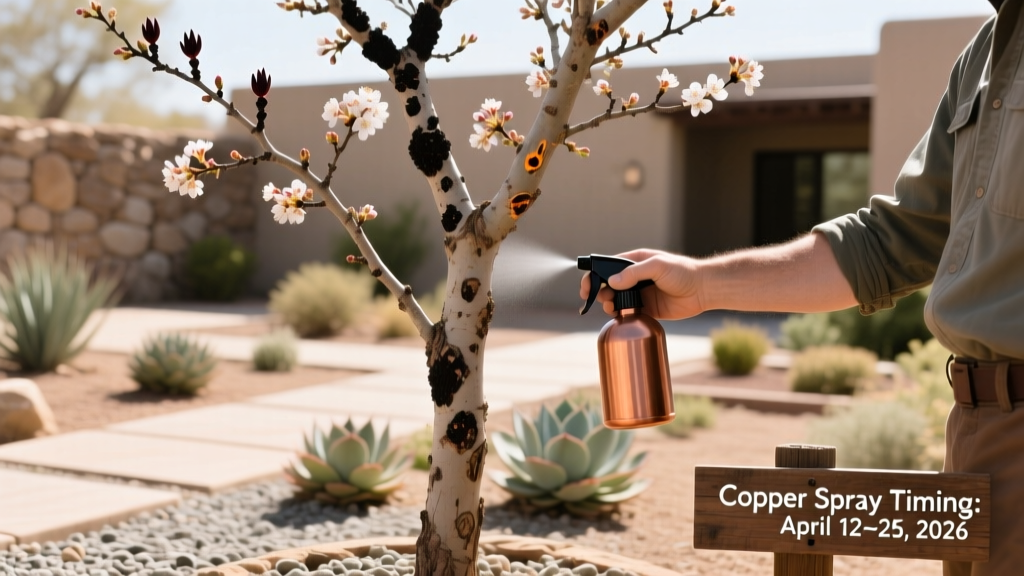
Fire Blight ID & Copper Spray Prevention for Xeriscapes 2026
David ParkPublished
The Xeriscape Paradox: Why Low-Water Trees Contract Fire Blight
As xeriscaping and low-water landscaping continue to dominate sustainable landscape design in 2026, homeowners and commercial property managers are increasingly relying on drought-tolerant ornamental trees to provide shade, structure, and visual interest without taxing municipal water supplies. However, a significant pathological challenge arises when low-water landscapes incorporate trees from the Rosaceae family. Species such as ornamental pears (Pyrus calleryana), hawthorns (Crataegus), pyracantha, and certain crabapples are staples in xeriscapes due to their hardiness and low water requirements once established. Unfortunately, they are also highly susceptible to fire blight, a destructive bacterial disease caused by the pathogen Erwinia amylovora.
The paradox of the xeriscape environment is that while these trees are selected for their ability to survive drought, the bacteria that cause fire blight thrive in warm, moist conditions. In many low-water landscapes, homeowners make the critical mistake of overwatering these drought-tolerant species or applying excessive nitrogen fertilizers to force rapid growth. This combination of high soil moisture and high nitrogen produces the exact type of lush, succulent, rapidly expanding shoot growth that fire blight bacteria exploit. Understanding how to identify this disease and utilizing copper sprays as a preventative measure is essential for maintaining a healthy, water-wise landscape in 2026.
Identifying Fire Blight in Drought-Tolerant Ornamentals
Fire blight earns its name from the scorched appearance it leaves on infected trees. In a xeriscape setting, where plants are already subjected to environmental stressors like high UV exposure and low humidity, the symptoms of fire blight can sometimes be mistaken for severe drought stress or sunscald. However, careful inspection reveals distinct bacterial signatures.
- The Shepherd's Crook: The most recognizable symptom is the rapid wilting and blackening of new, succulent shoot tips. As the bacteria destroy the vascular tissue, the tip of the branch bends over, forming a shape resembling a shepherd's crook. Unlike drought stress, which causes uniform drooping and browning of leaves, the shepherd's crook is localized to specific, rapidly growing terminals.
- Bacterial Ooze: During warm, humid spring days, infected branches and trunk cankers will exude a sticky, amber-colored or milky-white bacterial ooze. In the dry air typical of xeriscape climates, this ooze quickly dries into a dark, crusty residue on the bark, which can attract insects that further vector the disease.
- Necrotic Cankers: On older wood, fire blight manifests as sunken, discolored areas on the bark known as cankers. The margin between healthy and diseased tissue is often narrow and slightly raised. If you scrape away the outer bark of a canker, the underlying tissue will appear water-soaked and reddish-brown, contrasting sharply with the healthy, pale wood beneath.
- Blossom Blight: In early spring, infected flower clusters will turn brown or black and remain attached to the tree, creating a 'blasted' appearance that is easily visible against the typically sparse, gray-green foliage of xeriscape plants.
The Science of Copper Sprays in Low-Water Landscapes
Copper-based bactericides are the cornerstone of organic and conventional fire blight prevention. Copper does not cure an active infection; rather, it acts as a protective shield. When applied to the bark and emerging buds, copper ions create a highly toxic environment for Erwinia amylovora bacteria, preventing them from multiplying and entering the plant's natural openings (lenticels) or floral nectaries.
In arid, low-water landscapes, copper sprays face unique environmental challenges. High winds, blowing dust, and intense UV radiation can degrade the copper coating on the bark faster than in humid, temperate climates. Therefore, selecting the right formulation and applying it at the precise phenological stage of the tree's growth cycle is critical for 2026 xeriscape maintenance.
Copper Formulation Comparison for Xeriscapes
| Formulation Type | Active Ingredient | Best Use Case in Xeriscapes | Pros & Cons |
|---|---|---|---|
| Bordeaux Mixture | Copper Sulfate + Hydrated Lime | Dormant season trunk and branch spraying. | Pros: Highly weather-resistant; sticks well to rough bark. Cons: Can clog sprayers; must be mixed fresh; phytotoxic to green leaves. |
| Fixed Copper (Liquid) | Copper Octanoate / Copper Hydroxide | Green-tip and early bloom protection. | Pros: Easy to apply; safer for emerging tissue; widely available. Cons: Washes off easier in heavy spring rains; requires precise timing. |
| Micronized Copper | Ultra-fine Copper Particles | High-value ornamental hawthorns and pears. | Pros: Superior coverage; lower application rates; less visible residue. Cons: Higher cost per gallon; requires specialized agitation in tank. |
For comprehensive guidance on bactericide regulations and safety, the University of California Statewide Integrated Pest Management Program (UC IPM) provides excellent, up-to-date protocols on copper usage and environmental safety.
2026 Copper Spray Application Schedule
Timing is everything. Applying copper spray too late will damage the tree's foliage and fail to stop the bacteria, while applying it too early may result in the protective layer degrading before the bacteria become active. Follow this schedule for your xeriscape trees:
- Late Dormant Season (Late Winter): Apply a strong Bordeaux mixture or fixed copper spray just before the buds begin to swell. This targets overwintering cankers on the trunk and main scaffold branches, drastically reducing the primary inoculum (the initial bacterial load) in your landscape. Ensure the temperature is above freezing and no rain is expected for 24 hours.
- Silver Tip to Green Tip Stage: As the leaf buds break and show a sliver of green tissue, switch to a milder fixed copper spray (such as copper octanoate). This protects the emerging, highly vulnerable tissue without causing phytotoxicity (leaf burn).
- Early Bloom (5% to 20% Open Flowers): Fire blight bacteria primarily enter the tree through the nectaries of the flowers. A light application of fixed copper or a biological alternative (like Bacillus amyloliquefaciens) is crucial here. Note: Avoid heavy copper applications during full bloom, as it can cause russeting on fruit and harm beneficial pollinators.
Xeriscape Pro Tip: In dry, dusty environments, always rinse the foliage and bark of your trees with a gentle stream of water a day before applying a copper spray. Removing accumulated dust and pollen allows the copper to bond directly to the plant cuticle, significantly extending its protective lifespan.
Pruning and Sanitation in Dry Climates
Even with diligent copper spray prevention, xeriscape trees may still contract fire blight, especially during unusually wet spring microclimates created by inefficient drip irrigation systems. When infection occurs, surgical pruning is the only cure.
The Colorado State University Extension recommends the 'ugly stub' method for pruning active fire blight infections. Instead of making a clean, flush cut near the main trunk—which risks pushing the bacteria deeper into the tree's central vascular system—make your cut 12 to 18 inches below the visible margin of the infection, leaving a bare, leafless stub. Because the bacteria cannot easily travel through the older, hardened wood of the stub, this buys you time. You can then return during the winter dormant season to make a clean, final pruning cut at the branch collar when the bacteria are inactive.
Tool Sterilization is Non-Negotiable: In 2026, the standard for sterilizing pruning tools between every single cut is a 70% isopropyl alcohol solution or a commercial quaternary ammonium disinfectant. Avoid using bleach solutions, as they cause rapid rusting and pitting of high-carbon steel pruning saws and loppers, which creates microscopic grooves where bacteria can hide and survive.
Xeriscape Tree Selection: Susceptible vs. Resistant Species
The ultimate prevention strategy for fire blight in a low-water landscape is proper species selection. If you are designing a new xeriscape or replacing a tree lost to Erwinia amylovora, consult the table below to make water-wise, disease-resistant choices.
| Highly Susceptible (Avoid or Monitor Closely) | Moderately Susceptible | Highly Resistant (Ideal for Xeriscapes) |
|---|---|---|
| Callery Pear (Pyrus calleryana) | English Hawthorn (Crataegus laevigata) | Desert Willow (Chilopsis linearis) |
| Pyracantha (Firethorn) | Japanese Flowering Crabapple | Vitex / Chaste Tree (Vitex agnus-castus) |
| Indian Hawthorn (Rhaphiolepis indica) | Loquat (Eriobotrya japonica) | Smoke Tree (Cotinus coggygria) |
| Certain Quince varieties | Cotoneaster (Low-water groundcover) | Crape Myrtle (Lagerstroemia indica) |
Soil Health and Xeriscape Immunity
Finally, a tree's natural defense against bacterial pathogens is heavily influenced by its root environment. In xeriscapes, soils are often compacted, low in organic matter, and biologically inactive. Incorporating mycorrhizal fungi and deep-root composting techniques during the planting phase can drastically improve a tree's systemic immunity. By fostering a robust soil microbiome, you encourage the tree to produce natural phenolic compounds that make the internal vascular tissue less hospitable to fire blight bacteria. Combine this biological resilience with a strict, well-timed copper spray regimen, and your low-water landscape will remain vibrant, sustainable, and disease-free throughout 2026 and beyond.