
Landscaping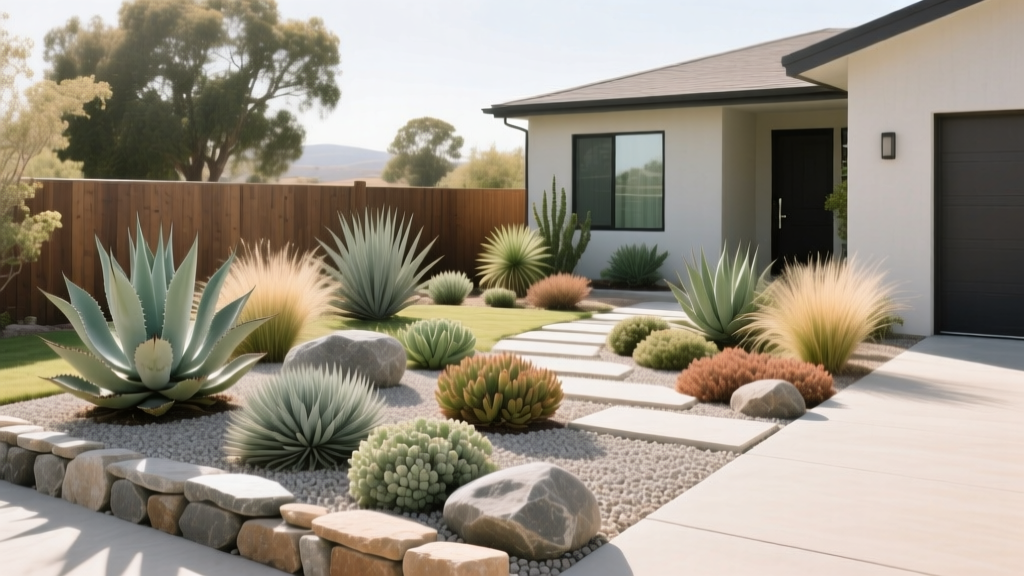
Xeriscape Front Yard Design: Planning a Low-Maintenance Landscape
James MillerPublished
Redefining Curb Appeal with Xeriscape Design
When homeowners hear the term xeriscaping, they often picture a barren wasteland of rocks, gravel, and a single struggling cactus. In reality, modern xeriscape front yard design is a vibrant, lush, and highly structured approach to landscaping that prioritizes water conservation without sacrificing aesthetic appeal. Originating in the 1980s, the term xeriscape combines the Greek word 'xeros' (dry) with landscaping. Today, it represents a sophisticated design philosophy that can increase property values, drastically reduce water bills, and eliminate the weekend chore of mowing the lawn.
Planning a successful xeriscape requires a strategic approach. You must move beyond simply ripping out the turf and replacing it with stone. True xeriscape design relies on seven core principles: planning and design, soil improvement, efficient irrigation, practical turf areas, appropriate plant selection, mulching, and appropriate maintenance. This guide will walk you through the actionable steps of designing a breathtaking, low-maintenance front yard that thrives in its specific microclimate.
Step 1: Site Analysis and Soil Testing
Before you sketch a single design idea or purchase a single plant, you must understand your site's unique characteristics. A front yard typically features a mix of microclimates dictated by the house's orientation, existing trees, and street heat reflection. South and west-facing areas will bake in the afternoon sun, requiring highly drought-tolerant specimens, while north and east-facing beds may retain moisture longer.
The Percolation Test
Soil drainage is the make-or-break factor for drought-tolerant plants. Most xeriscape plants, particularly succulents and Mediterranean natives, will suffer from root rot in heavy, waterlogged clay. To test your drainage, perform a simple percolation test: dig a hole 12 inches deep and 12 inches wide in your proposed planting bed. Fill it with water and let it drain completely. Then, fill it a second time and measure how long it takes for the water level to drop one inch. If it drops less than one inch per hour, you have heavy clay soil and will need to amend it with expanded shale or pumice, or build raised berms to improve drainage.
Step 2: Hydrozoning Your Landscape
Hydrozoning is the practice of grouping plants with similar water requirements together. This prevents the common mistake of overwatering drought-tolerant plants just to keep a nearby thirsty plant alive. When planning your front yard layout, divide the space into three distinct hydrozones.
- The Oasis Zone: Located near the entryway or front porch, this zone receives the most attention and water. Here, you can plant higher-water-use specimens like Japanese Maples, hydrangeas, or a small patch of drought-tolerant turf like UC Verde Buffalograss. This area creates a welcoming, lush first impression.
- The Transitional Zone: This middle ground bridges the gap between the lush entryway and the wilder edges of the yard. Plants here require moderate, infrequent watering. Examples include ornamental grasses, lavender, and yarrows.
- The Arid Zone: Typically located along the street, driveway, or property lines where heat radiates from concrete and asphalt. This zone relies almost entirely on natural rainfall once established. Utilize agaves, sages, and native succulents here.
Step 3: Hardscaping and Groundcover Selection
Hardscaping provides the architectural bones of your xeriscape. Replacing water-thirsty lawns with permeable hardscapes reduces water usage to zero in those areas while managing stormwater runoff. Choosing the right material depends on your budget, design style, and functional needs.
| Material | Cost (Per Sq Ft) | Permeability | Best Application |
|---|---|---|---|
| Decomposed Granite (DG) | $1.50 - $3.00 | High | Modern pathways, patios, and geometric planting beds |
| River Rock (1-3 inch) | $1.00 - $2.50 | Very High | Dry creek beds, drainage swales, and accent borders |
| Flagstone | $15.00 - $25.00 | Low (unless dry-set) | Primary walkways, formal entryways, and stepping stones |
| Crushed Gravel (3/8 minus) | $0.75 - $1.50 | High | Driveways, large coverage areas, and utility paths |
When installing materials like Decomposed Granite, always lay down a high-quality, permeable geotextile weed barrier first. A 2-to-3-inch layer of DG compacted with a plate compactor will create a firm, natural-looking surface that mimics the aesthetic of the American Southwest or modern minimalist designs.
Step 4: Selecting Drought-Tolerant Plants
The key to a stunning xeriscape is contrasting textures and seasonal colors. Since many drought-tolerant plants have fine, silvery, or needle-like foliage to reduce water loss, you must incorporate bold architectural plants to anchor the design. Here are three standout performers for a low-maintenance front yard:
- Agave 'Blue Glow' (Agave attenuata x Agave ocahui): This striking succulent forms a solitary rosette reaching 2 feet tall and wide. Its blue-green leaves are edged with a brilliant golden-yellow and red margin. It requires full sun and minimal water once established. It serves as an excellent architectural focal point at the end of a pathway. Cost: $35-$50 per 5-gallon nursery pot.
- Salvia greggii (Autumn Sage): A woody perennial that grows 2 to 3 feet tall and wide. It produces vibrant red, pink, or purple tubular flowers from spring through the first frost, acting as a magnet for hummingbirds and pollinators. Prune back by one-third in late winter to maintain a dense, mounding shape. Cost: $12-$18 per 1-gallon pot.
- Muhlenbergia capillaris (Pink Muhly Grass): This native ornamental grass reaches 3 feet tall and features a breathtaking display of hazy, pinkish-purple plumes in autumn. Plant them in drifts, spacing them 24 inches apart, to create a flowing, cloud-like effect that softens harsh hardscape edges. Cost: $15-$25 per 2-gallon pot.
Step 5: Precision Irrigation Planning
Xeriscaping does not mean zero irrigation; it means efficient irrigation. Overhead sprinklers are highly inefficient for mixed garden beds, losing up to 50% of water to wind and evaporation. Instead, design a drip irrigation system that delivers water directly to the root zone.
For mass plantings of groundcovers and ornamental grasses, use Netafim Techline CV dripline, which features built-in emitters spaced 12 inches apart, delivering 0.9 Gallons Per Hour (GPH). The CV (Check Valve) prevents the lines from draining out when the system turns off, ensuring even watering across slopes. For individual shrubs, agaves, and trees, utilize point-source emitters like the Rain Bird Xeri-Bug. These adjustable emitters can be dialed from 0.5 to 2.0 GPH and are connected to the mainline via 1/4-inch distribution tubing. Always connect your system to a smart weather-based irrigation controller, such as the Rachio 3, which automatically adjusts watering schedules based on local evapotranspiration rates and rainfall.
Cost Breakdown and ROI
Budgeting is a critical phase of the planning process. While the initial installation of a xeriscape can be comparable to or slightly higher than a traditional lawn, the long-term Return on Investment (ROI) is substantial due to water savings and eliminated maintenance costs. For a standard 1,000 square foot front yard, here is an estimated cost breakdown for a professional installation:
- Turf Removal and Disposal: $1.00 - $2.00 per square foot
- Soil Amendment and Grading: $1.50 per square foot
- Hardscaping (DG Pathways and Boulders): $4.00 - $8.00 per square foot
- Plants (Approx. 40-50 specimens): $800 - $1,200 total
- Drip Irrigation System and Smart Controller: $800 - $1,200 total
- Estimated Total Cost: $7,500 - $12,000
Homeowners who opt for a DIY approach can reduce these costs by 50% to 60%, bringing the total investment down to the $3,500 to $5,000 range. Furthermore, many local municipalities and water districts offer turf-replacement rebates ranging from $1.00 to $3.00 per square foot of removed grass, which can significantly offset your initial expenses.
Expert Insights and Authoritative Guidelines
Proper planning and adherence to horticultural science are vital for xeriscape success. According to the Colorado State University Extension, which has been a leading authority on water-wise landscaping since the term was coined in their state, implementing the seven principles of xeriscape can reduce outdoor water use by up to 60%. The CSU Extension emphasizes that soil preparation and proper hydrozoning are the most frequently overlooked steps by homeowners, leading to plant failure and eventual abandonment of water-wise practices. By following university-backed guidelines and respecting the natural limitations of your local environment, you can create a resilient landscape that thrives for decades.
Conclusion
Planning a xeriscape front yard is an investment in the future of your home and the environment. By carefully analyzing your site, grouping plants by their water needs, integrating functional hardscaping, and installing precision drip irrigation, you can design a landscape that is as beautiful as it is sustainable. Move past the outdated stereotypes of dry, lifeless yards, and embrace the vibrant, textural, and low-maintenance possibilities of modern xeriscape design.

