
Landscaping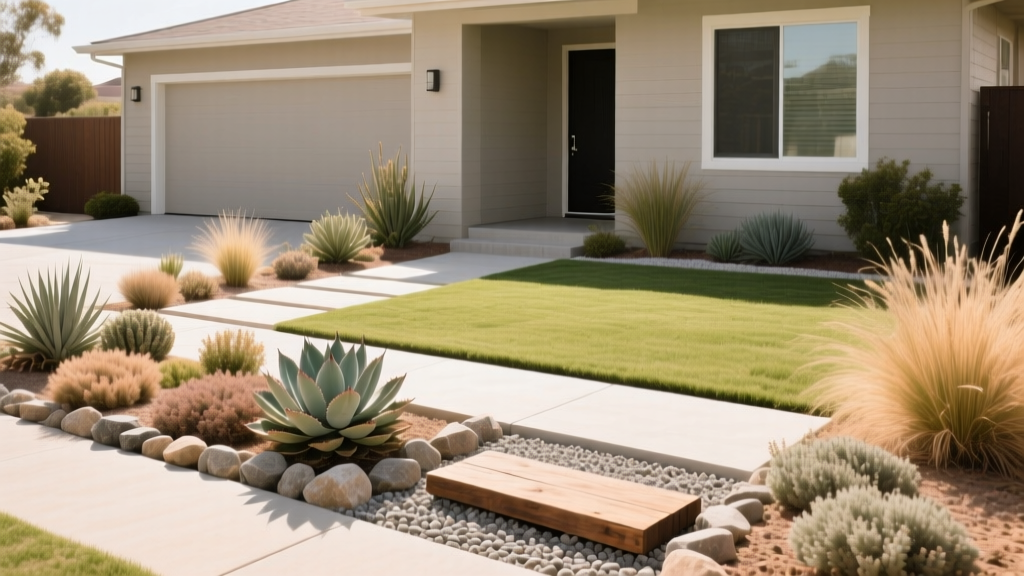
Xeriscape Front Yard Design: Replace Turf for Curb Appeal
Emily WatsonPublished
The Case for Drought-Tolerant Landscaping
As water restrictions become more frequent and utility costs continue to climb, homeowners are increasingly looking toward sustainable landscaping solutions. According to the EPA WaterSense program, the average American family uses nearly 320 gallons of water per day, with roughly 30 percent of that dedicated to outdoor uses. In arid and semi-arid climates, that outdoor water usage can spike to 60 percent or more, largely driven by thirsty turfgrass lawns. Replacing a traditional front yard lawn with a well-designed xeriscape is not just an environmentally responsible choice; it is a strategic investment in your property's curb appeal and long-term value.
Contrary to the misconception that xeriscaping means a barren yard filled with scattered rocks and lonely cacti, modern drought-tolerant landscaping embraces lush textures, vibrant colors, and architectural hardscaping. By utilizing the principles of hydrozoning, smart irrigation, and permeable hardscapes, you can create a dynamic outdoor space that thrives on minimal water. Below is a comprehensive, step-by-step guide to converting your front yard turf into a breathtaking, water-wise xeriscape.
Step 1: Turf Removal and Site Preparation
The first and most labor-intensive phase of xeriscaping is removing the existing lawn. While sod cutting provides immediate results, it strips away valuable topsoil and requires heavy machinery. For a more sustainable and cost-effective approach, we recommend sheet mulching (also known as lasagna composting).
How to Sheet Mulch Your Lawn
- Mow Low: Scalp the existing grass as short as your mower allows.
- Lay Cardboard: Cover the entire area with overlapping sheets of plain, uncoated corrugated cardboard. Remove all tape and labels. Overlap the edges by at least 6 inches to prevent weeds from pushing through.
- Soak Thoroughly: Water the cardboard heavily until it is completely saturated and conforms to the soil contour.
- Add Compost: Apply a 4 to 6-inch layer of high-quality, nitrogen-rich compost or topsoil directly over the wet cardboard.
- Wait: Allow the sheet mulch to decompose for 8 to 12 weeks. The grass beneath will die and compost, leaving you with a rich, workable soil bed.
Cost Estimate: Sheet mulching costs approximately $0.30 to $0.60 per square foot if done DIY, compared to $1.50 to $3.00 per square foot for professional sod removal and disposal.
Step 2: Soil Amendment and Grading
Drought-tolerant plants, particularly succulents and Mediterranean natives, require exceptional drainage. Heavy clay soils can lead to root rot, even in arid climates. Before planting, conduct a simple percolation test: dig a hole 12 inches deep and wide, fill it with water, and let it drain. If it takes longer than 4 hours to drain, you must amend the soil.
To improve drainage without compromising soil structure, mix in expanded shale or pumice at a ratio of 20 percent by volume. Avoid adding excessive sand to clay, as this can create a concrete-like texture. Additionally, use this stage to grade your yard. Create gentle swales (shallow depressions) and berms (raised mounds) to capture rainwater runoff and direct it toward the root zones of your new plants, a technique highly recommended by the Colorado State University Extension for passive water harvesting.
Step 3: Hardscaping and Permeable Pathways
A successful xeriscape balances softscape (plants) with hardscape (non-living elements). Incorporating permeable pathways reduces heat island effects and allows rainwater to percolate into the water table rather than running off into storm drains.
Installing a Decomposed Granite (DG) Pathway
Decomposed granite offers a natural, rustic look that complements drought-tolerant plantings perfectly. Here is how to install a durable DG walkway:
- Excavate: Dig a trench 4 inches deep along your desired path.
- Edging: Install steel or heavy-duty poly landscape edging along the borders to contain the gravel.
- Base Layer: Add 2 inches of crushed angular rock (like 3/4-inch minus gravel). Compact it thoroughly with a plate compactor.
- Surface Layer: Lay landscape fabric over the base to prevent weed growth, then add 1.5 inches of DG mixed with a liquid soil stabilizer.
- Compact and Cure: Compact the DG layer and mist it lightly with water. Allow it to cure for 48 hours before heavy foot traffic.
Cost Estimate: Materials for a DG pathway typically range from $1.50 to $2.50 per square foot.
Step 4: Hydrozoning and Plant Selection
Hydrozoning is the cornerstone of xeriscaping. It involves grouping plants with similar water, sun, and soil requirements together. This prevents the common mistake of overwatering drought-adapted plants just to keep a neighboring high-water plant alive.
When selecting plants, look for regional natives and adapted species that provide year-round interest through varied foliage textures, bark colors, and structural forms. Below is a comparison chart of highly reliable, low-water plants perfect for front yard curb appeal.
| Plant Name | Type | Water Need | Sun Exposure | Mature Size |
|---|---|---|---|---|
| Creeping Thyme (Thymus serpyllum) | Groundcover | Low | Full Sun | 2-4 in. H, 12-18 in. W |
| Blue Fescue (Festuca glauca) | Ornamental Grass | Very Low | Full Sun | 10-12 in. H, 10 in. W |
| Autumn Sage (Salvia greggii) | Perennial Shrub | Low | Full Sun to Part Shade | 24-36 in. H, 24 in. W |
| Dwarf Coyote Brush (Baccharis pilularis) | Evergreen Shrub | Very Low | Full Sun | 12-24 in. H, 4-6 ft. W |
| Agave 'Blue Glow' | Succulent | Minimal | Full Sun | 18 in. H, 24 in. W |
Design Tip: Use Agave or large ornamental grasses as focal points near the entryway, and mass-plant groundcovers like Creeping Thyme or Dwarf Coyote Brush to replace large expanses of former turf.
Step 5: Smart Drip Irrigation
Even drought-tolerant plants require regular watering during their first one to two years of establishment. Furthermore, deep, infrequent watering is always superior to shallow, daily sprinkling. To achieve this without wasting water to wind drift and evaporation, install a subsurface or surface drip irrigation system.
For shrubs and perennials, use Netafim Techline CV drip tubing, which features built-in emitters spaced 12 inches apart and includes check valves to prevent drainage at low points. For individual specimen plants like Agave or small trees, use adjustable bubblers or 0.5 to 1.0 GPH (gallons per hour) button emitters.
Connect your drip system to a smart irrigation controller, such as the Rachio 3 or Orbit B-hyve. These Wi-Fi-enabled devices adjust watering schedules automatically based on local weather data, soil type, and evapotranspiration rates, ensuring your landscape receives exactly what it needs and nothing more.
Step 6: Mulching for Moisture Retention
Mulch is the unsung hero of the water-wise garden. A proper mulch layer reduces soil surface evaporation by up to 70 percent, suppresses weed competition, and moderates soil temperature extremes. However, not all mulches are suitable for all plants.
- Organic Mulch (Shredded Hardwood or Bark): Apply a 3-inch layer around perennials, shrubs, and trees. Keep the mulch 2 inches away from the base of woody trunks to prevent rot. Organic mulch breaks down over time, feeding the soil microbiome.
- Inorganic Mulch (Decomposed Granite or River Rock): Apply a 2-inch layer around succulents, cacti, and heat-loving Mediterranean plants. Inorganic mulch reflects heat, improves surface drainage, and prevents the crown rot that succulents are prone to when sitting on damp organic matter.
Maintaining Your Xeriscape
A xeriscape is not a "no-maintenance" landscape, but rather a "low-maintenance" one. Seasonal upkeep involves pruning dormant perennials in late winter, refreshing organic mulch every two to three years, and flushing out drip irrigation lines annually to prevent emitter clogs. By following these actionable steps, you will drastically reduce your outdoor water consumption while elevating your home's exterior aesthetics. For further regional planting guides and conservation strategies, consult resources like the University of California Agriculture and Natural Resources lawn and landscape database to ensure your plant selections are perfectly matched to your specific microclimate.

