Tree Care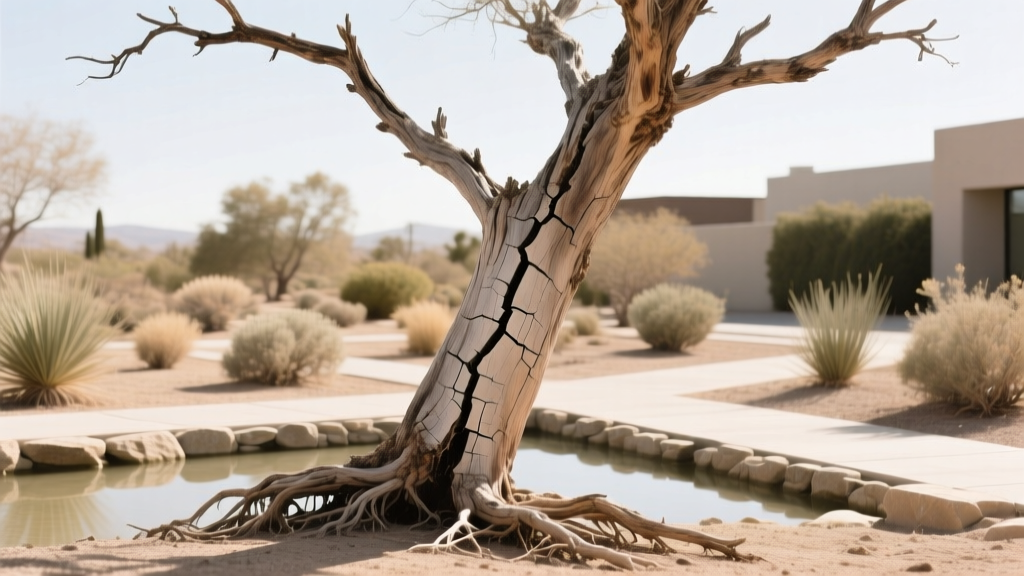
Xeriscape Hazard Tree Assessment: Cracks, Leans & Deadwood in 2026
Anna KowalskiPublished
Introduction to Xeriscape Tree Hazards in 2026
As water conservation becomes an increasingly critical priority for homeowners and municipalities alike, xeriscaping and low-water landscaping have transitioned from niche gardening trends to essential property management strategies in 2026. While replacing thirsty turfgrass with drought-tolerant groundcovers, decomposed granite, and native succulents drastically reduces outdoor water consumption, it also fundamentally alters the microenvironment surrounding your established trees. Trees that were once accustomed to the frequent, shallow watering of a traditional lawn must now adapt to infrequent, deep irrigation schedules—or in some cases, survive on ambient rainfall alone. This transition places immense physiological and structural stress on mature trees, increasing the likelihood of hazardous defects. Conducting a thorough hazard tree assessment focusing on cracks, leans, and deadwood evaluation is vital to ensuring your low-water landscape remains both beautiful and safe.
The Unique Challenges of Low-Water Landscaping on Tree Stability
In a traditional landscape, turfgrass provides a consistent blanket of shallow moisture that keeps the topsoil slightly expanded and humid. When you retrofit a yard into a xeriscape, the removal of grass and the introduction of inorganic mulches like gravel can lead to rapid soil desiccation. As the soil dries out, it shrinks and pulls away from the root collar, exposing structural roots to extreme temperature fluctuations and UV damage. Furthermore, the lack of surface moisture forces trees to rely entirely on deep taproots or widespread lateral roots. If a tree's root system was previously conditioned by shallow sprinkler systems, the sudden shift to a low-water environment can cause fine feeder roots to die back rapidly. This loss of root mass compromises the tree's anchorage, making it highly susceptible to leaning or uprooting during the high-wind monsoon events that frequently accompany dry seasons.
Evaluating Cracks in Drought-Stressed Trees
Drought stress is a primary catalyst for structural cracks in tree trunks and major scaffolding branches. When a tree experiences severe water deficits, the wood tissue loses its turgor pressure and moisture content, causing it to contract rapidly. This contraction often results in longitudinal frost cracks or deep radial fissures, particularly on the south and west-facing sides of the trunk where solar radiation is most intense. In 2026, evaluating these cracks requires more than just a visual inspection. While superficial bark splitting may only indicate minor stress, deep cracks that penetrate the sapwood can expose the heartwood to decay-causing fungi.
According to the International Society of Arboriculture (ISA), a formal tree risk assessment should include advanced diagnostic testing when structural cracks are present. Modern arborists now utilize micro-drill resistography tools, such as the IML-RESI PD500, to measure the internal density of the wood surrounding a crack. By inserting a tiny needle into the trunk, arborists can map the exact extent of internal decay without causing further harm to a drought-stressed tree. If a crack is accompanied by fungal conks or a hollow sound when tapped with a mallet, the structural integrity of the tree is severely compromised, and immediate mitigation or removal is required.
Assessing Tree Lean and Root Plate Shifts
A leaning tree in a xeriscape is a massive red flag that demands immediate attention. While some trees naturally grow with a slight lean to reach sunlight, a sudden or progressive lean indicates root failure or a shifting root plate. In low-water landscapes, this is often exacerbated by hydrophobic soil. When soil becomes excessively dry, it can develop a waxy, water-repellent coating. During rare but heavy desert rainstorms, water runs off the hydrophobic surface instead of penetrating the root zone, leading to flash erosion around the base of the tree. This erosion washes away the supporting soil, causing the root plate to tilt.
To evaluate a lean, look for secondary indicators of root failure. Check the base of the trunk for 'heaving' soil on the side opposite to the lean, which indicates the roots are physically pulling out of the ground. Additionally, inspect the area for severed roots caused by recent hardscaping or the installation of drip irrigation lines. In xeriscapes, homeowners often trench shallow lines for drip emitters directly over the critical root zone, inadvertently severing the very roots keeping the tree upright. If a tree exhibits a lean greater than 15 degrees from vertical, combined with heaving soil or exposed roots, it poses an imminent hazard to nearby structures and pedestrians.
Deadwood Evaluation: Cladoptosis vs. Hazardous Decay
Deadwood evaluation in a xeriscape requires a nuanced understanding of tree physiology. Many drought-adapted species, such as Mesquite, Palo Verde, and certain Oaks, utilize a survival mechanism known as cladoptosis. This is the intentional shedding of branches during severe drought to reduce the tree's overall water demand. While cladoptosis is a natural and healthy response to a low-water environment, the resulting deadwood can still pose a significant hazard if left unmanaged overhanging walkways, patios, or roofs.
However, not all deadwood is a product of natural self-pruning. The USDA Forest Service notes that prolonged drought reduces a tree's ability to produce defensive chemicals, making it highly vulnerable to secondary pests like bark beetles and woodborers. If you observe deadwood accompanied by tiny exit holes, sawdust-like frass at the base of the trunk, or sudden canopy dieback starting from the top down, the tree is likely suffering from a lethal pest infestation facilitated by drought stress. Hazardous deadwood will often feel brittle, lack the flexible green cambium layer beneath the bark, and may snap cleanly under the weight of a bird or a mild breeze. In 2026, regular crown cleaning by a certified arborist is essential to remove hazardous deadwood while preserving the tree's natural drought-response mechanisms.
Xeriscape Hazard Assessment Matrix
Use the following matrix to evaluate the severity of defects in your low-water landscape trees and determine the appropriate course of action.
| Hazard Defect | Visual Indicators in Xeriscapes | Risk Level | Recommended 2026 Mitigation |
|---|---|---|---|
| Longitudinal Trunk Cracks | Deep fissures on south/west trunk; peeling bark; fungal growth near the crack line. | High | Resistograph testing; install dynamic cabling if salvageable; remove if decay exceeds 30% of trunk radius. |
| Sudden Tree Lean | Trunk tilting >15 degrees; soil heaving on tension side; exposed structural roots. | Imminent | Immediate evacuation of the target zone; emergency removal by a certified crane crew. |
| Hydrophobic Root Zone | Water pooling and running off soil surface during irrigation; dry root ball despite watering. | Moderate | Apply soil wetting agents; use deep-root watering stakes to bypass the hydrophobic layer. |
| Natural Cladoptosis | Small to medium dead branches in the lower/mid canopy; no insect frass or exit holes. | Low to Moderate | Schedule routine crown cleaning to clear targets; leave non-hazardous deadwood for local wildlife habitat. |
| Pest-Induced Dieback | Top-down canopy death; D-shaped exit holes; sapwood tunneling; rapid leaf browning. | High | Systemic insecticide injections (if viable); otherwise, prompt removal to prevent spread to neighboring trees. |
Mitigation Strategies for 2026 Xeriscapes
Preventing tree hazards in a low-water landscape begins with proper irrigation design and soil management. The most common mistake in xeriscaping is placing drip emitters too close to the trunk of a mature tree. This encourages roots to circle the base, leading to girdling roots and a weak, unstable anchor. Instead, utilize deep-root watering stakes, such as the 2026 RootQuench Pro models, which deliver water directly to the deep lateral roots 12 to 18 inches below the surface. Place these emitters at the dripline and slightly beyond to encourage roots to spread outward, stabilizing the tree against windthrow.
Additionally, reconsider your mulching strategy. While gravel and decomposed granite are excellent for suppressing weeds and reducing evaporation in open xeriscape beds, they should never be piled against a tree trunk. Inorganic mulches retain heat and can bake the root flare, accelerating drought stress. Maintain a 3-foot radius of organic wood chip mulch around the base of your trees. Organic mulch slowly breaks down, improving soil structure, increasing the soil's water-holding capacity, and fostering the beneficial mycorrhizal fungi that help trees absorb scarce moisture.
When to Call a Certified Arborist
While homeowners can perform basic visual inspections for deadwood and minor leaning, a comprehensive hazard tree assessment requires professional expertise. If your tree exhibits deep cracks, significant leans, or signs of root plate failure, it is time to call a professional. Ensure you hire an arborist who holds the Tree Risk Assessment Qualification (TRAQ) credential from the ISA. These professionals are specifically trained to evaluate the complex interactions between drought stress, soil mechanics, and tree biomechanics. By proactively assessing and managing tree hazards in your xeriscape, you can enjoy the water-saving benefits of low-water landscaping without sacrificing the safety and longevity of your property's most valuable canopy assets.