
Landscaping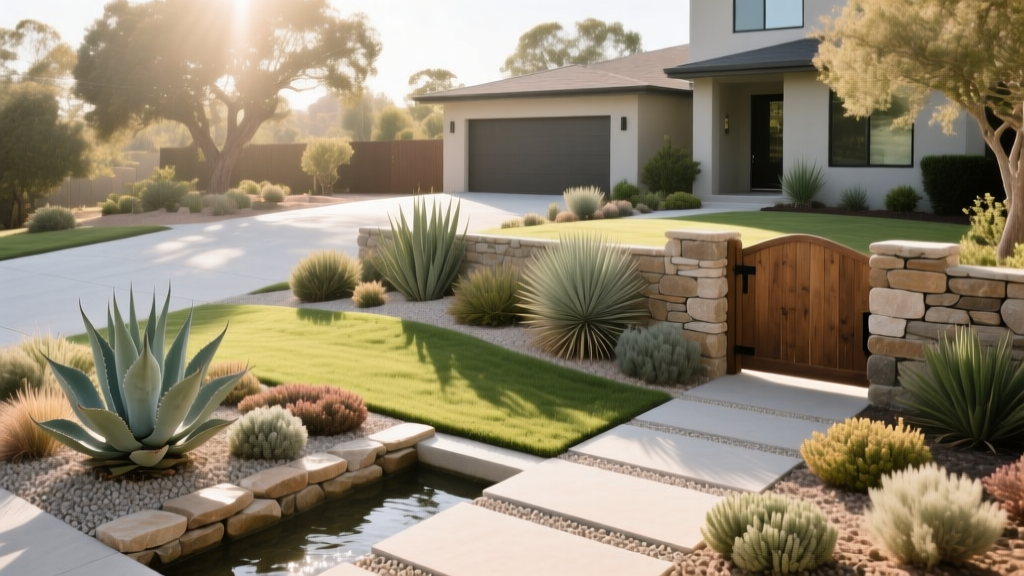
Xeriscaping Your Front Yard: Drought-Proof Curb Appeal
Robert HayesPublished
Why Xeriscaping is the Future of Front Yard Design
For decades, the quintessential American front yard has been defined by a sprawling, emerald-green lawn. However, as climate patterns shift and water restrictions become more common, homeowners and landscape architects are rethinking traditional turf. According to the Environmental Protection Agency (EPA), outdoor water use accounts for nearly 30% of total household water consumption, with some homes in arid regions using up to 60% of their water on landscaping. Xeriscaping—a landscaping philosophy focused on water conservation—offers a brilliant solution. By replacing thirsty turf with drought-tolerant flora, permeable hardscaping, and smart irrigation, you can drastically reduce your water bill while elevating your home's curb appeal with striking, low-maintenance textures and colors.
The Core Principles of Water-Wise Landscaping
Xeriscaping is not about creating a barren, desert-like rock garden; it is about thoughtful, sustainable design. The practice is built upon seven foundational principles that work together to minimize water waste while maximizing visual impact:
- Planning and Design: Mapping your yard's microclimates, sun exposure, and natural drainage patterns before planting.
- Soil Improvement: Amending native soil to improve water retention and root penetration.
- Practical Turf Areas: Limiting grass to small, functional zones and using drought-resistant grass species where necessary.
- Efficient Irrigation: Utilizing drip lines and smart controllers rather than wasteful overhead spray sprinklers.
- Mulching: Covering soil to reduce evaporation, suppress weeds, and regulate soil temperature.
- Low-Water Plant Selection: Choosing native and adapted species that thrive in your local climate with minimal supplemental water.
- Appropriate Maintenance: Pruning, weeding, and adjusting irrigation schedules seasonally to keep the landscape healthy.
Selecting Drought-Tolerant Plants for Curb Appeal
The foundation of a beautiful xeriscape is plant selection. When choosing specimens for your front yard, it is crucial to match the plant's water needs with your local climate. A highly recommended resource for this is the Water Use Classification of Landscape Species (WUCOLS) database, which categorizes thousands of plants based on their regional water requirements. By grouping plants with similar water needs—a practice known as hydrozoning—you prevent overwatering drought-tolerant species while ensuring thirsty plants get the moisture they need.
Top Drought-Tolerant Plants for Front Yards
Below is a comparison chart of versatile, low-water plants that provide year-round structural interest and vibrant curb appeal:
| Plant Name | Water Requirement | Sun Exposure | Best Landscape Use |
|---|---|---|---|
| Agave attenuata (Foxtail Agave) | Very Low | Full Sun to Part Shade | Architectural focal points, driveway borders |
| Muhlenbergia capillaris (Pink Muhly Grass) | Low | Full Sun | Mass plantings, softening hardscape edges |
| Rosmarinus officinalis (Creeping Rosemary) | Low | Full Sun | Groundcover, retaining wall cascades |
| Achillea millefolium (Yarrow) | Low to Moderate | Full Sun | Pollinator gardens, colorful border accents |
| Aloe arborescens (Torch Aloe) | Very Low | Full Sun | Winter color, security barriers under windows |
Designing with Permeable Hardscaping
To further reduce the irrigable area of your front yard, incorporate permeable hardscaping. Unlike solid concrete driveways or patios that create runoff and strain municipal storm drains, permeable surfaces allow rainwater to percolate back into the soil, recharging local groundwater.
Decomposed Granite (DG) Pathways: DG is an excellent, cost-effective material for walkways. It compacts firmly but remains permeable. For a durable DG path, excavate the area to a depth of 5 inches. Lay down a commercial-grade geotextile weed barrier, add a 3-inch base of crushed gravel, compact it with a plate compactor, and finish with a 2-inch layer of DG mixed with a stabilizer binder. Expect to pay between $40 and $60 per ton for DG, with one ton covering approximately 70 square feet at a 2-inch depth.
Permeable Pavers: For a more formal look or a driveway replacement, permeable pavers are ideal. These pavers are spaced slightly apart, and the joints are filled with small, angular gravel rather than sand. This allows water to flow through the joints into a deep aggregate base below. While installation costs are higher (typically $10 to $20 per square foot installed), the dramatic boost to curb appeal and elimination of puddling make it a worthwhile investment.
Installing Smart Drip Irrigation Systems
Even drought-tolerant plants require regular watering during their first one to two years of establishment. Furthermore, during extreme heat waves, supplemental watering keeps your xeriscape looking lush. The most efficient way to deliver water is through a drip irrigation system, which applies water directly to the root zone, minimizing evaporation and wind drift.
When designing your drip system, use pressure-compensating inline drip tubing, such as Netafim Techline CV, which features built-in emitters spaced 12 inches apart. For clay soils, which absorb water slowly, wider emitter spacing and longer run times are ideal. For sandy soils, which drain rapidly, use 6-inch emitter spacing and water more frequently for shorter durations.
To automate and optimize your system, pair your drip lines with a smart irrigation controller like the Rachio 3 or Weathermatic SmartLink. These devices connect to local weather stations via Wi-Fi and automatically skip watering cycles when rain is in the forecast, or adjust run times based on seasonal evapotranspiration rates. According to Colorado State University Extension, converting from traditional spray heads to drip irrigation and smart controllers can reduce outdoor water use by up to 50%.
Soil Amendment and Mulching Strategies
Healthy soil is the unsung hero of a successful xeriscape. Before planting, test your soil's percolation rate. Dig a hole 12 inches deep and fill it with water; if it takes longer than 24 hours to drain, you have heavy clay soil that needs amendment. Incorporate 2 to 3 inches of high-quality organic compost into the top 6 inches of your native soil. This improves soil structure, increases microbial activity, and enhances moisture retention.
Once planted, mulching is non-negotiable. Mulch acts as an insulating blanket, keeping root zones cool in the summer and warm in the winter, while drastically reducing surface evaporation.
- Organic Mulch (Wood Chips, Shredded Bark): Apply a 3 to 4-inch layer around plants. Organic mulch breaks down over time, feeding the soil. Keep the mulch at least 2 inches away from the base of woody shrubs and tree trunks to prevent collar rot.
- Inorganic Mulch (Gravel, River Rock): Ideal for succulent and cacti gardens where excess moisture around the crown can cause rot. A 2-inch layer of 3/8-inch crushed gravel provides excellent drainage and reflects heat, creating a striking, modern aesthetic that contrasts beautifully with architectural plants like Agave and Aloe.
Seasonal Maintenance for Xeriscapes
A common misconception is that xeriscapes are "zero-maintenance." While they require significantly less work than traditional lawns—eliminating the need for weekly mowing, edging, and fertilizing—they do require seasonal attention. In early spring, prune back dormant ornamental grasses to within 4 inches of the ground to encourage fresh, vibrant growth. Hand-pull weeds that emerge after winter rains, as weeds will aggressively compete with your established plants for limited soil moisture. Finally, conduct a bi-annual audit of your drip irrigation system. Flush the lines to clear mineral buildup, and replace any clogged emitters or chewed tubing to ensure every drop of water is used efficiently.
By embracing water-wise landscaping principles, you can transform your front yard into a resilient, eco-friendly showcase. Not only will you insulate your home against rising water costs and drought restrictions, but you will also create a unique, textured landscape that stands out beautifully in any neighborhood.

