
Landscaping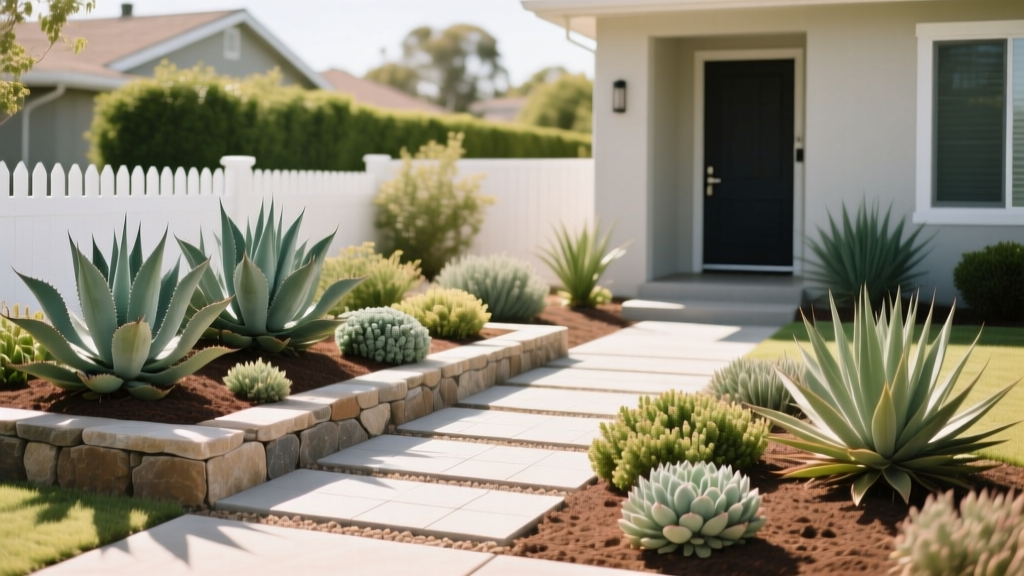
Xeriscaping Front Yards: Drought-Tolerant Design Ideas
James MillerPublished
The Shift to Water-Wise Landscaping
As water scarcity becomes a pressing global issue and utility costs continue to rise, traditional turf-heavy front yards are rapidly losing their appeal. According to the Environmental Protection Agency (EPA), outdoor water use accounts for nearly 30% of total household water consumption, with landscaping being the primary culprit. Transitioning to a xeriscaped front yard is no longer just an environmental statement; it is a practical, cost-effective landscaping strategy that dramatically reduces maintenance while elevating your home's curb appeal.
Xeriscaping is not about creating a barren, desert-like rock garden. When executed correctly, it involves a lush, vibrant, and highly functional landscape that thrives on minimal supplemental water. This guide provides actionable, step-by-step instructions for replacing thirsty turf with drought-tolerant groundcovers, integrating permeable hardscaping, and optimizing your irrigation for long-term resilience.
Step 1: Turf Removal and Soil Preparation
Before introducing new hardscaping or plants, the existing water-guzzling lawn must be removed. While chemical herbicides offer a quick fix, water-wise landscaping prioritizes soil health and ecological balance. The most effective and sustainable method is sheet mulching.
- Timing: Begin 6 to 8 weeks before your planned planting date, ideally in early fall or early spring.
- Process: Mow the existing grass as short as possible. Lay down 4 to 6 overlapping layers of plain, uncoated cardboard directly over the turf, wetting each layer thoroughly. Top the cardboard with 3 to 4 inches of organic compost, followed by 2 to 3 inches of coarse wood chip mulch.
- Result: The grass decomposes naturally, enriching the soil with organic matter while the cardboard suppresses weed growth without harming soil microbes.
Step 2: Selecting Drought-Tolerant Groundcovers
Replacing a monoculture lawn with diverse, low-water groundcovers reduces irrigation needs by up to 70%. The University of California's WUCOLS (Water Use Classification of Landscape Species) database is an invaluable, science-backed resource for selecting plants based on their specific regional water requirements.
Below is a comparison of top-performing, drought-tolerant groundcovers suitable for front yard applications:
| Groundcover Species | Water Requirement | Sun Exposure | Foot Traffic Tolerance | Est. Cost (per sq. ft.) |
|---|---|---|---|---|
| Creeping Thyme (Thymus serpyllum) | Low | Full Sun | Moderate | $0.50 - $1.00 |
| Sedum (Sedum spurium) | Very Low | Full to Part Sun | Low (Ornamental) | $0.75 - $1.25 |
| Kurapia (Lippia nodiflora) | Low | Full Sun | High | $1.50 - $2.50 |
| Buffalo Grass (Bouteloua dactyloides) | Very Low | Full Sun | High | $0.60 - $1.00 |
Note: Kurapia and Buffalo Grass are excellent direct replacements for traditional lawns if you still desire a walkable, mowable surface, though they require significantly less water and fertilizer.
Step 3: Integrating Permeable Hardscaping
A truly water-wise landscape captures rainwater on-site, allowing it to percolate into the soil and recharge local aquifers rather than running off into storm drains. Replacing concrete driveways or patios with permeable alternatives is a cornerstone of sustainable landscaping.
Decomposed Granite (DG) with Stabilizer
DG provides a natural, rustic look ideal for pathways and seating areas. To prevent erosion and maintain permeability, use a stabilizer like Gator Stone or TerraKoat.
- Excavation: Dig down 6 to 8 inches.
- Base Layer: Install 4 to 5 inches of 3/4-inch crushed angular gravel, compacting it with a plate compactor.
- Surface Layer: Apply 2 to 3 inches of stabilized DG, compacting in 1-inch lifts.
- Cost: Approximately $3.00 to $5.00 per square foot installed.
Permeable Interlocking Pavers
For areas requiring more structural integrity, permeable pavers allow water to flow through the joints into a crushed stone reservoir below.
- Excavation: Requires a deeper base, typically 10 to 12 inches.
- Base Layer: 6 to 8 inches of open-graded 1-inch crushed stone.
- Bedding & Joints: 1 to 2 inches of 1/4-inch chip stone, with joints filled with the same chip stone (never use fine sand, which clogs the system).
- Cost: $10.00 to $18.00 per square foot installed.
Step 4: Hydrozoning Your Plant Beds
Hydrozoning is the practice of grouping plants with similar water, sun, and soil requirements together. This prevents the common mistake of overwatering drought-tolerant plants just to keep a neighboring moisture-loving plant alive.
- Zone 1 (Oasis Zone): Located within 10 feet of your home's foundation or entryway. This zone receives the most attention and can feature higher-water-use plants that benefit from roof runoff or occasional supplemental irrigation.
- Zone 2 (Transition Zone): Extending 10 to 20 feet from the home. Use moderate-water-use native shrubs and perennials here. Water deeply but infrequently to encourage deep root growth.
- Zone 3 (Arid Zone): The outermost edges of the property. This zone should consist exclusively of highly drought-tolerant, native, or adapted species that survive entirely on natural rainfall once established.
Step 5: Upgrading to Smart Drip Irrigation
Overhead sprinklers lose up to 50% of their water to wind drift and evaporation. Subsurface drip irrigation delivers water directly to the root zone with up to 95% efficiency.
- Equipment: Use inline drip tubing (such as Netafim Techline CV) with built-in emitters spaced 12 to 18 inches apart. Bury the tubing 2 to 3 inches beneath the mulch layer to protect it from UV degradation and physical damage.
- Smart Controllers: Replace outdated timers with a weather-based smart controller like the Rachio 3 or Hunter Hydrawise. These devices connect to local weather stations via Wi-Fi and automatically skip watering cycles when rain is forecasted or soil moisture is sufficient, saving the average homeowner thousands of gallons annually.
Step 6: Mulching for Moisture Retention
Mulch is the unsung hero of the drought-tolerant landscape. A proper mulch layer reduces soil surface evaporation by up to 70%, moderates soil temperature, and suppresses competing weeds.
- Organic Mulches: Shredded hardwood bark, pine needles, or arborist wood chips are ideal for plant beds. Apply a 2 to 3-inch layer. Replenish annually as it decomposes and feeds the soil.
- Inorganic Mulches: Decomposed granite, river rock, or pea gravel are excellent for arid zones and succulent gardens. They do not decompose and reflect heat, which some desert-adapted plants prefer.
- The Donut Rule: Never pile mulch against the base of shrubs or trees (known as 'volcano mulching'). Leave a 3-inch bare soil 'donut' around the main stem to prevent rot and rodent damage.
Long-Term Maintenance and Financial ROI
While the initial installation of a xeriscaped front yard requires an investment of time and capital, the return on investment is substantial. You will eliminate the costs associated with weekly mowing, edging, aerating, and heavy fertilization. Furthermore, many local water districts offer aggressive rebate programs for turf removal and the installation of smart irrigation controllers. Organizations like Be Water Wise frequently update lists of regional rebates that can offset hardscaping and plant costs by up to $2.00 per square foot of removed turf.
By embracing drought-tolerant design, permeable surfaces, and smart irrigation, you are not just adapting to a changing climate—you are creating a sophisticated, resilient landscape that stands out in the neighborhood while preserving our most vital resource.

