
Landscaping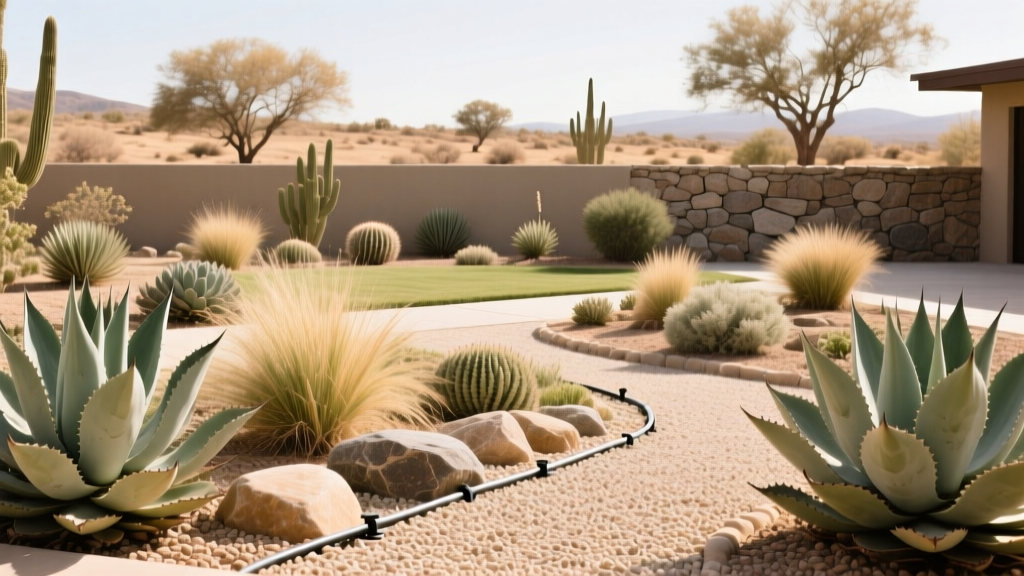
Xeriscaping Myths: Fact vs Fiction in Drought Landscaping
Anna KowalskiPublished
The Truth About Drought-Tolerant Landscaping
When homeowners hear the word 'xeriscaping,' many immediately picture barren front yards filled with decorative gravel, scattered boulders, and a single, lonely cactus. This misconception has prevented countless gardeners from embracing one of the most sustainable, cost-effective, and visually stunning landscaping methods available today. Coined in 1981 by Denver Water, the term 'xeriscape' comes from the Greek word 'xeros,' meaning dry. However, it does not mean 'zero-water' or 'lifeless.' According to the Denver Water authority, xeriscaping is simply landscaping that reduces or eliminates the need for supplemental water from irrigation. In an era of shifting climate patterns and frequent drought restrictions, separating xeriscaping fact from fiction is essential for modern homeowners. Let us debunk the five most pervasive myths about drought-tolerant landscaping and provide actionable, data-backed strategies for your yard.
Myth 1: Xeriscaping Means 'Zero-Scaping' (Rocks and Cacti Only)
The Fiction
Xeriscaping requires replacing all organic plant life with inorganic hardscaping, gravel, and desert succulents.
The Fact
Xeriscaping is about water efficiency, not biological sterility. A well-designed xeriscape can be incredibly lush, colorful, and teeming with pollinators. The secret lies in selecting climate-appropriate plants that thrive on natural rainfall once established. For example, plants like Russian Sage (Perovskia atriplicifolia), Yarrow (Achillea millefolium), and Hummingbird Mint (Agastache) provide vibrant blooms and dense foliage while requiring a fraction of the water needed by traditional turfgrass. To make informed choices, professionals use resources like the Water Use Classification of Landscape Species (WUCOLS) database, which categorizes thousands of plants by their specific regional water needs. By grouping plants with similar water requirements—a practice known as hydrozoning—you can create a vibrant, multi-layered garden that defies the 'barren desert' stereotype.
Myth 2: Drought-Tolerant Plants Never Need Watering
The Fiction
Once you plant a drought-tolerant shrub or perennial, you can walk away and let nature take its course.
The Fact
This is perhaps the most costly myth in sustainable landscaping. While mature xeriscape plants are highly drought-resistant, they are not drought-proof on day one. Every plant requires an establishment period to develop a deep, resilient root system. If you plant a 5-gallon Agastache or a 15-gallon Ceanothus (California Lilac) and ignore it, it will die. Here is a practical, actionable watering schedule for establishing drought-tolerant plants in their first year:
- Weeks 1-2: Water every other day to keep the root ball moist. Use a 1-GPH (gallon per hour) drip emitter for perennials and a 2-GPH emitter for shrubs.
- Months 1-3: Water twice a week, encouraging roots to push outward into the native soil.
- Months 4-12: Transition to a deep, weekly soak. Deep watering (applying about 1 to 1.5 inches of water per session) forces roots to grow downward, accessing cooler, moister soil layers.
- Year 2 and Beyond: Most true xeriscape plants will only need supplemental watering during extreme heat waves or prolonged dry spells, perhaps once or twice a month in the peak of summer.
The EPA's WaterSense program emphasizes that proper soil preparation—amending the top 6 inches of soil with 2 to 3 inches of organic compost before planting—is critical for water retention during this vulnerable establishment phase.
Myth 3: You Must Remove Your Entire Lawn to Xeriscape
The Fiction
To have a true xeriscape, you must rip out every square foot of turfgrass and replace it with garden beds.
The Fact
You do not need an all-or-nothing approach. 'Turf reduction' is a core principle of xeriscaping. Traditional Kentucky Bluegrass or Fescue lawns consume vast amounts of water, but you likely only need a small play area for children or pets. By shrinking your lawn to a functional 200-300 square foot 'carpet' and converting the remaining unused margins into drought-tolerant garden beds, you can reduce outdoor water use by 50% or more without losing the aesthetic of green grass. Furthermore, if you want a lawn-like look with minimal water, consider replacing traditional turf with eco-friendly alternatives like microclover, creeping thyme, or drought-tolerant fine fescue blends, which require up to 70% less water and naturally resist weeds.
Myth 4: Gravel and Landscape Fabric are the Best Mulches
The Fiction
Because xeriscapes are dry, inorganic gravel laid over plastic landscape fabric is the best way to prevent weeds and retain moisture.
The Fact
While gravel has its place in specific drainage swales or dry creek beds, using it as a blanket mulch over landscape fabric is detrimental to soil health and plant vitality. Landscape fabric blocks the natural exchange of gases, prevents organic matter from reaching the soil, and eventually becomes clogged with debris, creating a perfect breeding ground for weeds on top of the fabric. Furthermore, gravel absorbs and radiates intense solar heat, which can scorch the lower leaves of plants and bake the root zone. Organic mulch is vastly superior for the majority of a xeriscape.
| Feature | Organic Wood Mulch (e.g., Shredded Cedar) | Inorganic Gravel/Rock |
|---|---|---|
| Moisture Retention | Excellent; reduces soil evaporation by up to 70%. | Poor; water often runs off or evaporates quickly beneath rocks. |
| Soil Health | Decomposes over time, feeding soil microbes and adding nutrients. | Zero nutritional value; can compact soil and suffocate roots. |
| Heat Reflection | Absorbs heat, keeping the root zone cool and protected. | Reflects intense heat, increasing plant transpiration and stress. |
| Maintenance | Requires a 2-inch top-up every 1 to 2 years. | Requires frequent leaf-blowing; weeds are hard to pull from gravel. |
| Avg Cost | $30 - $45 per cubic yard. | $50 - $90 per cubic yard. |
For optimal results in a drought-tolerant garden, apply a 3-inch layer of shredded hardwood or cedar bark mulch, keeping it 2 inches away from the base of plant stems to prevent rot.
Myth 5: Xeriscaping is Too Expensive to Install
The Fiction
Converting a traditional yard into a xeriscape requires a massive upfront budget that most homeowners cannot justify.
The Fact
While there is an upfront investment, xeriscaping offers one of the highest returns on investment (ROI) in home landscaping. Let us break down the average costs for a 500-square-foot front yard conversion:
- Turf Removal: $1.00 to $2.50 per square foot (using a sod cutter or solarization method).
- Drip Irrigation Installation: $1.50 to $3.00 per linear foot for 1/2-inch poly tubing and emitters. Drip systems deliver water directly to the root zone with 90% efficiency, compared to 50-65% for overhead sprinklers.
- Plants and Soil Amendment: $3.00 to $6.00 per square foot, depending on the maturity of the plants chosen.
Total installation typically ranges from $8 to $15 per square foot. However, the savings are immediate. According to the EPA, outdoor water use accounts for nearly 30% of total household water consumption, with half of that wasted due to evaporation and inefficient sprinklers. By xeriscaping, a homeowner can save tens of thousands of gallons of water annually, drastically reducing utility bills. Furthermore, many local municipalities and water districts offer aggressive turf-removal rebates, paying homeowners anywhere from $1.00 to $3.00 per square foot of grass removed, which can offset a significant portion of the installation costs.
Conclusion: Embrace the Reality of Sustainable Landscaping
Xeriscaping is not a compromise; it is an upgrade. By discarding the myths of barren rock gardens, zero-water expectations, and prohibitive costs, you open the door to a dynamic, ecologically beneficial, and low-maintenance landscape. Whether you are replacing a water-thirsty parkway strip with native salvias or installing a smart drip-irrigation system beneath a layer of organic mulch, every step toward drought-tolerant landscaping future-proofs your home against water scarcity while boosting your curb appeal.

