
Landscaping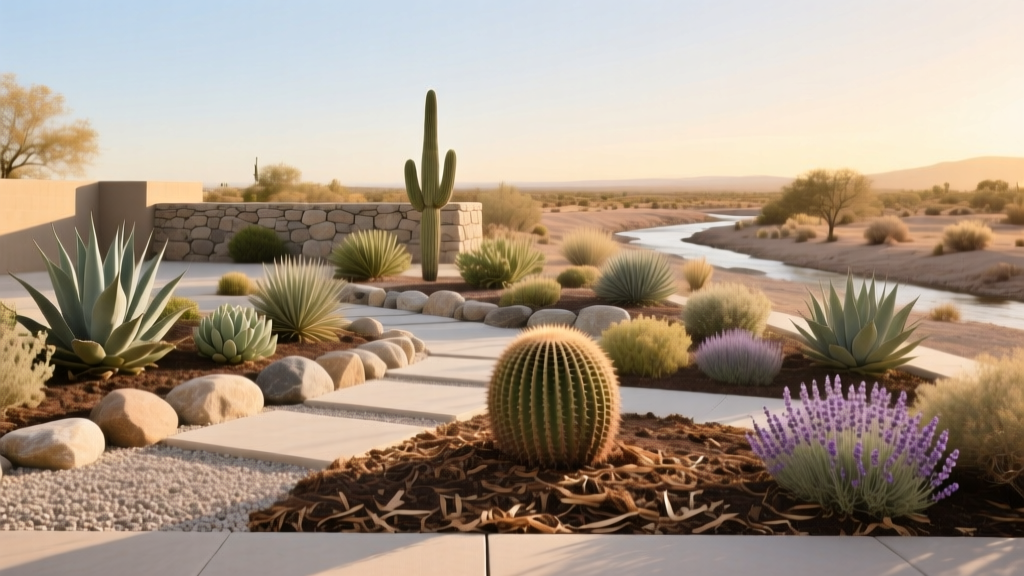
Xeriscaping Myths Busted: Facts vs Fiction for Dry Landscapes
Emily WatsonPublished
The Truth About Drought-Tolerant Landscaping
When homeowners hear the word 'xeriscaping,' they often picture a barren, desolate yard filled with sharp cacti, gray gravel, and zero color. This pervasive misconception has kept countless gardeners from adopting one of the most sustainable, cost-effective, and visually stunning landscaping methods available. Coined by Denver Water in 1981, the term xeriscaping comes from the Greek word 'xeros,' meaning dry. However, it was never intended to mean 'zero-scaping.' According to the Colorado State University Extension, xeriscaping is fundamentally about water conservation through smart design, not the elimination of lush plant life.
With outdoor water use accounting for nearly 30% of total household water consumption in the United States—as reported by EPA WaterSense—transitioning to a drought-tolerant landscape is a vital step toward environmental stewardship and lower utility bills. Yet, fiction continues to overshadow fact. Let's dismantle the most common xeriscaping myths and provide actionable, data-backed strategies for building a vibrant, low-water garden.
Myth 1: Xeriscapes Are Just Barren Rock Gardens and Cacti
The Fiction
Many believe that a water-wise garden requires ripping out all flora and replacing it with river rock, boulders, and a lone, spiky agave plant. This practice, often derisively called 'zeroscaping,' creates heat islands in your yard and offers zero ecological benefit to local pollinators.
The Fact
A properly designed xeriscape is a riot of color, texture, and movement. Drought-tolerant perennials and shrubs can provide year-round visual interest while supporting local wildlife. The secret lies in selecting native or climate-adapted plants that thrive in your specific hardiness zone with minimal supplemental water.
- Russian Sage (Perovskia atriplicifolia): Offers striking silver foliage and tall, hazy purple flower spikes from mid-summer to fall. Requires full sun and excellent drainage.
- Blanket Flower (Gaillardia): Produces vibrant, daisy-like blooms in shades of red, yellow, and orange. Highly attractive to butterflies and extremely heat-tolerant.
- Hummingbird Mint (Agastache): A fragrant, pollinator-magnet that produces dense spikes of pink, orange, or purple flowers. Once established, it thrives on neglect.
Actionable Advice: When purchasing plants, look for the UC ANR WUCOLS database classifications or local nursery tags indicating 'low' or 'very low' water use. Budget roughly $15 to $35 per 1-gallon perennial and $40 to $80 for 5-gallon shrubs to establish a diverse, colorful palette.
Myth 2: Drought-Tolerant Plants Need Zero Water
The Fiction
Homeowners often plant drought-resistant species, give them a single splash of water, and walk away, assuming their 'xeric' nature will keep them alive immediately.
The Fact
There is no such thing as an 'instant-drought-tolerant' plant. All plants require a critical establishment period to grow the deep, extensive root systems necessary to forage for subsurface moisture. If you starve a new xeric plant of water during its first few months, it will die just as quickly as a traditional hydrangea.
The Establishment Watering Schedule:
- Weeks 1-4: Water deeply 2 to 3 times per week. The goal is to keep the root ball consistently moist but not waterlogged. Apply roughly 1 inch of water per session.
- Weeks 5-8: Reduce frequency to 1 to 2 times per week, but increase the duration. This encourages roots to grow downward seeking moisture.
- Months 3-6: Transition to deep, infrequent soakings (once a week or once every two weeks, depending on seasonal temperatures).
Actionable Advice: Install a drip irrigation system using 1/2-inch poly tubing and 1 GPH (gallon per hour) pressure-compensating emitters placed directly at the base of each plant. This delivers water precisely to the root zone, eliminating evaporation loss and keeping weed seeds on the soil surface dry.
Myth 3: You Must Remove All Your Grass
The Fiction
Xeriscaping dictates that every square inch of traditional turfgrass must be eradicated and replaced with hardscaping or desert plants.
The Fact
One of the core principles of xeriscaping is practical turf management, not total turf elimination. Grass serves a functional purpose in high-traffic areas, play zones for children, and spaces for pets. The goal is to limit turf to areas where it is actively used and to choose the right type of grass for your climate.
Instead of a sprawling front lawn that no one walks on, shrink the turf footprint. Replace peripheral grass beds with drought-tolerant groundcovers like creeping thyme, lippia, or a micro-clover mix. If you live in the South or Transition Zone, consider swapping thirsty Fescue or St. Augustine for ultra-drought-tolerant warm-season grasses like Zeon Zoysia or TifTuf Bermuda, which can survive prolonged dry spells by going dormant and greening up once rain returns.
Myth 4: Xeriscaping Requires Absolutely No Maintenance
The Fiction
Once a xeriscape is installed, the homeowner can throw away their gardening tools and never think about the yard again.
The Fact
Xeriscaping requires different maintenance, not zero maintenance. While you will save dozens of hours a year by eliminating mowing, edging, and aerating, a drought-tolerant garden still requires seasonal care to remain healthy and aesthetically pleasing.
- Weeding: Weeds are opportunistic. In rock or decomposed granite (DG) mulched beds, wind-blown weed seeds can settle into crevices. Using a pre-emergent herbicide (like Preen Garden Weed Preventer) in early spring and early fall is crucial for low-maintenance rock gardens.
- Mulch Replenishment: Organic mulches (shredded bark, wood chips) break down over time, improving the soil but requiring a 2-to-3-inch top-up every 2 to 3 years. Inorganic mulches (gravel, DG) may need occasional raking to prevent compaction and leaf-blowing to remove debris.
- Pruning and Deadheading: Many native perennials require a hard cutback in late winter or early spring to promote vigorous new growth and prevent woody, leggy centers.
Data Comparison: Traditional Turf vs. Xeriscaped Garden
To understand the true return on investment (ROI) of a xeriscape conversion, consider the following 5-year projection for a 1,000-square-foot front yard space.
| Feature | Traditional Turf (1,000 sq ft) | Xeriscaped Garden (1,000 sq ft) |
|---|---|---|
| Initial Installation Cost | $150 - $350 (Sod & Soil Prep) | $1,500 - $3,500 (Plants, Drip, Mulch) |
| Annual Water Cost (Summer) | $150 - $400+ | $20 - $50 |
| Weekly Maintenance Time | 2-3 Hours (Mowing, Edging, Blowing) | 30-45 Mins (Weeding, Pruning) |
| Fertilizer & Chemical Needs | High (Nitrogen, Herbicides) | Low (Slow-release organic, pre-emergent) |
| 5-Year Total Water Cost | $750 - $2,000+ | $100 - $250 |
The Verdict: While the upfront cost of a xeriscape conversion is significantly higher due to materials, hardscaping, and mature plants, the dramatic reduction in water bills, fertilizer costs, and weekend labor typically results in a break-even point within 4 to 7 years, depending on local water rates and municipal rebate programs.
Your Action Plan: 4 Steps to a Successful Xeriscape
1. Test and Amend Your Soil
Drought-tolerant plants hate 'wet feet.' If you have heavy clay soil, water will pool and rot the roots of xeric plants. Amend your planting beds by tilling in 2 to 3 inches of high-quality compost or expanded shale to improve drainage and aeration.
2. Implement Hydrozoning
Group plants with similar water and sunlight requirements together. Place your most water-thirsty plants (like vegetable gardens or hydrangeas) near the house or patio where they can share runoff or easy hose access. Place your most drought-tolerant natives at the periphery of your property where they must rely primarily on natural rainfall.
3. Install and Audit Drip Irrigation
Overhead sprinklers lose up to 50% of their water to wind drift and evaporation. Convert your garden beds to drip irrigation. Use Netafim or similar drip grids for groundcover, and individual emitters for shrubs. Run your system once a month to audit for clogged emitters or rodent damage.
4. Apply the Right Mulch
Mulch is the unsung hero of xeriscaping. It lowers soil temperature by up to 10 degrees, reduces evaporation, and suppresses weeds. For woodland-style drought gardens, use 3 inches of shredded cedar or pine bark. For desert-style or Mediterranean gardens, use 1.5 to 2 inches of 3/8-inch crushed gravel or decomposed granite, keeping the mulch a few inches away from the base woody stems of shrubs to prevent crown rot.
By discarding the myths and embracing the science of water-wise design, you can cultivate a landscape that is not only resilient in the face of drought but also teeming with life, color, and year-round curb appeal.

