
Landscaping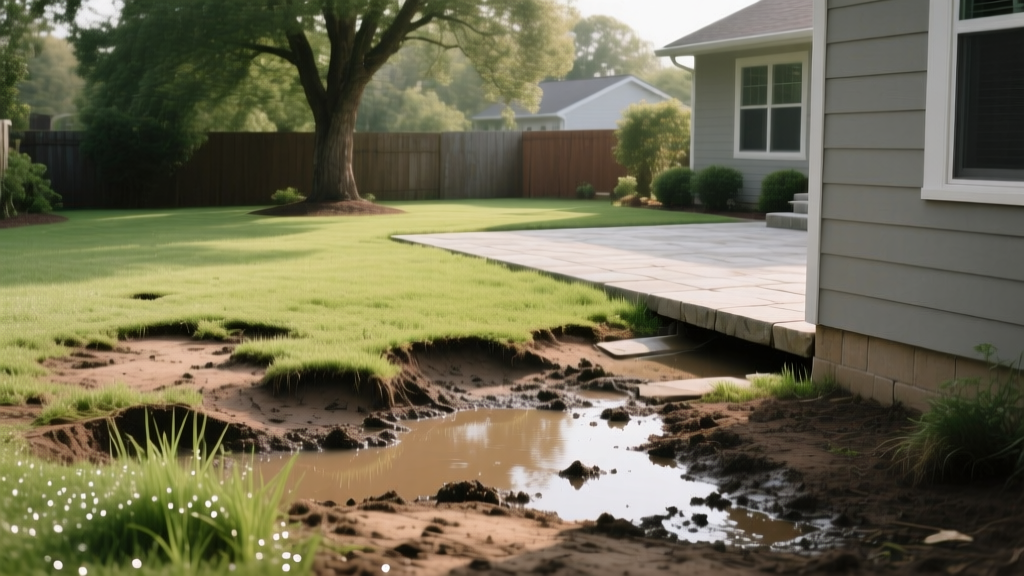
Top 5 Yard Drainage Mistakes and How to Fix Them Fast
James MillerPublished
Introduction: The Hidden Cost of Poor Yard Drainage
Water is both the lifeblood of your landscape and one of the most destructive forces against your home. When landscape drainage is poorly planned or improperly executed, the consequences extend far beyond a soggy lawn or a few muddy puddles. Chronic standing water breeds mosquitoes, suffocates turfgrass roots, invites fungal diseases, and—most alarmingly—can compromise your home's structural integrity by hydrostatic pressure against the foundation. According to the Federal Emergency Management Agency (FEMA), improper site grading and water management are leading contributors to residential water damage and basement flooding.
Whether you are installing a new patio, redesigning your garden beds, or simply trying to fix a perpetually wet spot in your yard, avoiding common pitfalls is crucial. Below, we break down the five most frequent yard drainage mistakes homeowners make and provide actionable, step-by-step fixes to reclaim your landscape.
Mistake 1: Negative Grading Toward the Foundation
The most critical drainage mistake a homeowner can make is allowing the soil to slope toward the house. This is known as "negative grading." When the ground slopes inward, every rainfall funnels thousands of gallons of water directly against your foundation, leading to cracks, basement leaks, and costly structural repairs.
The Fix: Regrading to Code Standards
The solution is to establish a positive slope that directs water away from the house. According to the International Residential Code (IRC) Chapter 4, the ground must slope away from the foundation at a minimum drop of 6 inches over the first 10 feet (a 5% slope).
- DIY Approach: For minor settling, purchase screened topsoil and pack it tightly against the foundation to create the necessary slope. Ensure you leave at least 6 inches of clearance between the top of the soil and your home's siding or brick weep holes to prevent pest intrusion and wood rot.
- Professional Approach: If your yard requires significant regrading, hire a landscaping contractor. They will use a laser level and skid steer to cut and fill the yard, typically costing between $1,000 and $3,500 depending on the yard's size and accessibility.
Mistake 2: Downspouts Dumping Water at the Base
Many homes have gutter downspouts that simply elbow out at the foundation line, dumping concentrated roof runoff directly into the soil near the house. A standard 1,000-square-foot roof can shed over 600 gallons of water during a 1-inch rainstorm. If this water pools at the base, no amount of positive grading will save your basement.
The Fix: Extend and Bury Your Downspouts
You must move roof runoff at least 4 to 6 feet away from the foundation, ideally 10 feet if your yard's slope allows it.
- Quick Fix: Attach rigid aluminum or corrugated plastic downspout extensions ($15–$25 each). While effective, they can be unsightly and make mowing difficult.
- Permanent Fix: Bury a 4-inch Schedule 40 PVC pipe. Connect the downspout to the PVC using a catch basin, trench the pipe at a 1% slope (1/8-inch drop per foot), and daylight it into a lower part of the yard, a dry creek bed, or a municipal storm drain (if local codes permit). Budget approximately $300–$500 for materials and trenching tools.
Mistake 3: Ignoring Soil Composition and the "Bathtub Effect"
Homeowners often attempt to fix a wet lawn by simply laying new sod or adding a few inches of topsoil over heavy, compacted clay. Because clay particles are microscopic and tightly bound, they are virtually impermeable. Adding porous topsoil on top of a clay base creates a "bathtub effect," where water fills the topsoil and has nowhere to drain, drowning your new grass.
The Fix: Amend the Soil Profile and Aerate
The Environmental Protection Agency (EPA) emphasizes the importance of soil permeability in managing stormwater and promoting healthy landscapes. To fix heavy clay drainage issues:
- Core Aeration: Rent a core aerator in the early fall or spring to pull 3-inch plugs of soil from the ground. This relieves compaction and creates channels for water to penetrate deeper.
- Topdressing with Expanded Shale: Instead of standard compost, topdress your lawn with expanded shale or coarse sand. These materials physically fracture the clay matrix over time, permanently improving drainage and root penetration.
Mistake 4: Hardscaping Without a Permeable Base
When building patios, walkways, or retaining walls, many DIYers pour a solid concrete slab or use a sand-set base without considering where the surface water will go. Impermeable hardscaping acts like a roof, accelerating runoff and causing severe erosion or flooding in adjacent garden beds.
The Fix: Install Permeable Bases and Weep Holes
- Patios and Walkways: Opt for permeable pavers installed over an open-graded base of 3/4-inch clean crushed stone (no fine dust). This allows surface water to percolate through the joints and store temporarily in the stone base before slowly infiltrating the native soil.
- Retaining Walls: If you are building a retaining wall to terrace a slope, you must install a perforated drain pipe wrapped in landscape fabric directly behind the wall's base, backfilled with washed gravel. Additionally, ensure the wall has "weep holes" at the bottom course to allow hydrostatic pressure to escape. Failure to do this will result in the wall bowing or collapsing under the weight of trapped water.
Mistake 5: Creating "Mulch Volcanoes" and Damming Water Flow
In an effort to make garden beds look tidy, homeowners often pile mulch high against the trunks of trees and the siding of their homes (mulch volcanoes), or install rigid plastic edging that sits above the soil grade. This edging acts as a dam, trapping surface runoff inside the landscape beds and forcing it to seep laterally toward the home's foundation.
The Fix: Trenching and Proper Mulching Techniques
- Mulch Depth: Maintain a mulch depth of exactly 2 to 3 inches. Keep mulch at least 6 inches away from your home's foundation and 3 inches away from tree trunks to prevent rot and pest harborage.
- Edging and Trenches: Remove solid plastic edging that blocks water flow. Instead, dig a shallow "French trench" or swale along the perimeter of your garden beds to catch surface water and gently redirect it toward the street or a designated drainage zone.
Comparison Chart: Best Drainage Solutions for Your Yard
When DIY grading and downspout extensions aren't enough, you may need to install a dedicated drainage system. Use the table below to choose the right solution for your specific landscape problem.
| Drainage Solution | Estimated Cost (DIY vs. Pro) | Best Use Case | Maintenance Level |
|---|---|---|---|
| French Drain | $200 - $1,500 | Subsurface water removal; relieving hydrostatic pressure near foundations. | Low (flush out annually) |
| Dry Creek Bed | $300 - $1,200 | Managing surface runoff in sloping yards; adding aesthetic landscape value. | Medium (weed control, raking rocks) |
| Dry Well | $150 - $800 | Terminating downspouts in flat yards where water cannot be daylighted. | Low (check for sediment buildup) |
| Surface Swale | $500 - $2,500 | Redirecting large volumes of surface water from neighboring properties. | Low (reseed grass periodically) |
Pro-Tip: How to Install a Basic French Drain
If you have a chronically soggy lawn, a French drain is often the most effective remedy. Dig a trench 12 to 18 inches deep and 6 inches wide, ensuring a continuous 1% slope toward your discharge point. Line the trench with heavy-duty, non-woven landscape fabric to prevent soil clogging. Add a 2-inch base of 3/4-inch washed limestone gravel. Lay a 4-inch perforated PVC pipe with the holes facing down (this prevents sediment from washing directly into the pipe). Cover the pipe with more gravel, fold the excess landscape fabric over the top like a burrito, and cover with topsoil and sod.
Conclusion
Proper landscape drainage is not a luxury; it is a fundamental requirement for a healthy lawn and a secure home. By correcting negative grading, extending your downspouts, respecting soil composition, and utilizing the right drainage infrastructure, you can transform a waterlogged yard into a thriving, resilient outdoor space. Always consult local building codes before tying into municipal storm systems, and when in doubt, hire a licensed landscape architect to evaluate your property's unique hydrology.

