
Landscaping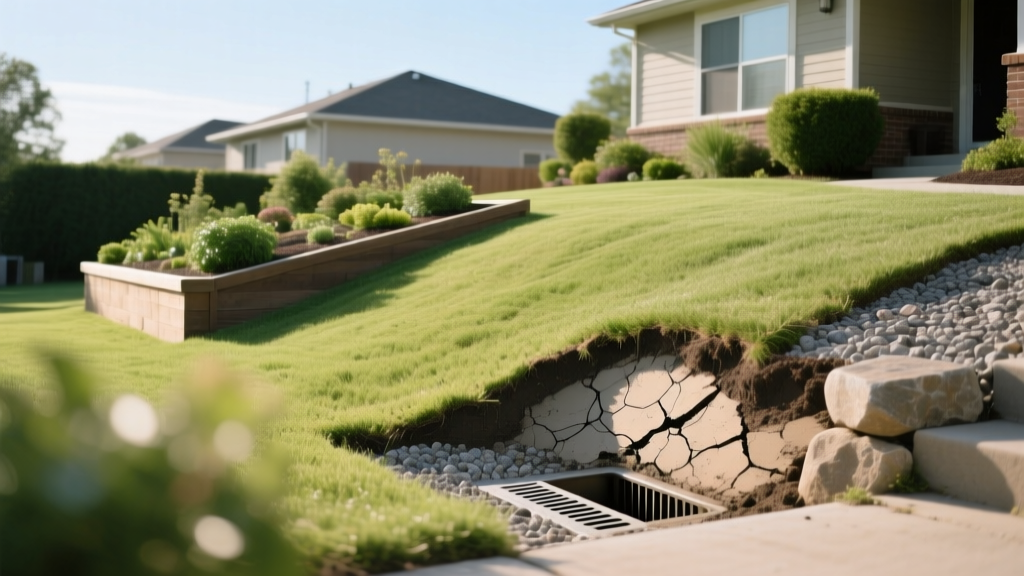
Yard Grading Mistakes: Common Drainage Errors & Fixes
Lisa ThompsonPublished
The Hidden Dangers of Poor Yard Grading
Water is the single greatest threat to your home’s foundation, and your landscape’s first line of defense is proper yard grading. When landscaping projects are rushed or poorly planned, water pools against your home, leading to cracked foundations, flooded basements, and destroyed hardscaping. According to the Pacific Northwest National Laboratory’s Building America Solution Center, improper surface water management is a leading cause of residential moisture damage. Yet, many homeowners and even amateur landscapers make critical grading errors that exacerbate these issues. In this guide, we will explore the most common yard grading and drainage mistakes and provide actionable, step-by-step fixes to protect your property.
Mistake 1: Negative Grading Towards the Foundation
The most catastrophic landscaping mistake is negative grading—when the soil slopes toward the house instead of away from it. Even a slight dip near the foundation can channel thousands of gallons of roof runoff directly into your basement or crawlspace. The International Residential Code (IRC) mandates a minimum 5% slope for the first 10 feet away from the foundation.
The Fix: Regrading and the 5% Rule
To achieve a 5% slope, the ground must drop exactly 6 inches over the first 10 horizontal feet. Here is how to fix negative grading:
- Measure the Slope: Drive a stake next to the foundation and a second stake exactly 10 feet away. Tie a string to the first stake at ground level, pull it taut to the second stake, and attach a string level. Adjust the string until it is perfectly level, then measure the distance from the string down to the ground at the second stake. If it is less than 6 inches, you have negative or inadequate grading.
- Cut and Fill: Use a landscaping rake and shovel to cut high spots near the house and fill low spots further away. Never use loose topsoil or mulch for the base fill, as it will settle and create new dips over time.
- Compact the Soil: Use a hand tamper or a mechanical plate compactor to pack the fill dirt tightly. Add soil in 2-inch layers, tamping each layer before adding the next.
- Top with Topsoil: Once the subgrade is properly sloped and compacted, add 2 to 3 inches of high-quality topsoil to support grass or groundcover.
Mistake 2: Installing French Drains Without a Proper Outlet
A French drain is a gravel-filled trench containing a perforated pipe that intercepts groundwater. However, a common mistake is installing the perforated pipe and simply burying the end in the yard, assuming the water will magically disappear. Without a proper outlet, the pipe fills up, the trench becomes a subterranean swamp, and water eventually backs up toward the foundation.
The Fix: Daylighting the Drain
Every French drain must have a designated exit point, a process known as 'daylighting.' The University of Minnesota Extension emphasizes that subsurface drainage systems must discharge into a storm sewer, a dry well, or a lower-lying area of the property.
- Maintain the Slope: The perforated pipe must have a minimum slope of 1% (a 1/8-inch drop per linear foot) to ensure water flows by gravity.
- Transition to Solid Pipe: Once the water is moving away from the critical area, transition from the perforated pipe to a solid PVC or corrugated pipe to prevent water from leaking back into the soil.
- Use a Pop-Up Emitter: If you cannot daylight the pipe above ground, terminate the solid pipe with an NDS Pop-Up Drainage Emitter. This device remains flush with the lawn but pops open when water pressure builds, safely dispersing water across the grass.
Mistake 3: Using the Wrong Backfill and Mulch Materials
Many homeowners pile rich, organic topsoil or heavy clay right up against their siding to create raised garden beds. Organic topsoil acts like a sponge, holding moisture against the foundation. Similarly, creating 'mulch volcanoes' around trees and shrubs near the house traps water and invites wood-destroying insects like termites.
The Fix: Proper Material Selection and Clearances
- The 4-Inch Rule: Always maintain a minimum 4-inch vertical gap between the top of your mulch or soil and the bottom of your home’s siding or weep holes. This prevents moisture wicking and pest intrusion.
- Use Sandy Loam for Backfill: When filling low spots near the foundation, use a sandy loam or a mix of 70% sand and 30% clay. This material is highly compactable and sheds water rapidly, unlike organic topsoil which retains it.
- Install a Geotextile Barrier: If you must use gravel or river rock near the foundation for aesthetic reasons, lay down a commercial-grade geotextile fabric first. This prevents the rocks from sinking into the mud and ensures water flows freely over the surface.
Pro Tip: Never attach a wooden planter box directly to your home's exterior siding. The trapped moisture behind the wood will rot your siding and compromise the weather barrier within a few seasons.
Mistake 4: Relying on Splash Blocks for Downspouts
A standard roof can shed hundreds of gallons of water during a heavy rainstorm. Relying on a 2-foot concrete splash block at the base of a downspout is a major grading error. Splash blocks often shift, settle into the mud, and ultimately deposit massive volumes of water right at the edge of the foundation's critical 5% slope zone.
The Fix: Extend and Bury Downspout Lines
- The 6-Foot Minimum: Downspout extensions must carry water at least 4 to 6 feet away from the house, though 10 feet is ideal for homes with basements.
- Bury Corrugated Flex Pipes: For a cleaner landscape look, attach a corrugated flex pipe to the downspout elbow and bury it in a shallow 6-inch trench. Route this pipe to a flower bed, a dry creek bed, or a pop-up emitter.
- Secure the Joints: Use aluminum pop rivets or heavy-duty zip screws to secure downspout elbows. High-volume water flow can easily blow apart friction-fit PVC or plastic elbows during severe storms.
Cost and Effort Comparison Chart
Understanding the financial and physical investment required for these fixes can help you prioritize your landscaping budget. Below is a breakdown of common drainage corrections.
| Drainage Fix | Difficulty Level | Estimated DIY Cost | Professional Cost | Time Required |
|---|---|---|---|---|
| Regrading Soil (per 100 sq ft) | Moderate | $50 - $150 | $300 - $800 | 1 - 2 Days |
| French Drain Installation (per linear ft) | High | $20 - $35 | $50 - $90 | 2 - 4 Days |
| Burying Downspout Extensions | Low | $40 - $100 | $200 - $400 | Half Day |
| Installing Dry Well (50-gallon) | High | $150 - $300 | $800 - $1,500 | 1 - 2 Days |
| Adding Swales or Berms | Moderate | $100 - $250 | $500 - $1,200 | 1 - 3 Days |
When to Hire a Professional vs. DIY
While extending downspouts and minor regrading are excellent weekend DIY projects, major earthmoving requires professional equipment. If your yard features heavy clay soil, severe negative grading, or if you need to tie your drainage system into municipal storm sewers, hire a licensed landscaping or excavation contractor. Furthermore, if you live in an area with a high water table, surface grading alone will not solve your issues; a professional hydrologist or drainage expert may need to design a comprehensive sump pump and interior/exterior French drain system.
Conclusion
Proper yard grading is not just about curb appeal; it is a critical structural defense for your home. By avoiding negative slopes, ensuring French drains have proper outlets, selecting the right backfill materials, and extending downspouts adequately, you can transform a waterlogged, dangerous yard into a dry, thriving landscape. Grab a string line, measure your slopes, and tackle these common mistakes before the next heavy rainstorm puts your foundation to the test.

