Lawn Care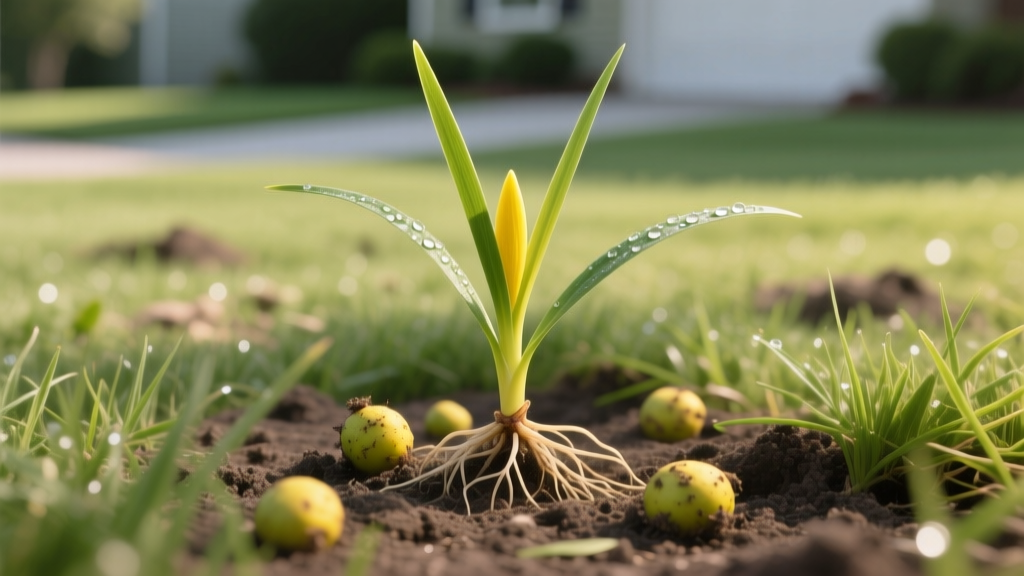
Complete Yellow Nutsedge Identification And Removal Guide
David ParkPublished
The Ultimate Guide to Yellow Nutsedge Identification and Removal
For homeowners striving for a pristine, uniform lawn, few invaders are as frustrating and resilient as yellow nutsedge (Cyperus esculentus). Often mistaken for grass due to its similar appearance and rapid growth rate, yellow nutsedge is actually a sedge. This distinction is critical because standard broadleaf weed killers and typical grass herbicides will not kill it. Eradicating nutsedge requires a targeted approach, specific active ingredients, and a solid understanding of its unique reproductive biology.
In this comprehensive guide, we will break down exactly how to identify yellow nutsedge, why it is so difficult to control, and the most effective chemical and cultural strategies to remove it from your cool-season or warm-season lawn.
Yellow Nutsedge vs. Lawn Grass: How to Tell the Difference
Before you can treat the weed, you must correctly identify it. Yellow nutsedge grows significantly faster than surrounding turfgrass, often shooting up above the canopy just days after mowing. It features a lighter, almost yellowish-green color compared to the darker green of most lawn grasses. However, the most definitive identification methods involve examining the stem and the root system.
To confirm you are dealing with nutsedge, perform the roll test and the tug test. Grab a single blade near the base and roll it between your thumb and index finger. If it feels distinctly triangular or V-shaped, you have found a sedge. Grass stems are typically flat or round. Next, gently tug on the plant. If the soil is moist, you may pull up a small, round, brown tuber (often called a nutlet) attached to the root system via thin rhizomes.
Comparison Chart: Turfgrass vs. Yellow Nutsedge
| Characteristic | Standard Turfgrass | Yellow Nutsedge |
|---|---|---|
| Stem Shape | Flat or round | Triangular (V-shaped) |
| Growth Rate | Moderate, consistent | Extremely rapid, outpaces grass |
| Leaf Tip | >Varies (pointed, rounded, boat-shaped)Sharply pointed, tapered | |
| Root System | Fibrous roots | Rhizomes with small brown tubers (nutlets) |
| Seed Heads | Varies (spikes, panicles) | Distinct golden-brown, star-like clusters |
The Biology of Nutsedge: Why It Is So Hard to Kill
The primary reason yellow nutsedge is a nightmare for lawn care professionals and homeowners alike is its subterranean reproductive system. According to turfgrass research outlined by the University of Minnesota Extension, a single yellow nutsedge plant can produce hundreds of tubers (nutlets) in a single growing season. These tubers remain dormant in the soil throughout the winter and can survive for up to three years.
When you pull a nutsedge plant by hand, the stem usually breaks off just above the tuber, leaving the nutlet intact in the soil. Within weeks, the dormant tuber will activate and send up a new shoot. Furthermore, attempting to till or aggressively aerate an infested lawn can actually spread the tubers to new areas, multiplying the problem. This is why systemic, post-emergent herbicides are required to translocate the active ingredient down into the root system and destroy the tubers.
Step-by-Step Chemical Eradication Guide
Because nutsedge is neither a grassy weed nor a broadleaf weed, standard 2,4-D or glyphosate treatments will fail. You must use herbicides specifically formulated for sedges. The two most effective active ingredients available to homeowners and professionals are Halosulfuron-methyl and Sulfentrazone.
1. Halosulfuron-methyl (e.g., SedgeHammer+)
Halosulfuron-methyl is widely considered the gold standard for nutsedge control. It is a systemic herbicide that is absorbed through the foliage and travels down to the tubers, inhibiting amino acid synthesis and slowly starving the plant.
- Product Cost: Approximately $25 to $30 for a box containing five 0.9-gram packets.
- Measurement & Mixing: Mix one 0.9g packet with 1 to 2 gallons of water to treat 1,000 square feet. Always include a Non-Ionic Surfactant (NIS) at a rate of 1/2 ounce per gallon of water to ensure the herbicide sticks to the waxy nutsedge blades.
- Timing: Apply in late spring to early summer when the nutsedge is actively growing and has reached the 3-to-5 leaf stage. This is typically when soil temperatures consistently reach 60°F.
- Expectations: The plant will stop growing within 48 hours, but complete yellowing and death of the foliage can take 14 to 21 days. A second application may be required 6 to 8 weeks later for severe infestations.
2. Sulfentrazone (e.g., Dismiss NXT)
Sulfentrazone offers a faster burn-down effect and also provides some pre-emergent soil residual activity, preventing new tubers from sprouting immediately.
- Product Cost: Around $60 to $80 for a 16 oz bottle (highly concentrated, treats multiple acres).
- Measurement & Mixing: Mix 0.18 to 0.27 fluid ounces per 1,000 square feet in 1 to 2 gallons of water.
- Timing: Best applied when nutsedge is young and actively growing. Avoid application during extreme heat (above 85°F) to prevent turfgrass phytotoxicity.
- Expectations: Visible necrosis (browning) occurs within 24 to 48 hours, making it much faster than halosulfuron, though it may not translocate to the deepest tubers quite as effectively as SedgeHammer.
Cultural Practices to Prevent Nutsedge Return
Chemical control is only half the battle. Yellow nutsedge thrives in specific environmental conditions, particularly in lawns with poor drainage, compacted soil, and short mowing heights. The University of California Statewide Integrated Pest Management Program emphasizes that modifying the lawn environment is crucial for long-term suppression.
Improve Soil Drainage
Nutsedge loves moisture. If your lawn has low spots where water pools after a heavy rain, you are creating a perfect nursery for sedges. Regrade severe low spots, install French drains if necessary, and perform annual core aeration to alleviate soil compaction and improve water infiltration.
Raise Your Mowing Height
Mowing your lawn too short stresses the turfgrass and allows sunlight to reach the soil surface, triggering nutsedge seeds and tubers to germinate. Raise your mower deck to a minimum of 3 inches for cool-season grasses (like Kentucky Bluegrass and Tall Fescue) and 2 to 2.5 inches for warm-season grasses (like Bermudagrass and Zoysia). A thick, tall turf canopy will shade the soil and naturally outcompete emerging nutsedge shoots.
Fix Irrigation Leaks
Overwatering is a primary catalyst for nutsedge outbreaks. Audit your sprinkler system regularly. A single leaking sprinkler head can keep a localized area of soil perpetually saturated, inviting a massive nutsedge colony. Adjust your irrigation schedule to provide deep, infrequent watering (about 1 to 1.5 inches per week) rather than shallow, daily watering.
Frequently Asked Questions
Can I just pull yellow nutsedge by hand?
While you can pull it, it is rarely effective for long-term control. Pulling usually snaps the stem above the tuber, leaving the nutlet in the ground to regenerate. If you choose to hand-pull, you must dig deep into the soil with a weeding tool to extract the entire root and tuber system, which is highly impractical for large infestations.
Will pre-emergent herbicides stop nutsedge?
Standard pre-emergents used for crabgrass (like Prodiamine or Dithiopyr) have very limited efficacy against yellow nutsedge tubers. Nutsedge primarily reproduces via subterranean tubers rather than seeds, rendering most seed-focused pre-emergents useless. Focus on post-emergent systemic treatments and cultural drainage improvements instead.
Conclusion
Yellow nutsedge is a formidable opponent, but it is not invincible. By correctly identifying the triangular stems and understanding the tuber-based life cycle, you can stop wasting money on ineffective broadleaf weed killers. Invest in a high-quality halosulfuron-methyl or sulfentrazone product, apply it with a surfactant during the early summer growth flush, and correct the drainage issues in your yard. With patience and a strategic approach, you can reclaim your lawn and achieve the thick, uniform turf you desire.